
Why the rankings are hailing Hayling
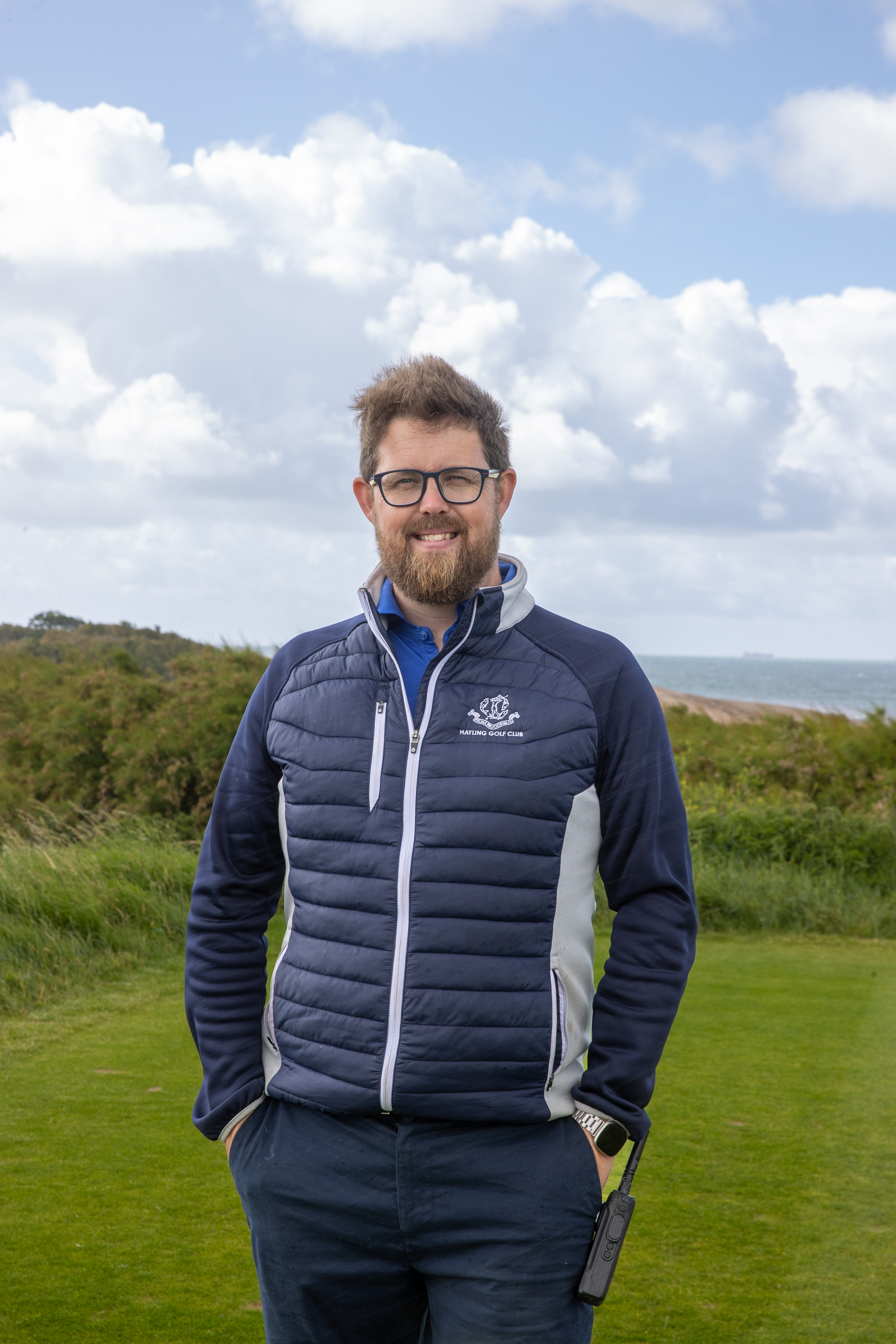
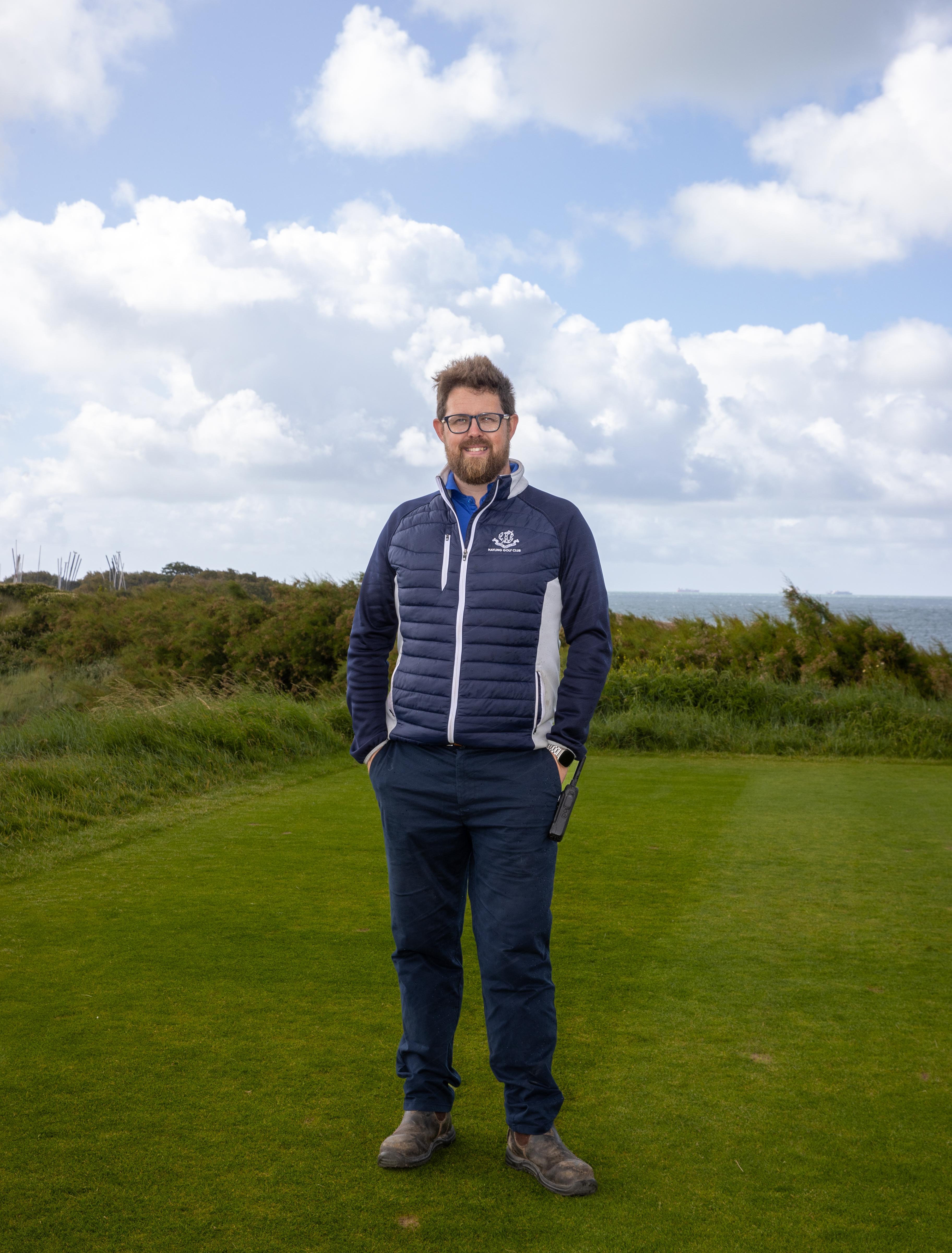
Graeme Roberts grew up around greenkeeping and the enthusiasm that brought him into the industry has only strengthened with experience. The Hayling course manager is a second-generation greenkeeper whose career has taken him through outstanding clubs, overseas internships and more than 20 tournament volunteering opportunities.
At Hayling, Graeme has found a club with the ambition to improve and a course whose standing continues to rise through careful, long-term work. The south coast links has climbed strongly in the rankings, with the club now recognised among England’s Top 50 and the Top 100 links courses in the UK and Ireland. For Graeme, that progress reflects a shared commitment across the club to restore Hayling’s true links identity, strengthen standards and keep pushing forward. The result is a course and team on a clear upward trajectory, led by a man who has made the most of every opportunity available to him.
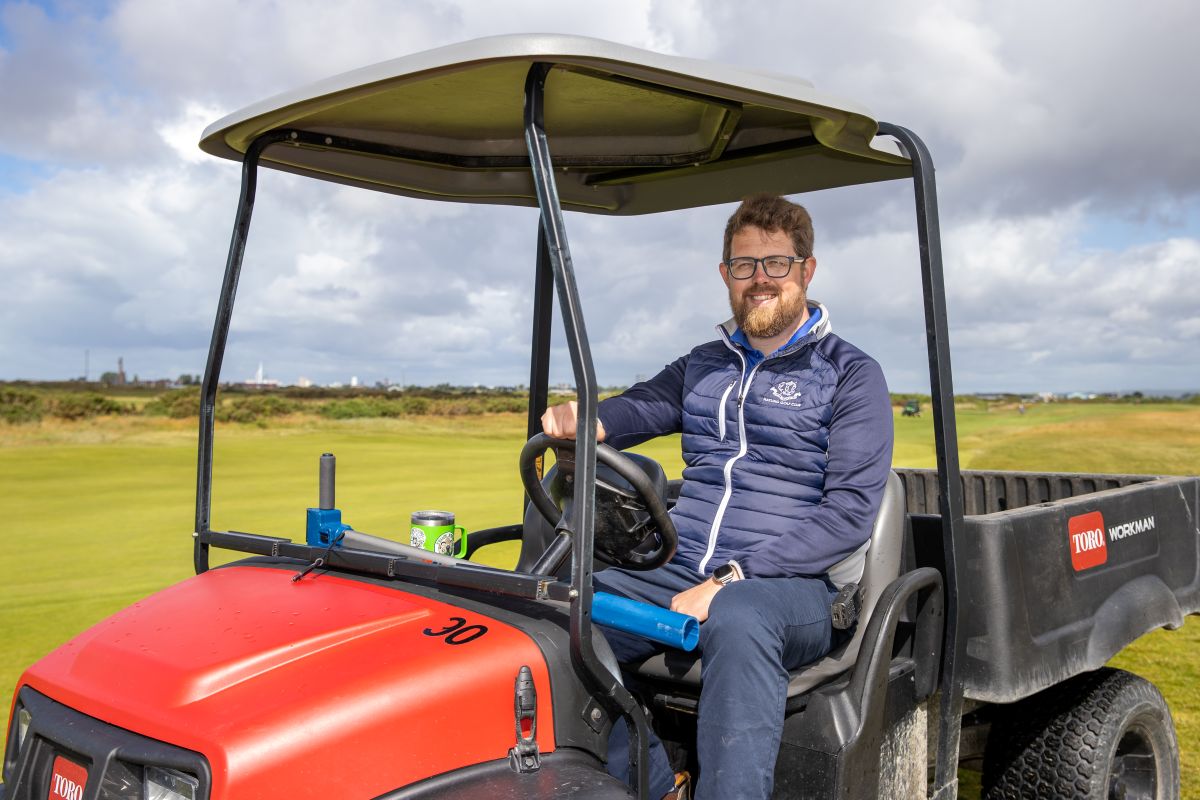
How did you get started in greenkeeping?
I’m second generation, so I was brought up around golf courses. My dad, Gareth Roberts, was a course manager, and my brother Scott is also a course manager at Hindhead. We were brought up at Hankley Common, where my dad was for around 20 years, and I was always out on the course with him. I’d go out in the mornings before school, after school and through the holidays whenever I could. I saw my dad’s friends from other golf clubs, people coming in to visit, machinery being picked up and this close-knit network of people who were really passionate about what they did. It was totally encapsulating from a young age. I went to college and got A levels as a backup, but the reality was I still wanted to be a greenkeeper.
What did the early part of your career give you?
I did my apprenticeship with my dad at Hankley Common and worked there for a couple of years before going out to America on the Ohio Program. I worked at Pinehurst for six months, then Harbour Town Golf Links for another six months, both in the Carolinas. When I came back, Hankley had kept my position open, which was fortunate because the recession had hit and there weren’t many jobs around. I returned, became first assistant and then moved into my first deputy role at Tandridge in 2013.
From there I went to Camberley Heath as deputy course manager, then after a six-month sabbatical travelling with my wife, I joined Swinley Forest, where I was promoted to first assistant. During Covid, I was approached by Leigh Powell at Windlesham, who I’d met through the Bernhard Delegation, and he gave me the opportunity to step back into management as his deputy course manager.
How did the move to Hayling come about?
In 2021 I got the deputy course manager position at Hayling under Greig Easton. The club wanted to set up a succession plan, so the idea was to bring someone in who could step up when the time came. Greig went on to Royal St George’s in August 2023, and to be fair, the club advertised the role externally to make sure everything was done properly. I went through that process and was offered the course manager’s position. It was a brilliant opportunity because Hayling was already on a journey. Greig had done a huge amount of work, and we shared a very similar philosophy about where the course should go.
Which mentors have shaped you most?
My dad has been a massive influence, without doubt. I was also fortunate to do FTMI in 2014, when Matt Plested was my mentor, and we’ve remained close friends. I still consider him a mentor now. When we volunteered together at the Open at Hoylake in 2023, just before my interview for the course manager’s job at Hayling, we spent every evening after our shift going through the interview process and questions. He coached me through that, so I owe Matt a lot. Greig was also a huge influence because of the exposure he gave me to the course manager’s role and the way he helped set me up to take that step.
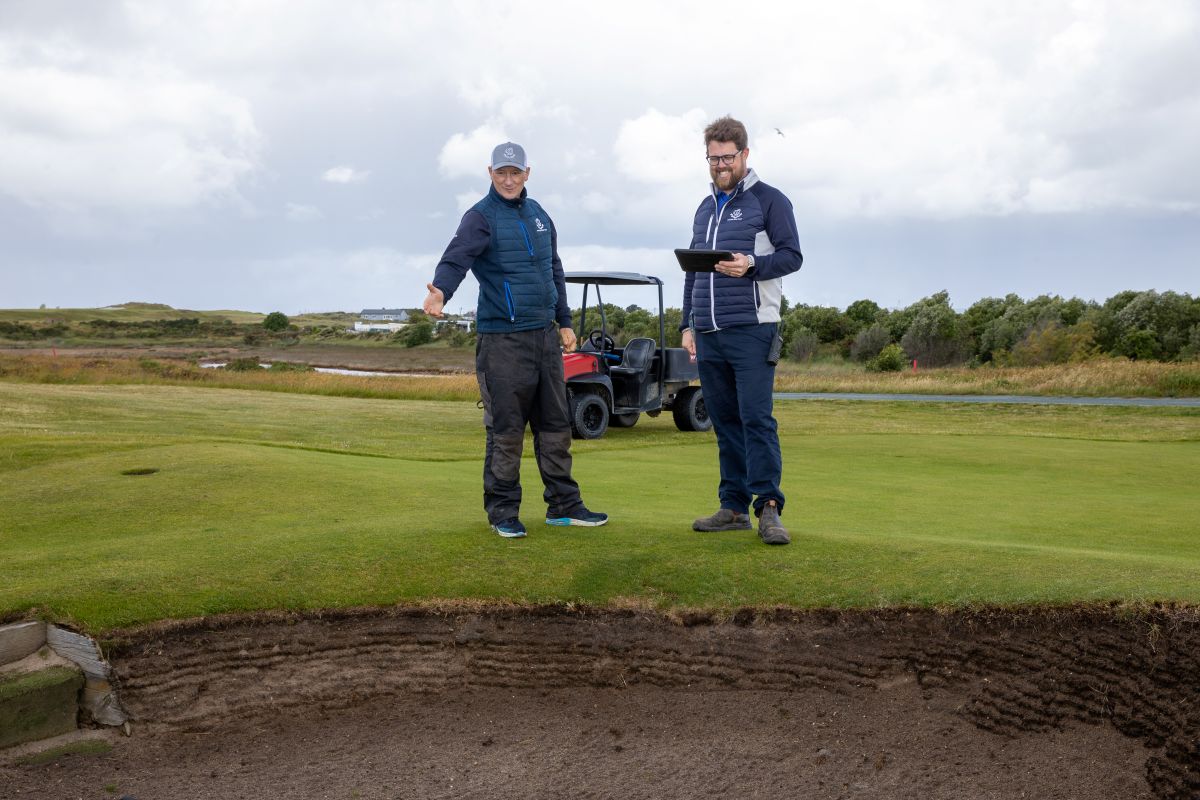
For anyone who hasn’t visited Hayling, how would you describe the course?
Hayling is one of the few links courses on the south coast. It’s built predominantly on shingle, although we also have more typical links dune sand on the west side of the course. It isn’t as dramatic as some links courses in terms of topography, but it has a very natural, rugged landscape and a diverse range of habitats, from heather, lichen, marram, fescue and gorse.
In some ways, it has elements you might expect from heathland and links, although we’re pushing the links identity because that’s what the course should be. The club was founded in 1883, and there’s a real sense of trying to respect that heritage while improving the course for modern expectations.
You mentioned Hayling was on a journey – where was it when you arrived?
The course was already well through its journey. A lot of work had been done in the 1990s and early 2000s to remove invasive species such as holm oaks and other trees that had taken away the links characteristics. When Greig arrived in 2017, his focus was on returning the course to true links play. That meant improving the surfaces, reducing organic matter, encouraging finer grasses and pushing forward with Tom Mackenzie’s master plan, which had been put together in 2011 and then revisited in 2023. When I took over, it was about continuing that trajectory. We both had the same desire and outlook of what we wanted the place to be, and that made the transition much smoother.
What does that work look like in practice?
It includes refining the surfaces to make them more like a true links course, improving fescue numbers and managing out coarser grasses, which is arguably one of our biggest challenges on greens and approaches. We’ve also continued with master plan work such as rebuilding and relocating bunkers, adding sand scrapes, rebuilding tee complexes and looking at future projects that could include rebuilding a couple of green complexes. The work is also about the wider club. We talk a lot about the One Hayling mentality, which means departments working together to lift the whole place. That includes the course, the car park, the clubhouse surrounds and the whole experience.
Is there an awkward transition period when you’re shifting towards finer grasses?
We’re in that transition now. The first stage was creating the environment where finer grasses could grow by reducing organic matter, managing water and nutrient inputs and increasing dressing on the surfaces. We’re carrying that on and trying to make it sustainable. The difficult bit is introducing more finer grasses and managing coarser grasses out while dealing with high play. Last year we had 52,000 rounds. Because we’re built on sand and shingle, the course hardly closes, even through wet winters, so when other courses shut people come here to play. That amount of footfall, alongside expectations, makes the transition challenging. We’re still working towards where we want to be, and we have Alistair Beggs as our course agronomist from The R&A, which is a big help.
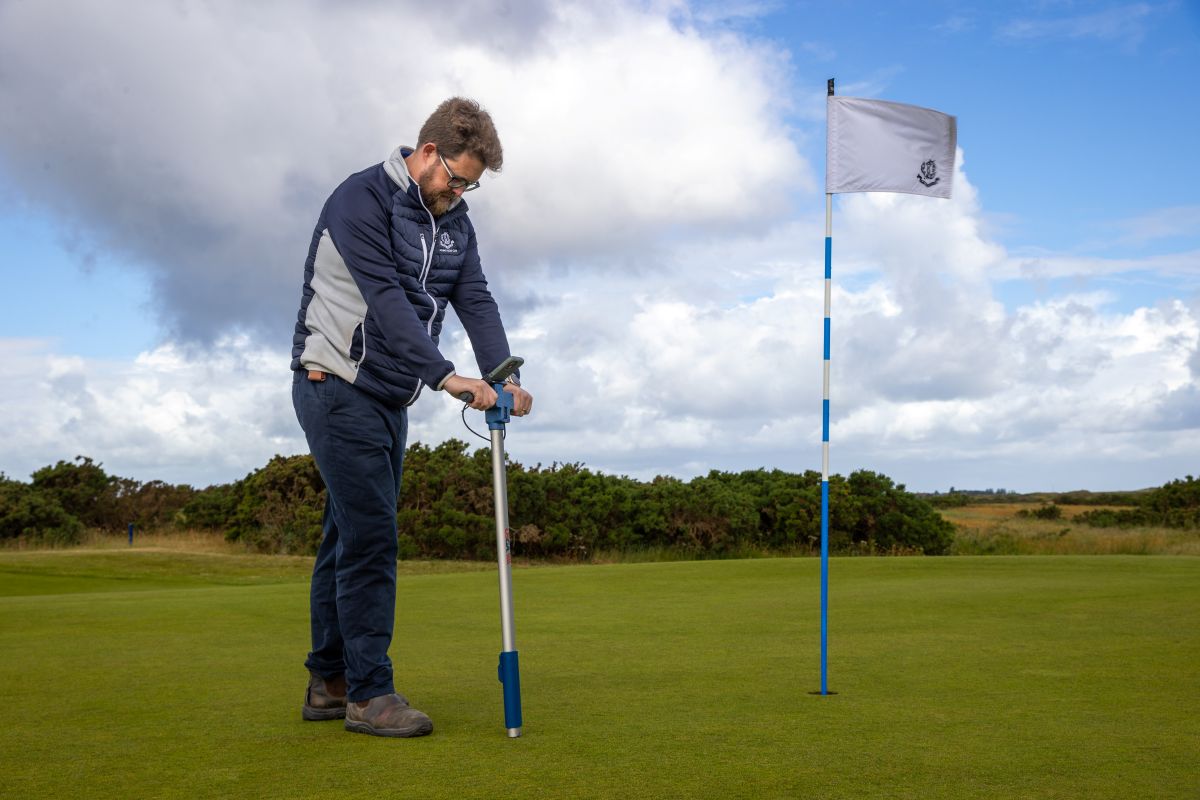
What would members and visitors notice now compared with 10 years ago?
A big difference would be the openness. Years ago, because of the number of holm oaks, birch and oak trees across the course, some holes didn’t look like links holes at all. Removing trees has allowed us to create an environment that benefits fine grasses, with lower inputs and more sustainable surfaces. We regularly overseed fescue on greens, approaches and fairways, and we’re trying to create a drought-tolerant sward composition. The aim is to produce firm, fast links conditions and encourage the running game, with more options and strategies for playing the course.
How have recent weather patterns tested that approach?
My first full season was one of the wettest we’d had in ages, then the next year was almost the complete opposite and one of the driest. That was a real test of decision-making. Water is limited here. We have a lake on the course, originally created during the Second World War when the course was used as a decoy for German aircraft heading towards Portsmouth. The lake later became our irrigation lake, but although it looks big, it’s shallow and doesn’t hold enough water for our needs. That means wetting agents, moisture management and moisture meters are all huge parts of our programme. We have to make sure we’re using water efficiently.
You experienced a tidal event in late 2025 – what happened there?
In truth, it was probably blown out of proportion a little. We were fortunate that it affected only a small part of the property. Compared with what some other links courses have to deal with, it was more a case of bad timing. We’d just built a new artificially faced revetted bunker on the practice ground, and a few days later the spring tides pushed around 20–30 tonnes of shingle through the fence line and into the bunker and surrounding area.
In the grand scheme of things, it wasn’t a major incident, but it has really sharpened our awareness of how vulnerable that part of the course is to coastal erosion. Since the council removed the nearby groynes, we’ve seen more and more encroachment each year from that section of the coastline, and it’s edging ever closer to our boundary.
How would you describe your management style?
I see myself as positive and passionate, and I want to pass that on to everyone around me. I want the team to see the passion and positivity we can create on the course and for that to come through in our work. Different managers I’ve worked under have shown me how to do things and also how I wouldn’t want to do things. For me, it’s about treating people with respect, being patient, being positive and being supportive. I want the team to know they can talk to me about anything. Mistakes happen, and it’s about reflecting on them and working out how to improve next time.
What does the team look like at Hayling?
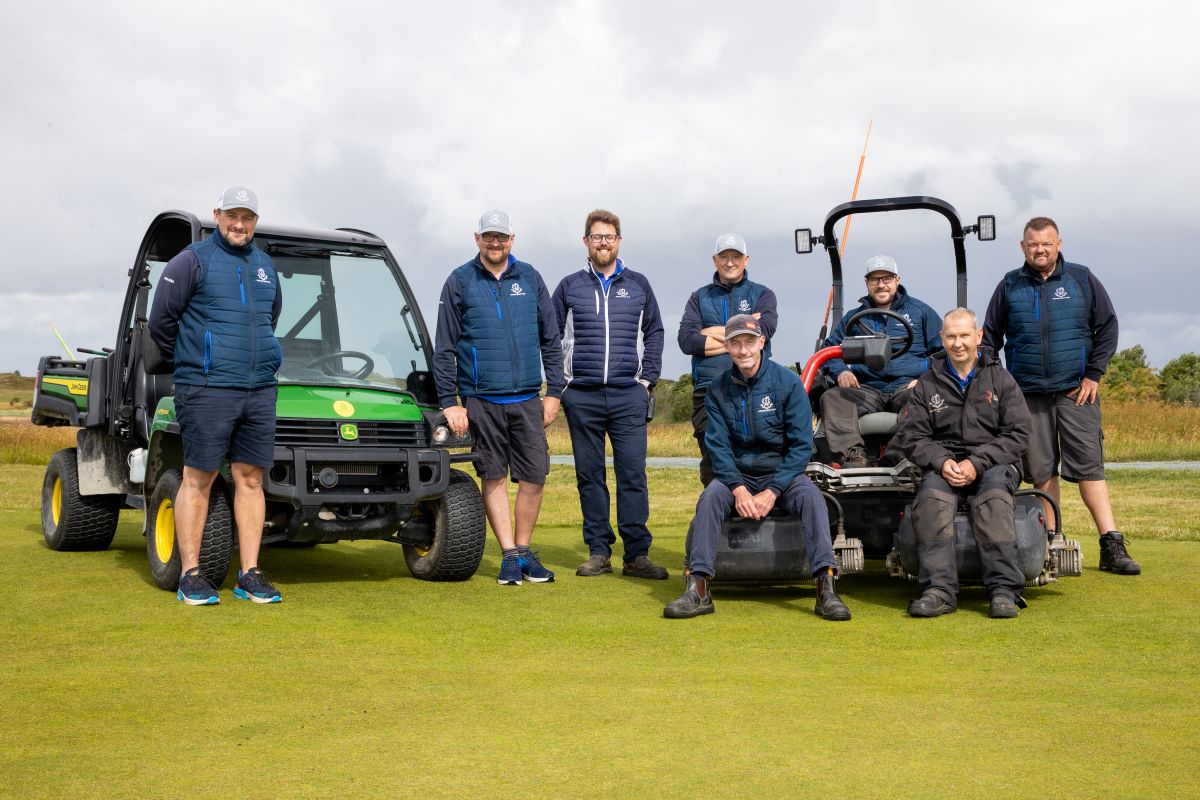
We’re typically a team of nine. That includes Alan Finch, our deputy course manager, who has been here 25 years, Harvey Sims, our first assistant, a greenkeeper mechanic and the assistant greenkeepers. We’re currently one person down after someone left, but nine is the usual structure.
How involved are you in the wider strategy of the club?
I’m very fortunate. My previous general manager, Steve Slinger, and our current general manager, Russell Main, have both been open in helping me understand the club as a business. One of the most important relationships at any club is between the course manager and general manager. I’ve worked hard to make sure that relationship is based on communication, honesty and supporting each other. The more I understand the business plan, budgets, rounds and strategy, the better course manager I can be. There’s no point asking for investment without understanding the wider business. I’m also trusted by the committee and the membership, and I’m fully involved in discussions about the next five to 10 years, including irrigation, practice facilities and water resources.
Has improving the rankings become a specific target?
When Steve came in, we worked with Legacy Golf, and that helped shape the One Hayling mentality and the wider plan for the club. Steve adopted the idea of top-50 thinking, which is about the level of quality from the second someone turns into the drive to when they leave after their round. Rankings are subjective, but they still provide a benchmark. Over the last two years, we’ve moved up 19 places in the England Top 100 Golf Courses rankings and breaking into GB and Ireland was huge for us. That was really satisfying, almost emotional at times, because it reflects the desire to keep improving. Being part of a club that wants to work through the master plan, improve water resources, strengthen the business plan and be a better club for members and staff is a huge driver for me.
What do you see as the major challenges facing greenkeeping?
Recruitment is a big one. We’ve worked hard to improve staff welfare and what we do as an employer, which has been great, but getting people into the industry and keeping them there is still a challenge. This isn’t always the most glamorous job, so when you find people with a passion for it, you have to stoke the fires of that passion. That means giving them opportunities to develop, giving them a career path if they want one and supporting them if they’re happy in their current role. Water is another huge issue. A lot of it comes down to understanding and trust from clubs and memberships. Everything we do has a thought process behind it. We don’t just throw something in the window and see what happens. It might not always be what people want in the short term, but there’s always a bigger goal in mind.
What are the next major projects at Hayling?
A lot of the master plan work over the last 15 years has been done in-house, which has been great for team development. We’re reaching a point now where some of the bigger-ticket items may require external help, and that’s exciting. We’ll also need to look at upgrading the irrigation system in the near future. For our site, water is absolutely critical, so making sure it goes where it needs to go efficiently is massive. We started water exploration work in 2024, though the journey began in 2023, to see whether we can source more water beneath the course. That’s an ongoing project and hopefully it will help us secure more water to improve and retain the quality of the course.
Quickfire with Graeme
Favourite spot on the course?
Probably around the 10th tee. It’s a high point on the course where you can see some of the best architectural holes, particularly 9 through to 14, which are among the most photogenic and stunning holes on the course.
Best part of the job?
Continually seeing the course improve and seeing us work together as a team. I love when we pull things off, especially winter projects, and see the team improving the place from the little details through to the big projects.
Toughest part of the job?
Dealing with negativity. That can come from staff, players or generally. Negativity can have such a detrimental effect on an individual and a team, so it’s something you have to manage as best you can.
Best piece of advice?
Have a work-life balance. When you come in keen as a course manager, you can easily create unsustainable hours for yourself, and that can be detrimental in the long run. For younger people in the industry, I’d say ask questions. It’s far better to ask again than go away unsure and miss the chance to learn something.
Career timeline
2006-2008:
Hankley Common, assistant greenkeeper
2008:
Pinehurst No. 7, intern
2008-2009:
Harbour Town Golf Links, intern
2009-2011:
Hankley Common, assistant greenkeeper
2011-2013:
Hankley Common, first assistant greenkeeper
2013-2014:
Tandridge Golf Club, deputy course manager
2014-2017:
Camberley Heath Golf Club, deputy course manager
2017-2020:
Swinley Forest Golf Club, first assistant greenkeeper
2020-2021:
Windlesham Golf Management Ltd, assistant course manager
2021-2023:
Hayling Golf Club, deputy course manager
2023-present:
Hayling Golf Club, course manager
Making the most of BIGGA
Graeme’s career has been shaped by a willingness to take every opportunity to learn, network and step outside his day-to-day environment. That has included more than 20 tournament volunteering experiences, among them three of the four majors and the Ryder Cup, while BIGGA has been a constant presence through FTMI, the Bernhard Delegation, scholarship opportunities, BTME and The Open volunteer support team.
For Graeme, those opportunities have helped build confidence, develop contacts and gain exposure to different ways of working across the industry. It is also a message he now passes on to the team at Hayling. “The one thing I try to push with the guys here is to utilise everything BIGGA has to offer,” he said. “I’ve been fortunate to do the volunteer support team at Portrush, FTMI, the Bernhard Delegation and scholarship opportunities, as well as attending BTME. Everything BIGGA has to offer, I try to utilise as much as possible, because it’s there for us to use and benefit from.”
Author

Hayling at a glance
Founded in 1883, Hayling Golf Club is one of the south coast’s most distinctive links courses, set on Hayling Island with views across the Solent to the Isle of Wight. The course has architectural roots involving J.H. Taylor and Tom Simpson, and its modern direction is shaped by a desire to restore and strengthen its true links characteristics.
Built predominantly on shingle, with areas of dune sand on the west side, Hayling presents a distinctive agronomic challenge. It drains quickly, stays playable through difficult winters and attracts heavy traffic when inland courses are closed. That resilience contributes to significant footfall, with the club recording around 52,000 rounds last year. For Graeme and his team, the challenge is to maintain standards while continuing the transition towards finer grasses, lower inputs and firmer, faster links conditions.
The course is recognised among England’s Top 50 and the Top 100 links courses in the UK and Ireland.