
Who needs bunkers?
For some of you, a golf course without bunkers might seem unimaginable. They can be awe-inspiring and terrifying at the same time. They can be the first thing you think about when you hear a club’s name pass another golfer’s lips.
Remove the sand, the naysayers might tell you, and you lose the very identity of the game itself. Where is the strategy? Where is the challenge?

But there are classic courses in Great Britain & Ireland – like Berkhamsted and Royal Ashdown Forest – where you won’t find the hint of a bunker on their 18 holes. The former, designed by a combination of Willie Park Jr, Harry Colt and James Braid, hasn’t had them for more than a century, while the latter can’t. The forest is protected by an Act of Parliament that forbids anything artificial being constructed on the land.
While other courses build their character through ingenious pot bunkers, devilishly large shapes or perfectly placed hazards, what you’ll find in Hertfordshire and East Sussex are natural contours, hollows and, in the case of Royal Ashdown Forest, lots of heather.
And don’t be mistaken. Neither course is remotely gentle.
“Rather naively, and much like most people, I assumed the course would play easier without bunkering,” says Berkhamsted Course Manager Scott Gardner. “As a self-confessed former good golfer, I was quickly humbled after playing the course myself upon my arrival.”
Royal Ashdown Forest Course Manager Dominic Lewis adds: “If you look at the golf course, and you didn’t know it, you’d say, ‘OK, it’s got no bunkers. It’s not that long on the scorecard. It’s going to be an easy golf course. It’s anything but.”
At each course, the challenge is dramatically different – with nature providing the defence.
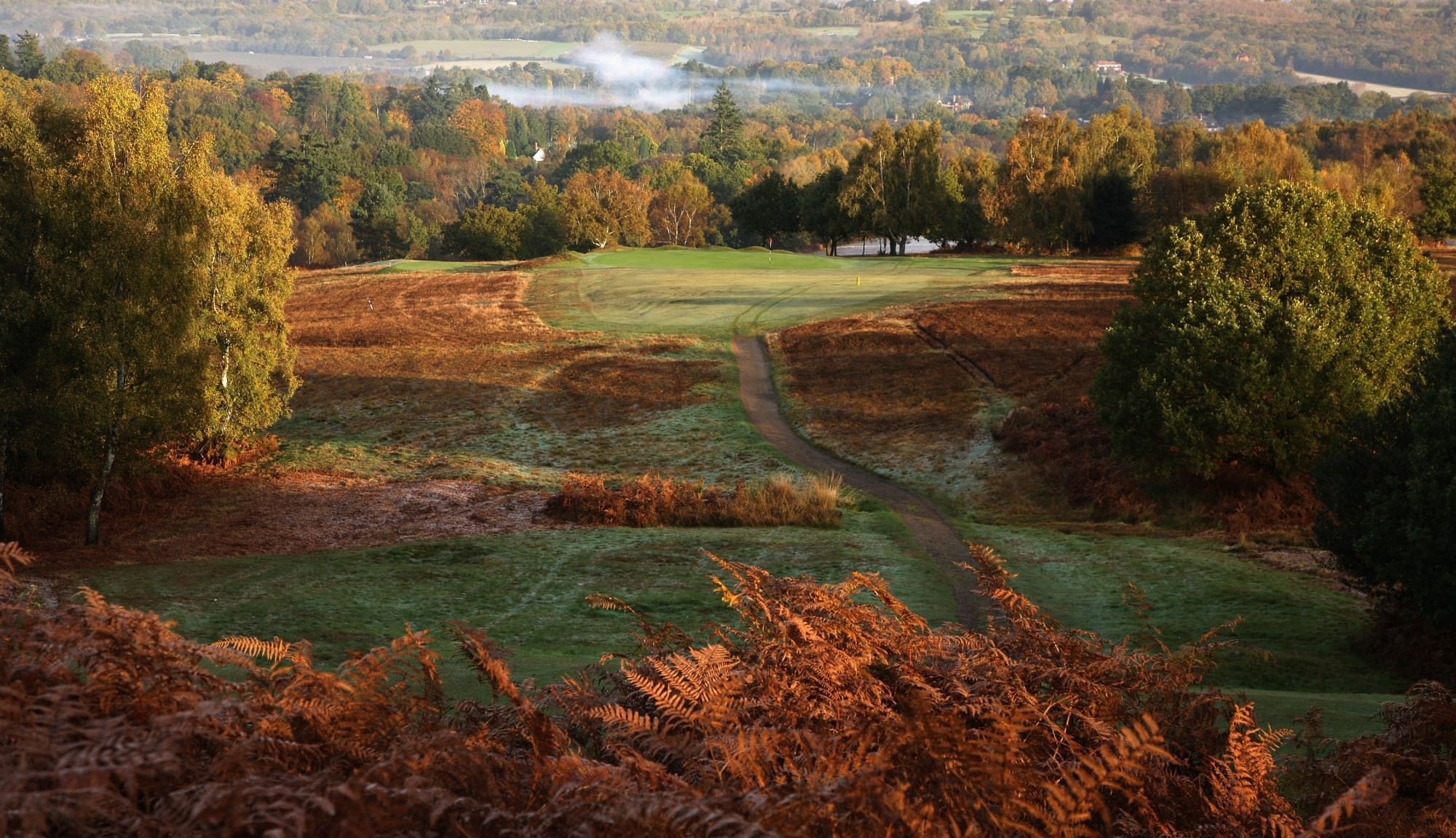
“We have lots of heather. It’s a heathland golf course, and there’s heather on every hole,” says Dominic. “We’ve also got streams and dips and the natural contours of the land, which really protect it.”
He continues: “A well looked after, well-manicured bunker for a good player is not that much of a hazard. In the heather, you can think it’s a good lie but your club gets tangled in it, and once it gets going, once you get some life into the heather, it’s so hard to get out of. Firstly, you’ve got to find the ball, which can be tough, and then you’ve got to get out of it. When I first came here, I was told that once you’re in the heather it doesn’t matter what lie you think you’ve got, get your wedge out, just get it back in play and start again. It can be brutal. Over the years, we’ve done a lot of work on the grass that grows around the heather because, if left to grow with any vigour, it makes it even more of a hazard and it also stops you from seeing into the heather from the fairway if you’ve got long grass around it.”
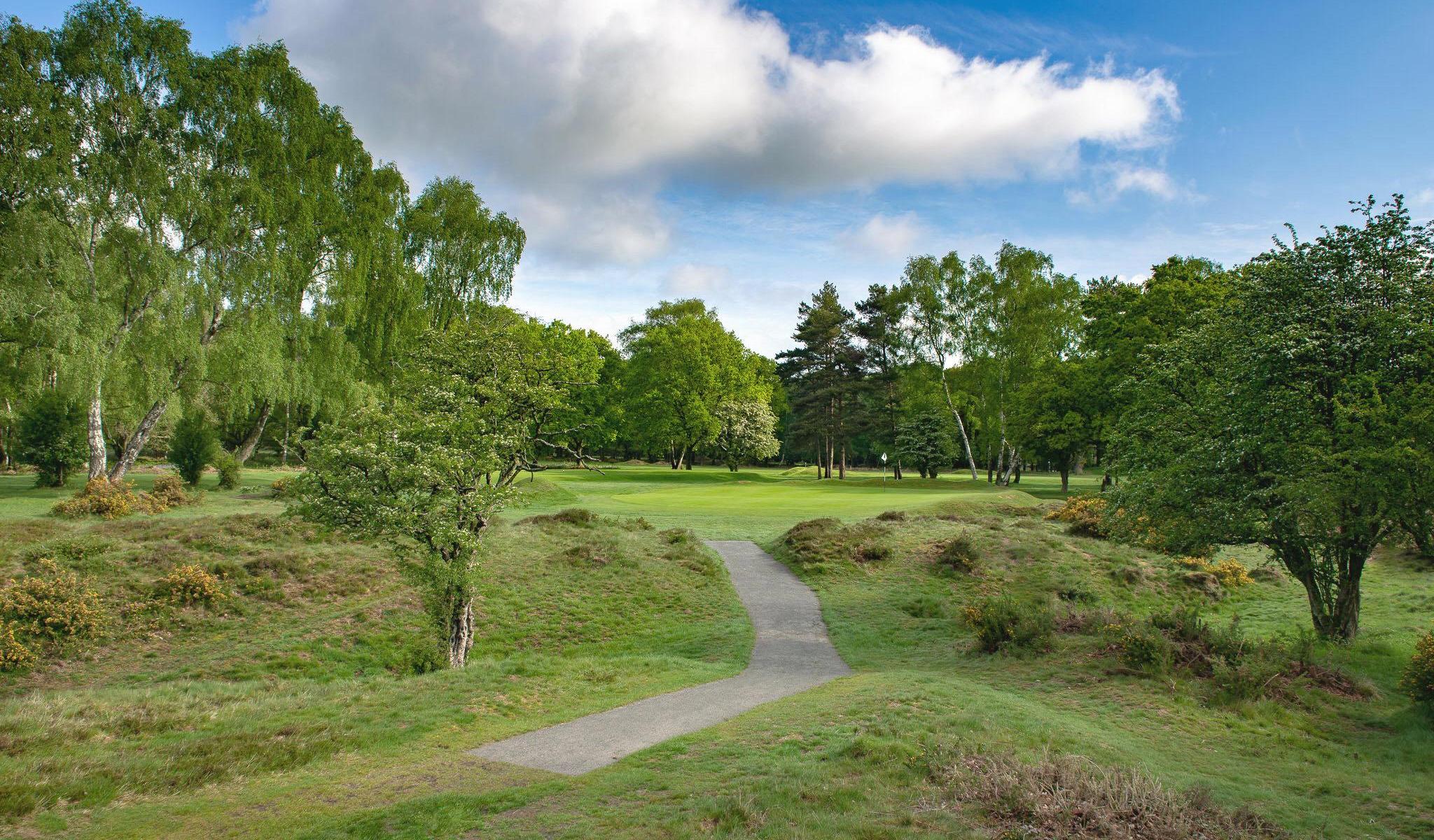
At Berkhamsted, meanwhile, it is the ground game that dominates. “The severe moundings and tricky lies can often affect stance,” explains Scott. “In some cases, the mounds offer 60-to-70-degree slopes, and their many accompanying hollows often make for a serious test to a short game around the greens here.”
Scott believes having bunkers might sometimes make things easier for golfers. “Genuinely, some bunker shots (with the exception of being sandwiched against a revetted face) would certainly offer an easier up and down with a more consistent lie.”
So what’s at the heart of both courses? It’s the idea that the natural environment can be just as much of a test of golf as bunkers. If you leave the safe confines of the fairway, you can find yourself in deep trouble.
As Dominic says: “It’s [the heather] almost like a shot penalty all the way down the side of the fairway. That heather will then grow three or four inches through the season. You can have 10 to 11 inches of deep heather, which is quite penal.”
It’s a test that also stands up at the highest level. Each year, the Berkhamsted Trophy provides an exacting early season examination of some of the nation’s best amateur golfers.
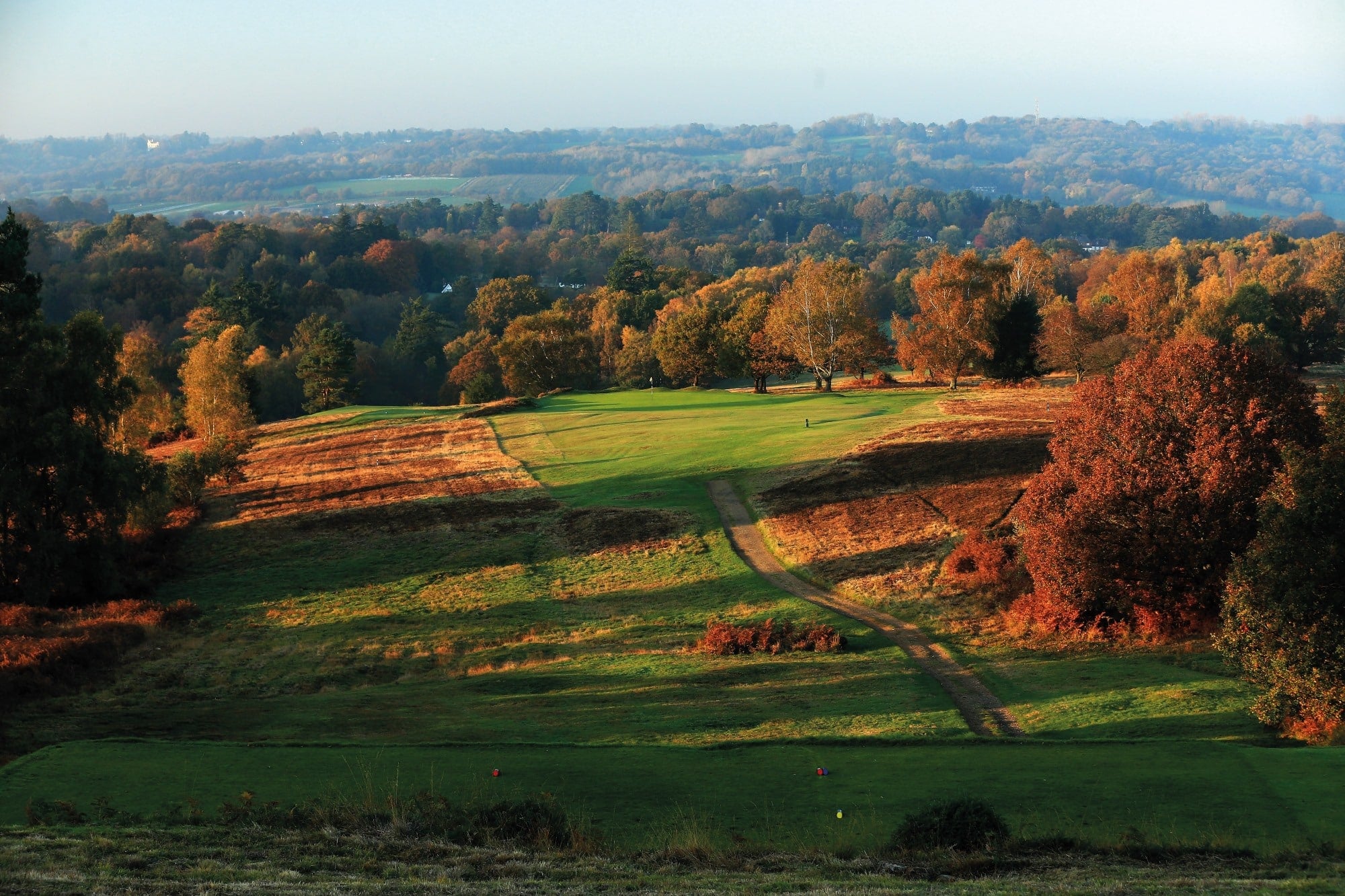
While at Royal Ashdown Forest, qualifying for the Brabazon Trophy – England’s premier amateur stroke play tournament – saw the layout at its best.
“We had some of the top amateurs in the country trying to qualify for the final and we had three guys on one-under, who were the three leaders,” Dominic points out.
Scott adds: “The annual Berkhamsted Trophy is proof that when visited by some of the UK’s best amateurs, the very modest length of 6,700 yards is more than enough of a test. A massive part of this is down to the mounding that is strategically placed on fairways, roughs and greens, and this is testament to the original design and later the sympathetic management of such unique features. The golf course often plays firm and fast due to the soil substrate with many tight tree-lined holes. This together with firm greens can be a serious test for any golfer.”
It’s not just the strategic test that benefits from being bunkerless, there are also maintenance advantages. Greenkeeping teams at courses with lots of sand traps can spend hours and hours raking, strimming and cutting. That’s before you even start talking about winter renovation projects. Not at these two clubs.
“There is no getting away from it, when you’ve got a lot of bunkers and expectation from members, a lot of manpower goes into it,” Dominic says. “We don’t have the daily bunker raking and maintenance, and that can be great. After heavy rain at a previous club, I would have to go out and pump out water and we would rake sand back up. That would be a lot of manpower to get the course open and get it in play. Whereas if I’ve had really heavy rainfall here, I can send one man out with a swish to walk around, move markers, swish tees, swish greens and that can be a course set up. In that respect, it’s a lot easier. It takes that rush out.”
Scott says: “We don’t have to factor in ongoing bunker maintenance (apart from three bunkers on our short game area) or reconstruction works, such as building faces, sand levels, drainage, new liners, sand contamination, raking, edging, weeding, blowing or switching bunker sand splash off greens.”
That’s not to say, though, that bunkerless golf means maintenance-free golf. While greenkeepers at both clubs are not spending hours with a rake in their hands, there is plenty of labour required. But their time is spent in other parts of the golf course.
“We do a lot of work on the heather,” Dominic says. “There’s a lot of strimming around it, controlling the grass with lots of spraying. We have to get in there and hand weed the gorse and stop that from taking over. Luckily, we have an artisan section of 75 members and they all have their own areas of heather which they keep clear. Without them it would be such an uphill battle. They do so much for us.”
At Berkhamsted, it’s those fabled mounds and hollows that provide the difficulties.
“Our mounds are far from maintenance free as they’re not all cuttable due to their sloped construction,” says Scott. “We strim these once every week and use growth regulators that we apply with knapsacks to control growth and help with consistency. It also gives us a serious challenge to spray our greens as we have a lack of run-off areas. We often have to navigate the slopes by lifting spray booms, and it also creates pinch-point areas for walk offs from greens to tees as the mounds practically horseshoe each green. It can be difficult turning with the greens mowers. The mounds are visually stunning, though, just given how unique they are, and you really feel a sense of history when looking at them.”
So what does all this prove? What Berkhamsted and Royal Ashdown Forest show, along with other bunker free courses like Minchinhampton, Piltdown and Kington, is that just because there is no sand, it doesn’t mean the challenge and charm are absent too.
It just takes on a different shape.
Author

Meet the experts
Scott Gardner joined Berkhamsted as course manager in 2025, having previously had spells at Swinton Park, Northenden, Heswall and as a greenkeeper for the Evergreen Turf Group in Melbourne. Berkhamsted was opened as a 9-hole course in 1890, expanding to 18 in 1910.

Scott Gardner
Dominic Lewis has been the course manager at Royal Ashdown Forest for seven years. Both courses at the East Sussex club – the Old Course and West Course – are rented from Natural England and are part of Ashdown Forest.

Dominic Lewis