
The World of Greenkeeping: Garðabær and Kópavogur, Iceland
Kate Stillwell's life in greenkeeping has taken her across multiple continents and encompassed a breadth of experience in tournament preparation, construction projects and leadership roles. Having grown up around the game, with greenkeeping and agronomy firmly part of her background, she has never been afraid to follow an opportunity when it feels right. Even so, becoming head greenkeeper at GKG in Iceland has provided challenges she had never encountered before.
What has surprised you most since arriving in Iceland?
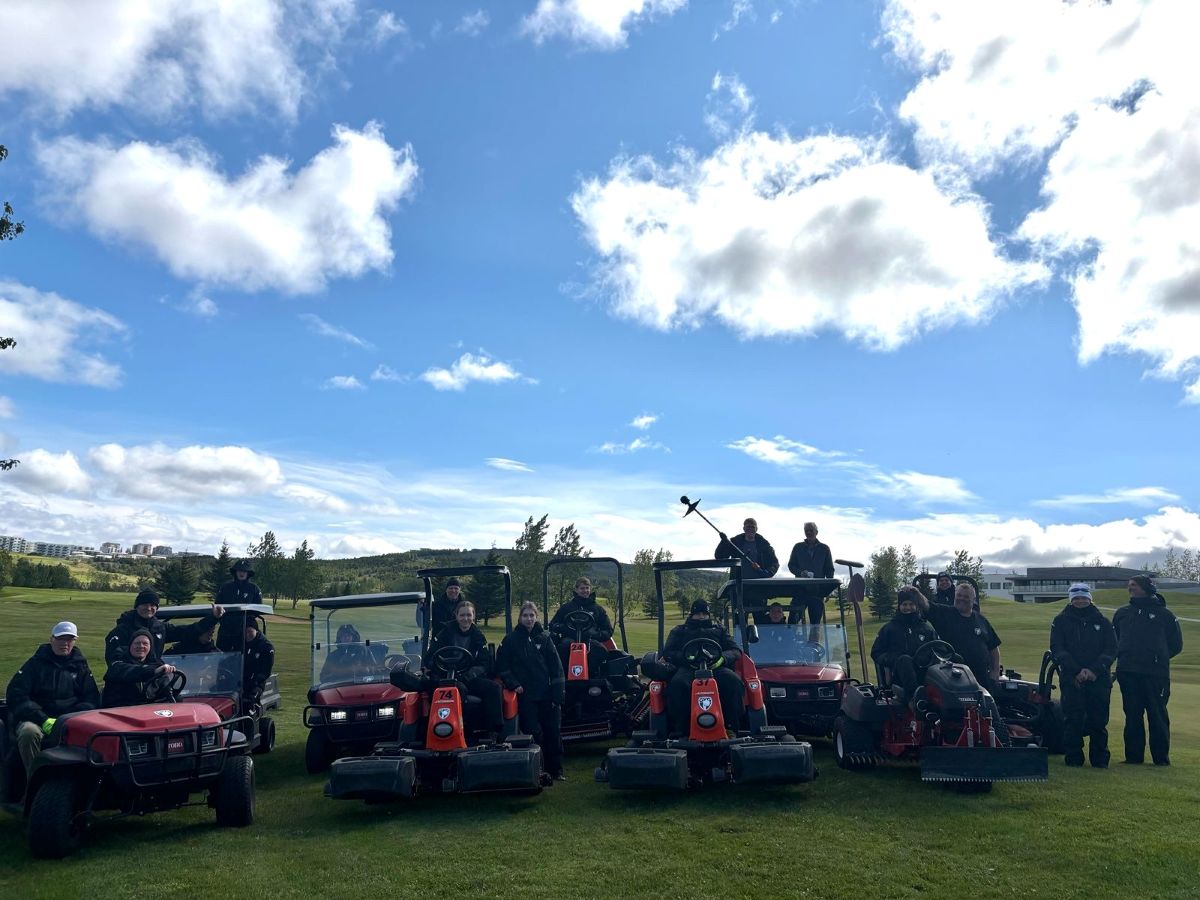
There have been lots of surprises! Staffing has been quite a big one. We have a huge number of seasonal staff, including teenagers coming through the Youth Programme, which is run through Garðabær and Kópavogur, and you only have them for three or four months. Training them takes so much cohesion within the permanent team. Everyone has to be on board and in good communication, because you need that united front. Getting supplies onto the island is another thing that was harder than I gave credit for, so you have to plan ahead.
Agronomically, what have you had to adapt to?
The frost heave is like nothing I've ever seen. It can heave about half a metre, and then you just roll it back down. The first things that go out at the start of the year are the fairway roller, tee roller and greens roller, because if you go onto greens or tees before they've been rolled, you might not get those wheel marks out for the rest of the season.
The black sand is another thing. All we really have available is basaltic sand, so the pH is more alkaline. They put black sand on to warm the greens up at the start of the year and get the grass growing, which is something I had never dealt with before.
Who was on hand to help you settle in when you first arrived?
The previous course manager, Gummi [Guðmundur Árni Gunnarsson], had been here for 25 years at GKG and has worked on golf courses in Iceland for 40 years. When I first came in, he was very hands-off and gave me loose reins, but he would sit opposite me in the office and drop little bits of knowledge in.
He might ask whether I had considered topdressing, and I would ask why. Then he would explain it could help warm the ground up. With fairway rolling, I was itching to get out, and he would suggest taking a fork out first to see how deep the frost was.
What does good look like in Icelandic conditions?
The Icelandic are known for their metrics. They love technology, so we do a lot of measuring, including TDR readings and clip volume. We’re trying to get more fescue into the greens, and I’ve found the STERF turf trials (Scandinavian Turfgrass and Environment Research Foundation) over here fascinating. Bjarni Þór Hannesson looks after the trial plots and has been hugely instrumental in their success, with the trials having been under threat in Iceland before he took hold of the reins. You can see how different species respond to the conditions. One year creeping bent might perform well, another year fescue comes through strongly, then the poa can struggle. It really depends on frost, snow and wind.
Once things get going after a month, the greens normally putt true and putt well. If they’re rolling between 9 and 10 on the Stimp, people would be chuffed to bits.
Does Iceland change the way you think about planning?
The main thing I've learned here is to plan ahead for every eventuality. Icelandic golf is incredibly passionate. If you can make a good argument for something, the club will back it. If you need netting for the greens, electric robots or seed in reserve in case you have a rough winter, they understand that. They know you need a lot of tools in the toolbox.
What does winter look like for the team?
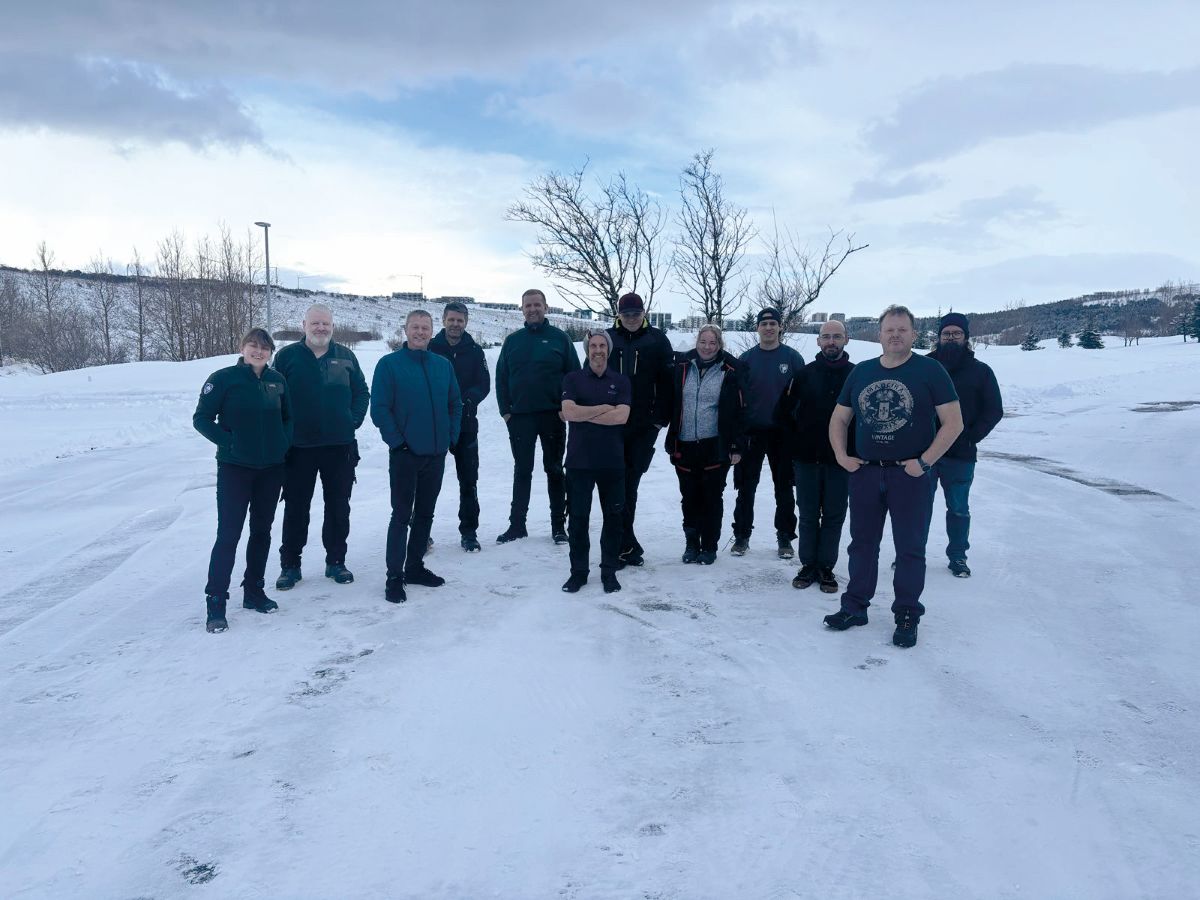
Over winter, we have five staff. We save jobs for winter, so it’s the usual things like painting benches, bringing in bins and ball washers, painting attachments and servicing machinery.
We maintain pathways, plough when needed and carry out construction work. Our mechanic services machines and goes on training courses, and we also do a lot of servicing of irrigation, testing rotors outside of the workshop, rebuilding them and preparing rotors for upgrades the next season. Gummi can work on construction, digging bunkers and putting pathways in, while our horticulturist is always doing tree work.
How strong is the Icelandic greenkeeping community?
They are so tight-knit. The golf course next to us had a problem last year with serious winter desiccation. They rang up and asked to use our seeder, and of course the answer was yes, because it could be us next year. Another course down the road had the Icelandic Championships and one of their machines was down, so they asked to borrow one of ours. Absolutely, take it.
There isn’t one golf course you wouldn’t bend over backwards for, because they would all do it for you too. It sounds cheesy, but it really is a big family over here.
Was there anyone who helped you settle in away from the course?
One of the first things they did when I came over was take me to meet a Scottish guy called Chris Elrich, who was working at another golf course at the time and now has his own business. He’s like a brother I never knew I needed. If I’ve had a bad day, I can ring him and say: 'You’ll never guess what happened'. He’s there through thick and thin, and he warned me about so many things with the weather. He really looked out for me when I first got here.
What advice would you give to someone considering an overseas role?
I would encourage everyone to travel in greenkeeping, but all my risks have been calculated risks. I knew I was moving to a country where English is widely spoken and to a golf club that was well equipped to welcome me from abroad and all that involved, assisting with finding me a home, a car, a social security number and a right to work within the country.
They were interested in my way of living as well. It wasn’t going to be work, work, work the whole time. I still had a home in England, which I now rent out, and I knew I could move home if anything went wrong.
Kate on GKG
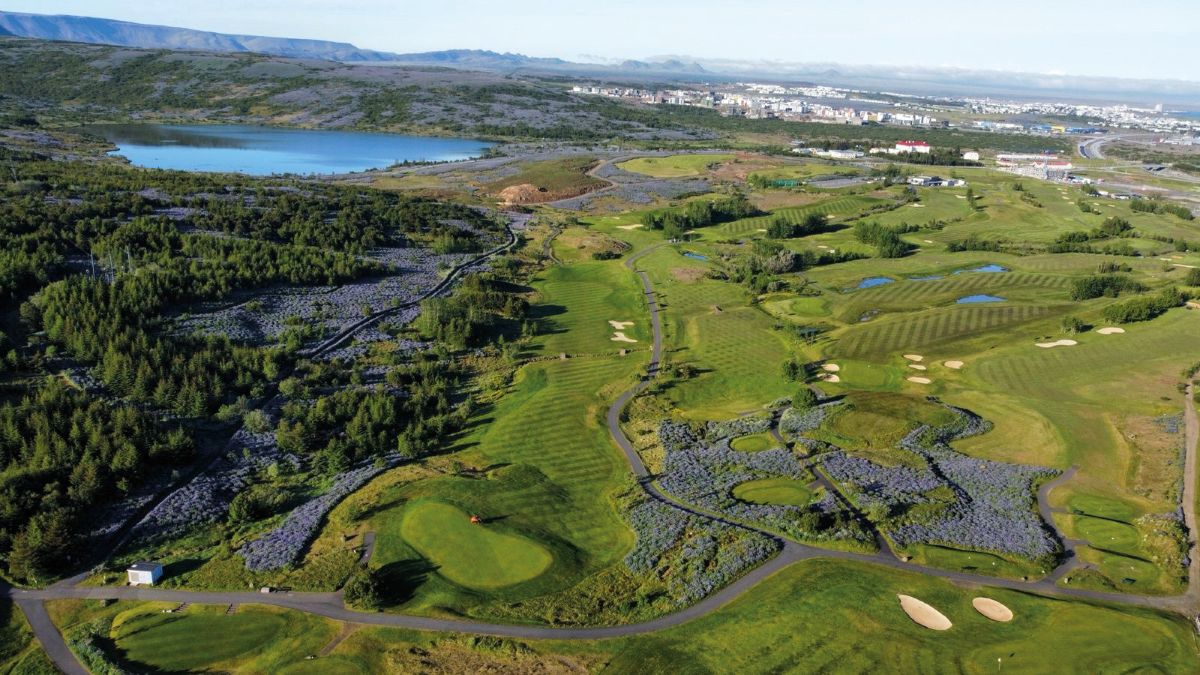
GKG is parkland, and one of the unique things about the club is the diversity of people playing. We’re nearly 50-50 in terms of male and female golfers, and the volume of golf is huge. Leirdalur, our 18-hole course, has around 34,000 rounds over five months, while Myrin, our 9-hole course, has around 36,000 rounds. The long daylight hours were a real surprise, because golfers can and do play 24 hours a day. We have 600-plus people playing in the club championships and they are finishing on the course at 23.00.
We also have a huge children’s programme, with around 900 kids training in the 16 underground simulators over winter and outside in summer, which means the clubhouse remains active throughout the year in a way that’s unique within Iceland. On the 9-hole course, we make things quite sympathetic. It’s nearly wall-to-wall cut, because we want people to get around, enjoy it and have fun. The 18-hole course has more definition. We have GEO certification, which we’re super proud of, and we’re now trying to create wildlife corridors that flow from one hole to the next. We’re also planning new maintenance facilities of 1,540m², with a lot more space for electric equipment and the robotic fleet, which is expanding. The 9-hole course will also move from its present location into a more diverse area, with a more dynamic landscape in the hillside beside us.
Author

About Kate
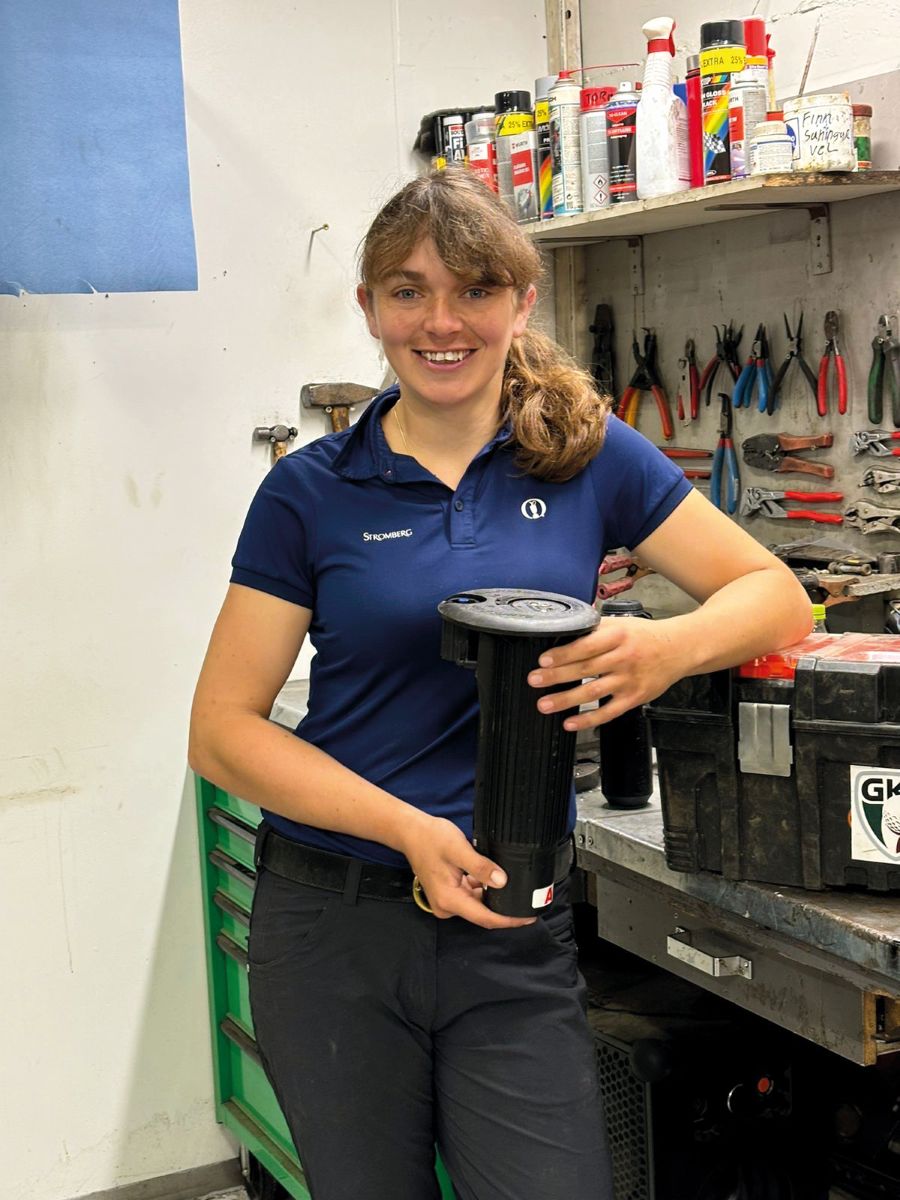
Kate Stillwell grew up surrounded by golf course management, with her father’s career as a leading tour agronomist giving her an early insight into the profession. She has since built a varied CV of her own, working across tournament preparation, construction and senior greenkeeping roles, including experience at The Inspiration Club near London. Her move to GKG has taken that international outlook further and she is now firmly embedded in Icelandic golf, sitting on the Icelandic Greenkeepers Association board and contributing through the Icelandic Golf Union, while building strong links across the country’s close-knit greenkeeping network.