
Tackling golf's water security issue with data
Water security has become one of golf's most pressing challenges, with increasingly dry summers placing greater demands on irrigation supplies.
At Kenilworth, a project to monitor the water leaving the course is helping the club understand what could be captured and stored for future use. Here, Course Manager Steve Hardy explains what he and Dr Tom Young, from The Environment Partnership (TEP), will share during their presentation in Harrogate.
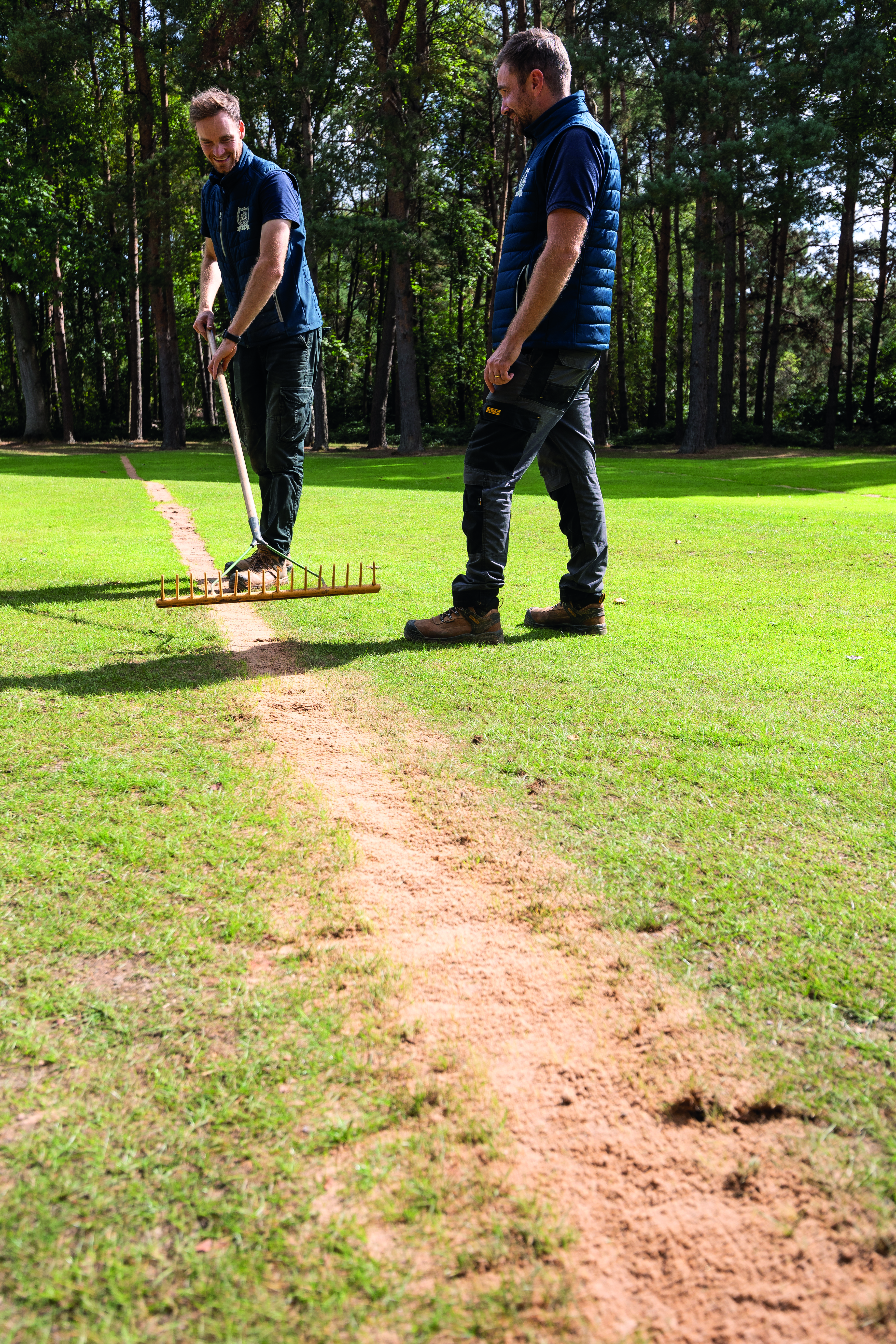
Kenliworth Golf Club invested in a trencher to facilitate in-house drainage work
Can you tell us about the presentation and the context behind it?
For the last two or three years, TEP has been helping us monitor the water leaving the golf course through our drainage outlets. Tom is going to present some of the data we have captured and explain the different mechanisms we have been using. I will support that from the golf course manager's perspective, looking at the club's strategic objectives, our irrigation requirements and why securing water for the future is so important. We will also touch on the extreme summer we have experienced and what future demand might look like.
How would you characterise the importance of water security in the golf industry?
Water needs to be at the top of the agenda. It should be a strategic item that the board recognises and reviews every 12 months. It is not a tick-box exercise that disappears once you have completed a project. Clubs need to keep asking what their resilience plan looks like and what would happen following back-to-back droughts or if the Environment Agency introduced restrictions.
What has the monitoring at Kenilworth shown you?
One catchment area has been monitored for the last 18 months. We know the average annual volume is between 5,000 and 6,000 cubic metres of surplus drainage water. That water currently leaves the site, enters the local network and most likely contributes to local flooding. We still have four other catchments to monitor, and that was not even the largest one. The data has also reinforced that the peak opportunities to capture water come during storm events. There is not a gradual flow from the existing network throughout the year. It comes in surges, which has been quite stark to see.
Why is collecting that data so important?
The aim is to use the data when we approach the Environment Agency about an abstraction licence. We will be able to show how much water flows through the site during winter, how much we want to capture and that the water is genuinely available. That gives us a far stronger case than simply asking to increase our abstraction allowance. We want to capture that winter water, store it in a reservoir and use it when it is needed. It feels like a more sustainable model because we are working with water that is already passing through the golf course.
Reservoirs are increasingly being discussed by golf clubs. Is building one only part of the answer?
I hear course managers, greenkeepers, greens chairmen and boards getting onto the reservoir topic quite quickly. That is great, but how are you actually going to fill it? There is no point raising half-a-million pounds to build a bathtub if you have not got a tap to fill it. We are working from the other end and asking how we would supply a reservoir once we reach that point. It does not simply fill from the rain that lands directly on it. If a club still relies on the same borehole or mains supply, it has not necessarily solved the underlying problem.
Is tackling this problem about infrastructure or daily practices?
It's both. We will talk about some of the quicker wins, including clubhouse roofs, car parks and other hard surfaces. We have quantified some of those opportunities at Kenilworth. They still require infrastructure. The water needs to be captured, piped to a central location and moved around. Storage may need to be lined, and algae may need to be controlled. These things can look straightforward initially, but there is quite a lot behind them. The important starting point is understanding the whole site and identifying where the opportunities are.
What do you hope people will take away from the session?
Every golf course is different, but I hope people will begin thinking about where their water comes from, where it currently goes and what they could potentially capture. There is not necessarily a shortage of water. We may have to accept that the water available to golf in future will be of a different quality. It could come from roofs, car parks or treated wastewater rather than a potable supply. If clubs want the quantity they need, they may have to think differently about the sources they are prepared to use.
Author
