
Moorland or heathland? Why golf’s labels aren’t always what they seem
In the first instalment of a two-part series, ecologist Rowan Edwards explains why our categorisation of moorland often differs from nature’s and how heathland habitats really work
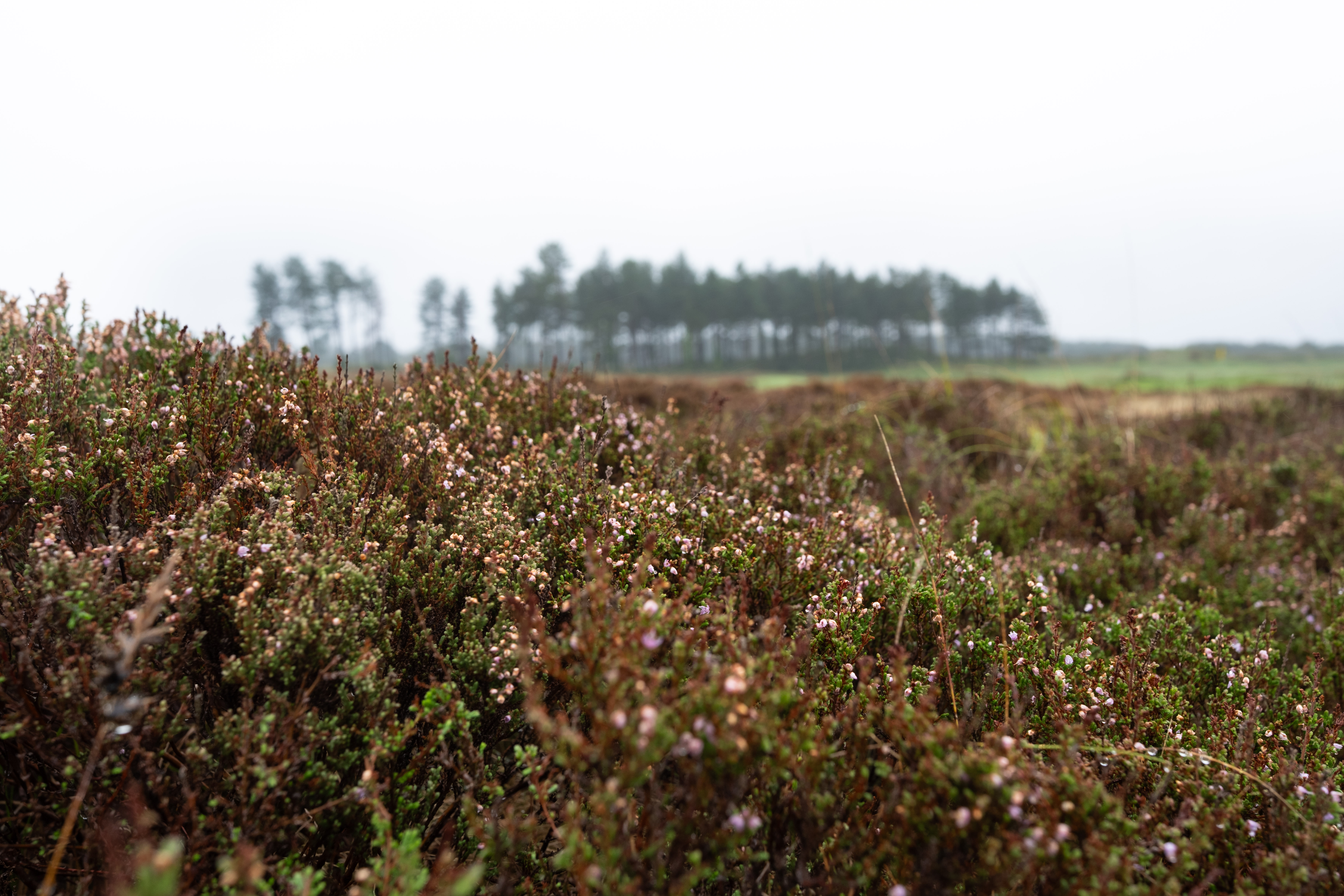
Golfers have a clear picture of moorland and heathland courses. Moorlands especially sit high and exposed. At both, the turf feels springy underfoot, while heather, gorse and open views frame a game that seems closer to the wild than more manicured parklands.
But ask an ecologist and these familiar labels become more complicated.
For Rowan Edwards, who consults with many of the UK’s leading heathland and moorland golf courses, the way golf talks about moorland and heathland does not always match the way those habitats are defined in nature. And there are subtle distinctions between the two.
Courses can be sold, loved and recognised by golfers as moorland while, ecologically, behaving much more like lowland heath. Others may feel bleak and upland without having the wet soils, peat deposits, vegetation structures or climates an ecologist would expect from moorland.
The distinction matters because it shapes how clubs manage the land. Drainage, tree planting, fertiliser, lime, watering, heather cutting and even bare ground can either support these fragile habitats or gradually erase the qualities that made them special.
How important are the soil type, altitude, rainfall exposure and vegetation to distinguish moorland from heathland habitats?
Ecologically, these properties are what define it. Overall, I expect my moors to be wetter, or more exposed, or colder - something along those lines - to distinguish them.
If a course has changed significantly over time through tree planting, drainage, fertilizer use or mowing regimes, can it lose its moorland or heathland identity? Absolutely. This can happen very, very quickly and if you do the wrong thing, particularly if you're altering the soil chemistry, it can be extremely hard to reverse. If you put down extreme amounts of fertiliser or lime or you over-water, you can destroy heathland in a matter of a couple of years. Pathing material is the big alkalinity problem for golf courses and nature reserves.
Here a few key factors to bear in mind:
- Drainage – this is not necessarily going to change your heath. Heathland can cope with wet and dry. Your species composition will change, and you'll definitely swap things from wet heath to dry heath.
- Tree planting – don't plant trees on heathland. Just don't. We're trying to get rid of them. Don't do it. You can plant conifers if you want to have something. It's the leaf drop that matters. The conifers will fertilise less, but it's still not good. Definitely don't plant dense stands of conifers.
- Fertilising – if you fertilise your heather, you might as well just give up and call it grassland, because that is what it's going to be in a couple of years. Fertiliser will very quickly favour the grass. Heather and grass are in constant competition. If the conditions are favourable, your grass will win. If the conditions are unfavourable, your heather, which is a dwarf shrub that likes to live in the extremes, will survive and will be the predominant species.
- Watering – it does exactly the same as fertilising. If you water it, you remove the limiter. You have to be especially careful if you are going to be watering with alkali water. There have been some clubs that have been using mains water on their heather, and they've tested it with pH strips and found out it's alkali. So they've been inadvertently destroying the heather in two ways, and that also counts if you're watering areas adjacent to your heather – your soil chemistry is going to spread a couple of meters. They've swapped to on-site water capture. It isn't an option for every course, but they managed to make it work, and they've had very good results.
- Mowing regimes – if you mow your heather at the wrong time, if you mow it at the wrong regime, the wrong strategy, you will end up destroying it. If you don't mow it enough and short enough, you will get very, very dead, damaged heather that will just break up and die all at the same time. And then you let grass come in. If you mow it too frequently and too low, you will let grass come in because the heather won't survive, and the grass will.
Golf clubs should trust greenkeepers who have to learn how to manage heather. A good heathland course, regardless of whether it's heathland or moorland, is going to have to have a very good head greenkeeper and green staff in general.
What are the biggest ecological risks when golf courses try to improve or modernise these habitats for playability, presentation or commercial appeal?
The big one here is bare ground. Golf courses tend not to like bare ground. It's typically seen as unsightly, something that should have been fixed. Why isn't it turfed already? Everybody wants a fast, immediate response that removes bare ground.
Ecologically, destroying your bare ground is the worst thing you can do. There's been a lot of fuss about pollinators and providing plants for pollinators, and given that my other day job is pollinator monitoring and running a consultancy for pollinator strategies, I'm literally writing the red list for the bees, wasps and ants at the moment.
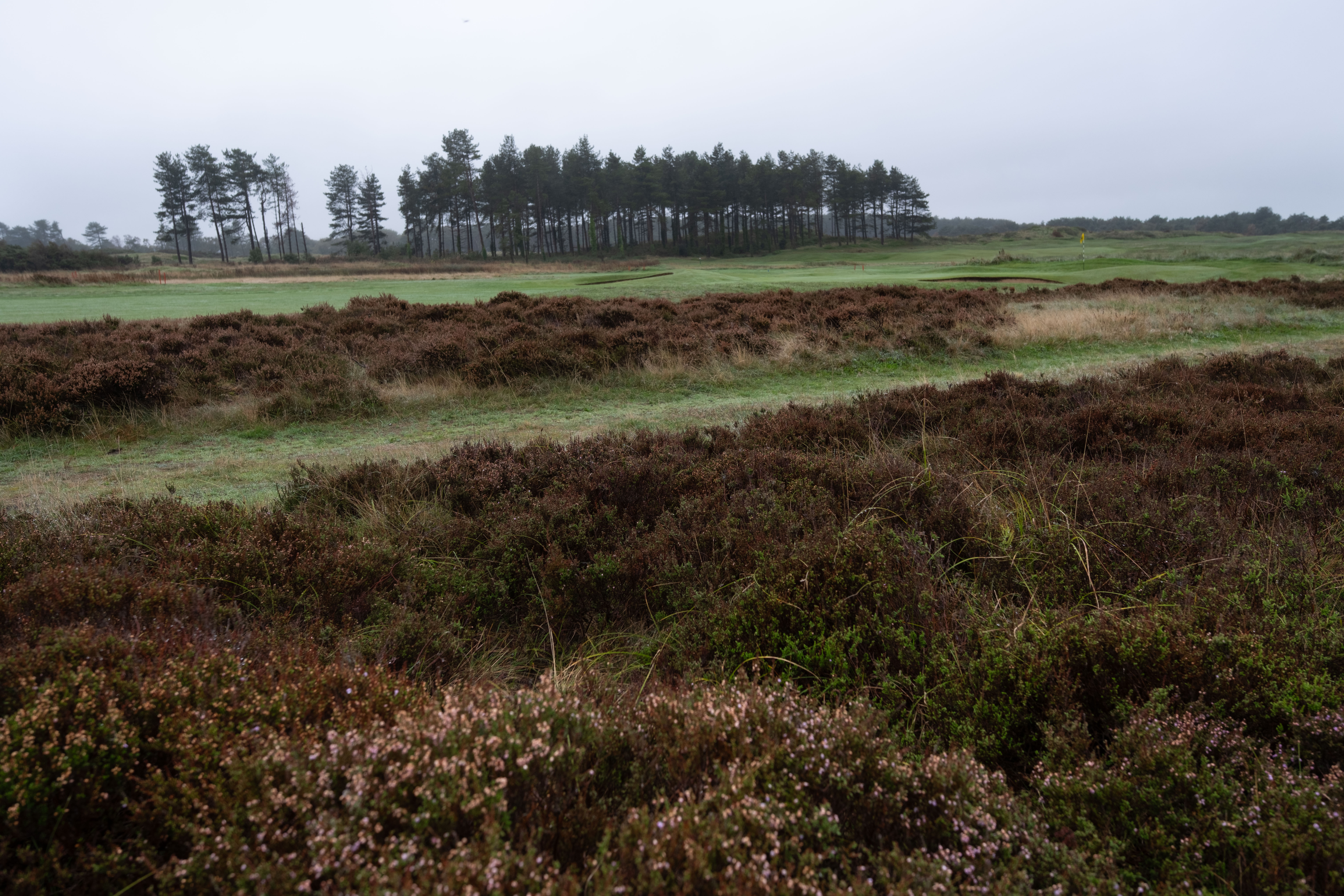
The biggest problem we have now is not floral resource; it is bare ground for nesting. That is what we do not have, and if you don't have your bare ground in the right geology, in the right conditions for nesting, your entire food chain collapses.
Insects are pretty much the first, or near the bottom, consumers of plants, so they are foundational to your entire food chain and food web. Not having bare ground reduces the number of insects you have and then reduces the number of everything that stacks on top of that. Bare ground invertebrates also tend to be predators of other pest invertebrates.
There's no hard science on the amount and what and why and where. It's still very nebulous. There is some good science that says it does not reduce the number of outbreaks of pests you get, particularly in manufactured environments, which a golf course still is. However, healthy biological control – a healthy food chain – can reduce the probability and severity of large outbreaks.
There's a lovely study we have a presentation on about woodland ants that farm aphids. Sure, overall it slows down your conifer production by about 10 years to cropping, but when invasive pests arrive, the woodland stands with ants in them fare significantly better than those without because they protect the stands, because that's their farm.
Next is the lack of desire to reset things. Everything has to be perfect all the time. Everyone wants everything in manicured condition. That's not going to work. You need to keep succession going. You need to have a plan: that area's been looking great for 10 years, but it's time to reset it. Yes, it's going to look a little nasty for the next couple of years, but then we'll get 20 years out of it, and we're doing little bits of resetting as you go along.
Presentation is going to suffer. I don't really want to say that playability should ever really suffer, because at that point you're starting to encroach on something that I very strongly believe, which is that this is still a golf course. It needs to be playable for golf. There's no point saying ecology takes precedence over golf, because unfortunately ecology doesn't really bring in money.
I am very much a firm believer in the idea that if you put in careful consideration, and you have helpful managers and farmers available, that you can get a lot done by working alongside someone rather than working against them.
I do want to say that there is a lot of doom and gloom and lots of scare stories about insect apocalypses and so on but England is actually doing really well. It's not perfect and we still have an expanding population, expanding development and expanding demands upon the landscape, but overall, it’s not bad.
Generally, the management of heathland is messy. Typically, golf courses don't like doing what we tend to do on heathland reserves, which is very very brutal. I mean, I've used bulldozers on quite a few heather reserves because it ultimately produces a really nice result. But doing something of that intensity and scale on a golf club would be an absolute no-no.
Management of a heathland is messy and it takes time. Clubs frequently don't want any mess and they also want it done instantly.
So you lose out on the succession and you lose out on the bare ground and you lose out on the variation in structure and assemblage that you would otherwise get.
Once you lose it over a long enough time period, it's gone forever because you've lost the botanical factors.
How a heathland habitat changes if left to its own devices
In a natural environment, you typically have two different states. The first is the edge-of-range state, where you have tundra-style shrub habitats and trees cannot grow because the ground is too cold and there is insufficient sunlight. Heather, being a dwarf shrub, has evolved to thrive in these conditions.
Over time, as the climate warms, trees begin to take over, leading to the forestation of places such as England and Scotland. Heather then becomes part of a transitional habitat, supported by its ability to maintain a long-lived seed bank.
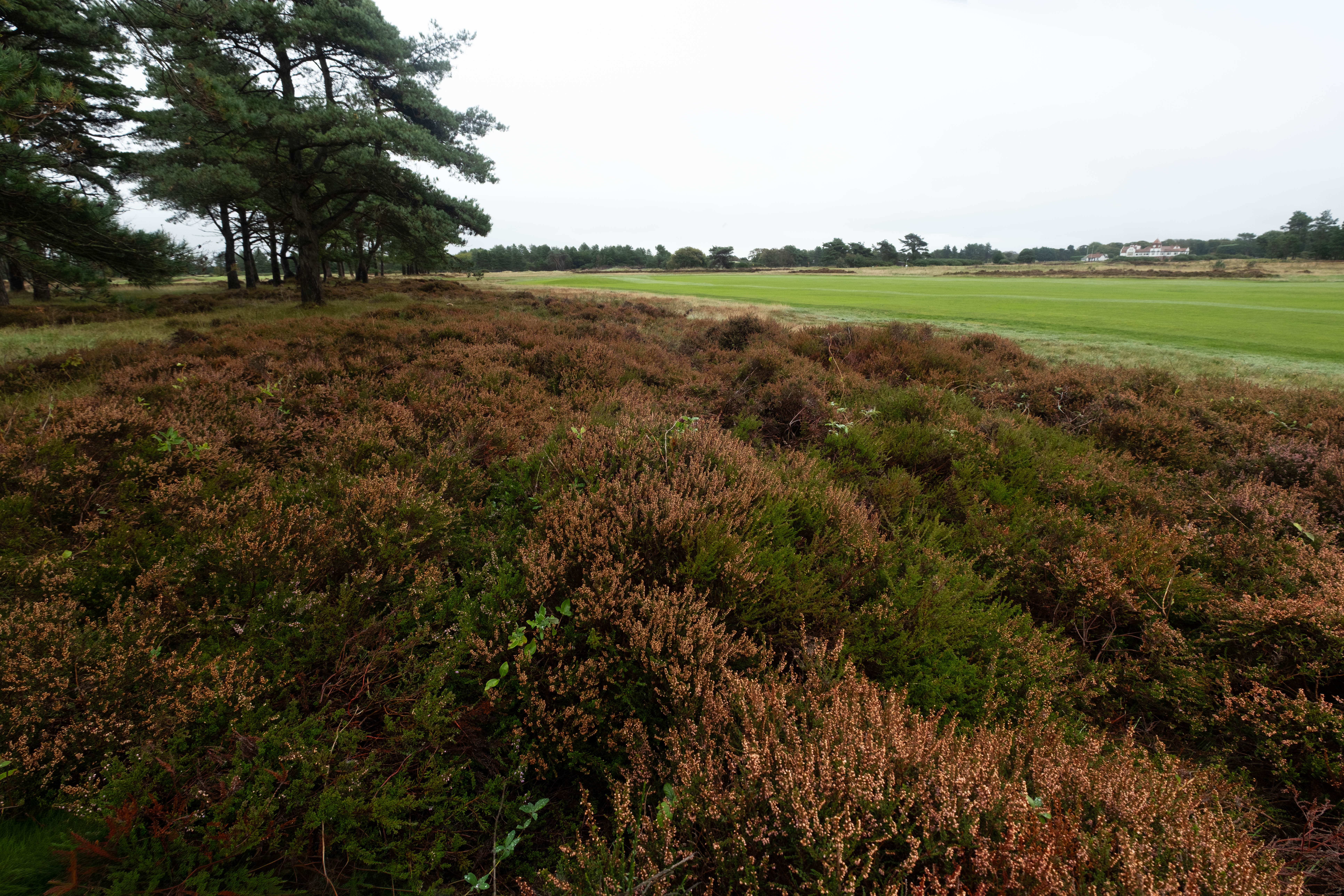
Although trees become dominant, there are always patches where they don't establish. The idea that the landscape was once entirely covered in trees is nonsense.
What happens naturally is that a tree falls and creates a clearing. Heather germinates in that clearing, grows and flowers for 10 to 20 years. During that time, tree saplings also establish themselves and eventually begin to dominate. They block out the light, suppress the vegetation beneath them and, ultimately, the area returns to woodland.
It's a continuous cycle: trees fall, heather establishes, saplings take over and eventually mature into trees. This process occurs across the landscape and creates a constantly changing environment.
It's one of the reasons we're concerned about uniformity in woodland today. Many of our trees are of a similar age, growing in even-aged stands, so we don't have that natural progression.
There are also areas, such as wetter ground, where heather persists because conditions are too boggy for trees to establish successfully.
If heathland is left unmanaged, it can quickly revert to birch woodland. Bracken, gorse and other vegetation may also establish, so intervention is needed to prevent the heathland from being lost.
In a managed environment, the aim is to interrupt that cycle before heathland gives way to regenerating woodland. However, a golf club isn't going to want to wait that long, because by that stage the heather would look very unattractive.
Instead, you need to consider the age and condition of the heather. If you break a stem and it's dry and brittle, the plant is too old and should have been cut much earlier.
If the stems are becoming thicker but are still green, that's the point at which you should be considering cutting and encouraging the next stage of regeneration.
Key Takeaways: Moorland or heathland?
Golf’s labels are not ecological definitions. A course known as moorland may function more like lowland heath.
Moorland tends to be wetter, colder or more exposed. An upland feel alone does not establish its ecological identity. Look beyond altitude: Soil, rainfall, exposure and vegetation help distinguish the habitats
Heathland can be wet or dry. Drainage may change its species mix rather than remove its heathland character Heather alone is not the dividing line. Edwards says most heather courses should be managed as lowland habitats because of their soil conditions.
Author
