

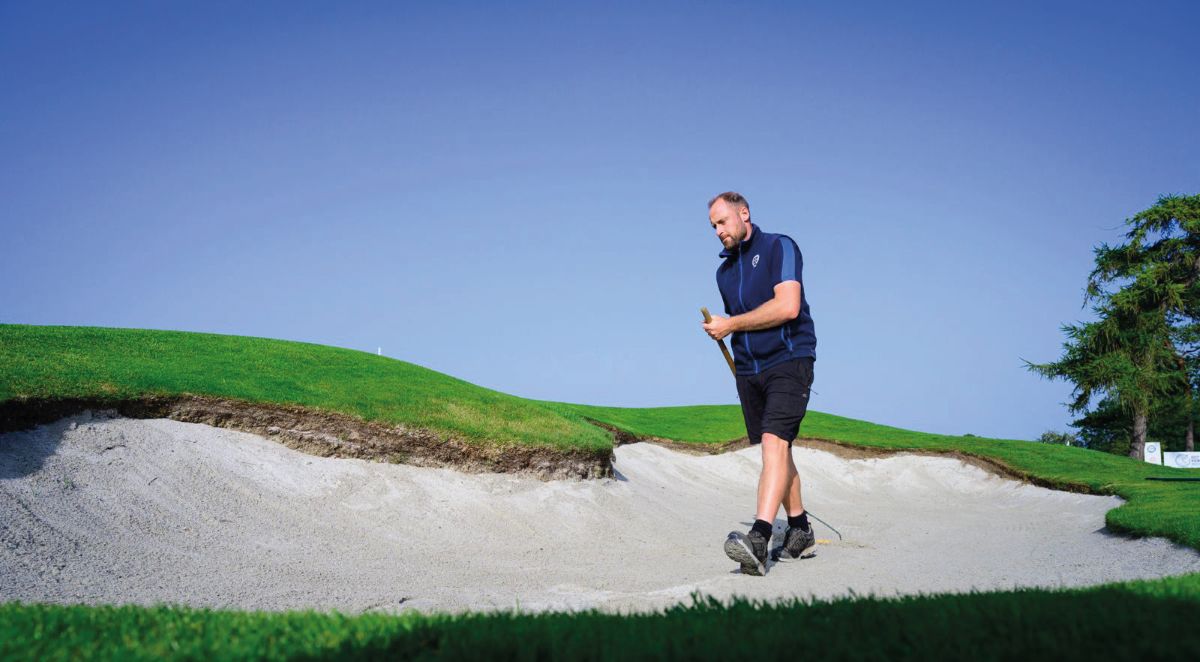
When Luffenham Heath was named Tournament Venue of the Year at the England Golf Awards, the course at the Rutland venue came in for particularly high praise.
In its review of Luffenham’s hosting of the Carris Trophy, England Golf described a track that was “presented in immaculate condition each day”. Such lofty commendation entitles a course manager to some degree of self-satisfaction, but Jonny Peacock is not one to seek the spotlight.
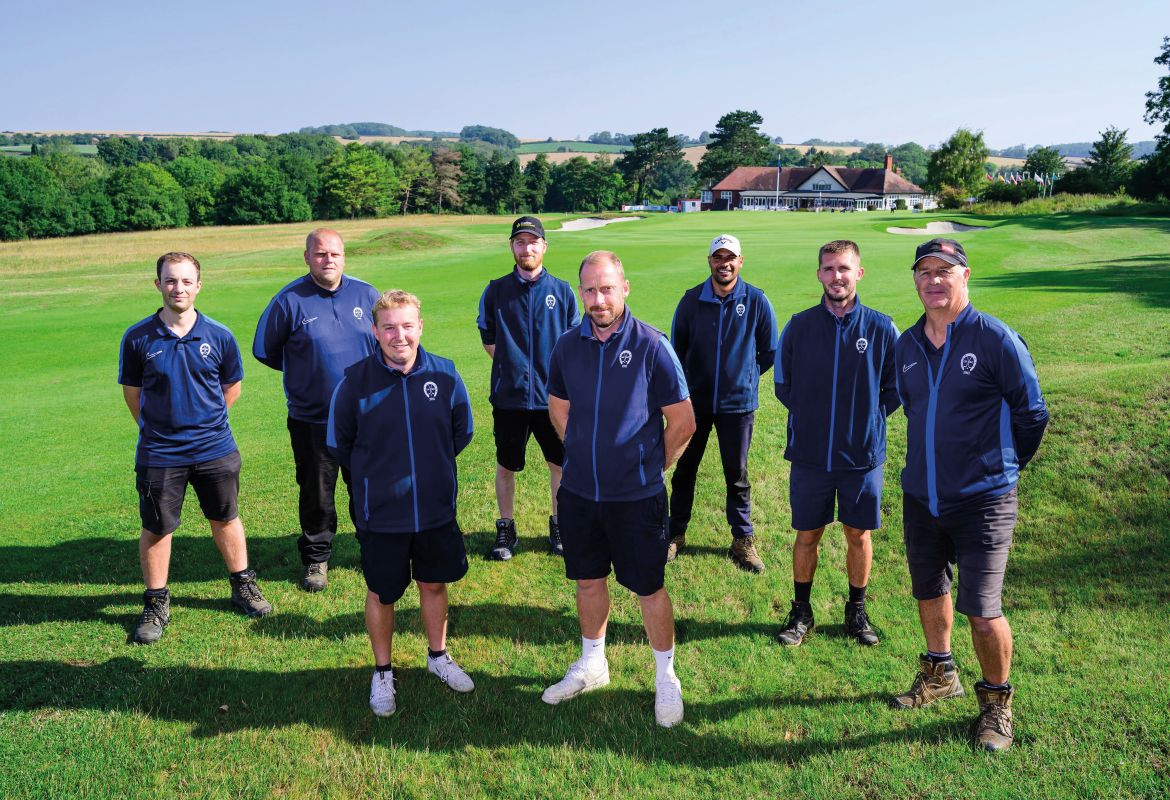
In fact, he was quick to redirect the plaudits to his seven-man team, whose preparations began long before the event itself, with the club having learned it would be on hosting duties more than 18 months ahead of time. Rather than needing to make drastic changes to bring the course up to scratch for championship play, it was just a case of continuing with the careful planning and hard work that were already part of the ethos.
“Rather than building towards a single peak in conditioning for one particular event, the aim is to maintain a consistently high baseline so the course can be elevated quickly whenever a championship arrives on the calendar,” said Jonny. “I quite like being eight out of 10 every day. If we need to dial it up, we can do that quickly. I’m not a huge fan of peaking and troughing with a golf course. If the standards are already high, it doesn’t take a huge leap to push things on that little bit further for a tournament week.”
That level-headed approach ensured that when Jonny received word of the club’s awards success in early March, he took it in his stride.
“I can be a bit blasé about stuff, and I don’t really like taking credit, if I’m honest,” he said. “For me, it’s about the whole team and all the hard work the lads put in – including things we’ve done years in advance. I always say to the lads, ‘when we’re overseeding or doing agronomy work, the members don’t see that. If we paint a bench, they see that straight away, but they don’t see the groundwork that goes in beforehand in preparation for tournaments and for the long-term gains for the golf course’. Our long-term vision really comes together at times like this, and we’re still building on that as a club, looking forward.”
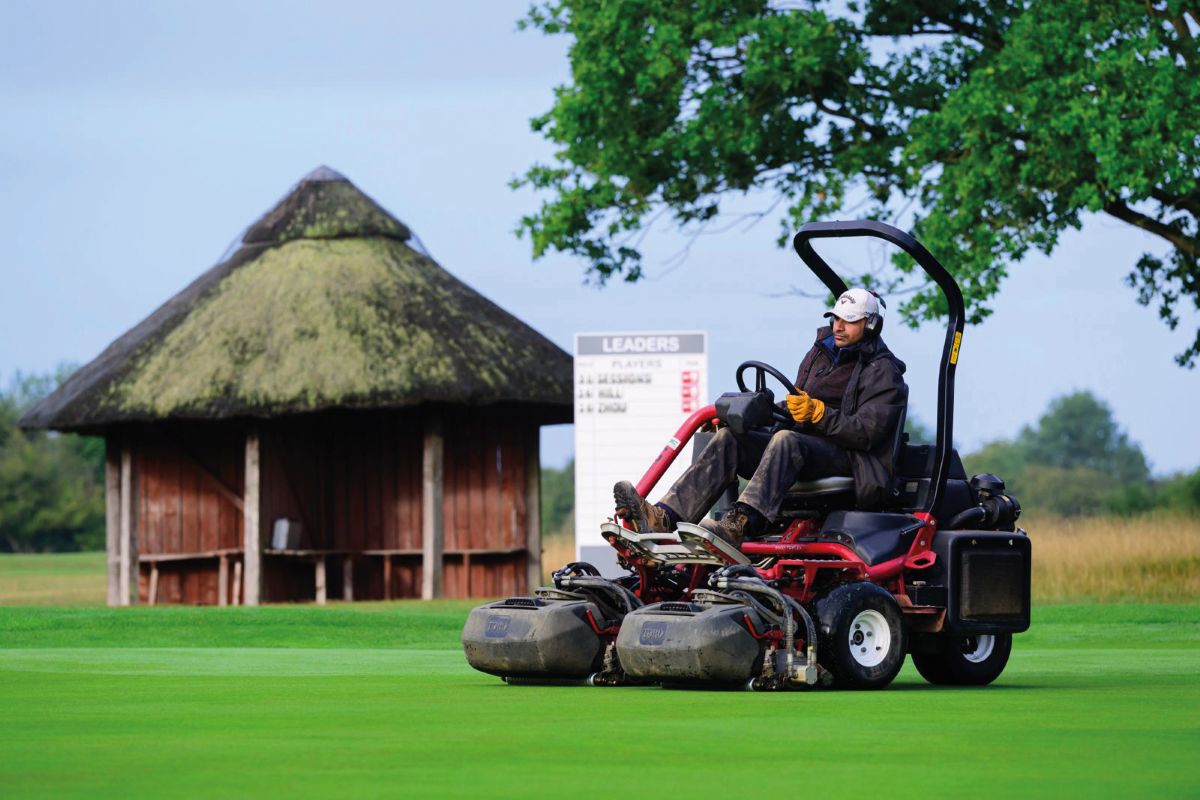
With the July 2025 date of the Carris Trophy having been on the calendar for some time, Jonny ensured his plans were aligned to ensure minimal disruption and maximum impact.
“You usually find out these things 18 months or more before, and that gives you the chance to look ahead and plan your maintenance calendar so you’re not doing anything too disruptive close to the tournament. It’s really about moving certain jobs around and making sure surfaces are where you want them to be when the players arrive.”
In Luffenham’s case, the winter prior to the championship brought a major infrastructure project with the installation of a new irrigation system across the course. While the upgrade provided clear long-term benefits, it also created additional work in the months leading up to the event.
“We’d had a dry spring and the irrigation install had left a few cracks in the fairways where the work had been carried out. There was a bit more remedial work involved than we might normally have had to do, just tidying those areas and getting everything settled again. But the flip side was that we could water the course properly when a lot of places around the country were really struggling with dry conditions.”
As the tournament approached, attention shifted towards fine-tuning agronomic inputs and ensuring that key operations were completed ahead of the championship itself.
“We were looking closely at things like nutrition and when we were going to spray. The aim was to get as much of that work done as possible before tournament week. You don’t really want to be spraying during the event if you can help it. It’s about knowing what products are going on, why they’re going on and making sure everyone at the club understands that plan as well.”
Alongside the playing surfaces themselves, the build-up also involved significant work across the wider course environment to ensure the venue was ready for players, officials and spectators alike.
“We spent a good week just going round tidying areas that golfers might not normally go near but spectators would. That’s things like roping areas off properly, checking stakes, clearing anything that someone might trip over when they’re walking around watching the golf. When you’re hosting an event like that you have to think about the whole environment, not just the areas in play.”
Weather also had an influence during the final days of preparation. Heavy rainfall on the weekend before the event softened surfaces slightly, although speeds were still testing on sloping putting surfaces.
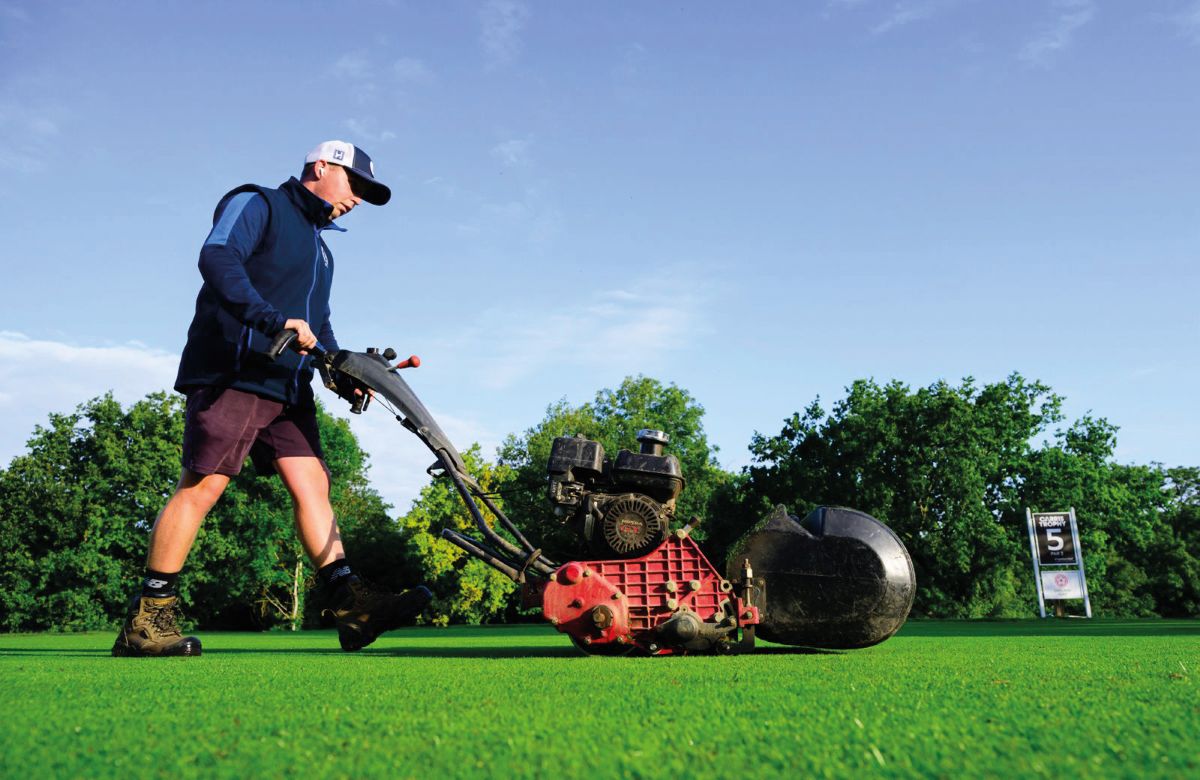
“We had about 20 millimetres of rain on the Saturday before the championship, which softened the greens a little bit early in the week, but the forecast was dry and they firmed up nicely as the week went on. By Thursday and Friday, we were running around the mid-10s, which is quick around here with some of the slopes on our greens.”
Luffenham’s natural heathland character provided an ideal test for the leading junior players in the field. Extensive areas of rough demand accuracy from the tee, while the undulating greens place a premium on approach play and positioning.
“Because we’re a Site of Special Scientific Interest, we’ve got a lot of rough around the golf course, and it frames the holes beautifully. Because it had been so dry, the rough was almost perfect for tournament golf. It was long and wispy rather than thick and heavy, so players could still find the ball and have a go at it. You want to reward good golf but punish poor shots. If someone hits a quality shot they should have the opportunity to make a score. But if they miss the green in the wrong place then it should leave them with a difficult up-and-down.”
Jonny’s approach to tournament preparation has also been shaped by earlier experiences volunteering at elite events, having joined the greenkeeping team at the BMW PGA Championship at Wentworth, gaining valuable insight into the standards and organisation required to deliver a top-level event.
“That experience made me realise I wanted to work at the highest-end golf course I possibly could. Obviously somewhere like Wentworth has far more resources than most clubs, but there are still plenty of ideas you can take from that environment and apply in your own way.”
The influence of those experiences is evident in the way tournament weeks are organised at Luffenham, with clear structures and defined responsibilities helping the team maintain consistency throughout a demanding schedule.
“Even things like the way we organised afternoon shifts came from what I’d seen there. The goal is the same — to produce the best possible product and experience for the players — you just have to adapt the methods to suit the resources you have available.”
Once the championship began, the focus shifted from long-term planning to daily precision and organisation. Early starts ensured the team had sufficient time to complete the morning setup before play began each day.
“We were in at about half four or five depending on the first tee time. We try to give ourselves roughly two hours before play starts so we can get round the course properly and deal with anything that needs attention.”
The team operated split shifts throughout the week, returning later in the day once the final groups had completed their rounds.
“Everyone would come back between about half three and half four depending on the first tee time. The evenings were mainly about preparing the greens for the following morning and making sure everything was ready to go again.”
Additional support also played a valuable role in maintaining standards across the course. Visiting greenkeepers assisted the team during the week, while club members volunteered their time to help with divoting work.
“We had about 10 members out divoting fairways every evening. That allowed the team to concentrate on the agronomy work, which made a big difference.”
Thanks to careful planning and cooperative weather, the week itself passed with remarkably few problems.
“There was only one occasion where a hole had been damaged slightly and I had to go out and tidy it up. Other than that, it all ran pretty smoothly. We’d planned the week well in advance and everything just fell into place.”
For Jonny, the most satisfying moment of the week came, not during the championship itself, but in the quiet reflection that followed the final morning’s work.
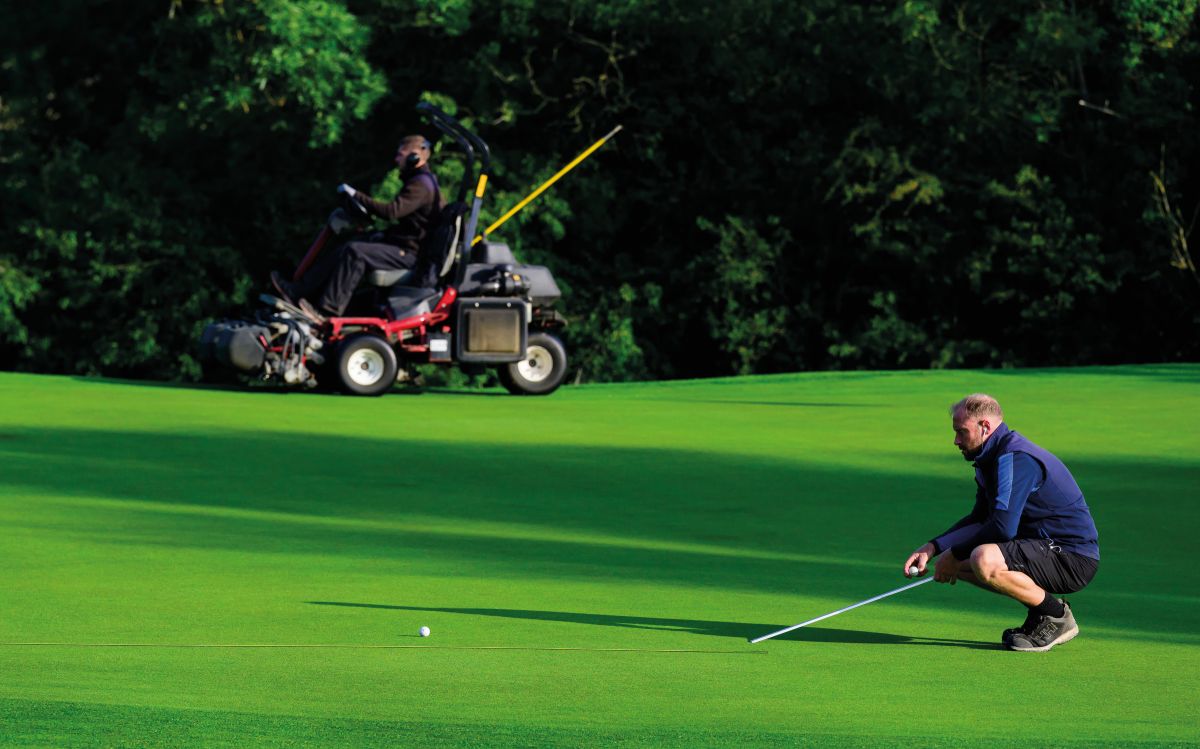
“On the Friday morning, when the lads knew it was the last shift, that’s when you start to reflect on it together. We were just talking about how well everything had gone and how good the course had looked throughout the week.”
Several members of the team stayed behind after their duties were complete to watch the closing stages of the championship, making the most of a rare opportunity to see accomplished players tackling the course they prepare every day.
“Quite a few of the lads stayed and watched the golf on the Friday. It’s nice for them to see how the course actually plays and how the players deal with it.”
For a team that prides itself on delivering consistently high standards throughout the year, the recognition from England Golf simply reinforced the approach they already follow on a daily basis.
“That pressure is part of the enjoyment. That’s the buzz of working at a club that hosts tournaments. You want to produce the best golf course you can.” GI
‘Extremely proud’
Club Manager Tom Sharpe lauded Jonny and his greenkeeping team for their role in Luffenham’s awards triumph.
“A strong working collaboration between club management and the greenkeeping team is absolutely fundamental to the successful delivery of a championship,” he said. “While course presentation is the most visible outcome, it is the trust, communication and shared commitment behind the scenes that truly underpin success. Jonny was pivotal throughout the planning stages. His experience of working in tournament environments proved invaluable and his guidance throughout the process was second to none. We are extremely proud of our greenkeeping team, who consistently present the golf course in true championship condition and take great pride in their work.”
About the Carris Trophy
The Carris Trophy is the English Boys’ Open Amateur Stroke Play Championship and one of the most prestigious junior events in the British golfing calendar. Open to players under the age of 18 on 1 January of the championship year, the event is contested over 72 holes of stroke play across four days. A starting field of 144 competitors plays 18 holes on each of the opening two days. After 36 holes, the leading 60 players and ties progress to the final two rounds. The championship has long been regarded as a proving ground for future elite amateurs and professionals.


Jonny’s career path
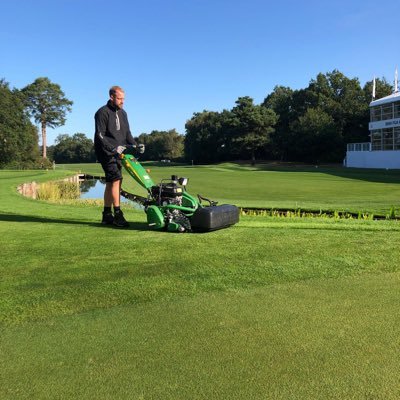
Jonny began his greenkeeping career at Ullesthorpe Golf Club in Leicestershire, where he spent more than a decade developing his technical and practical skills within the profession. He later moved to Rugby Golf Club in Warwickshire. Working within a smaller team environment gave him the opportunity to take on broader responsibilities and gain greater experience in the day-to-day management of a golf course. It was during that period that he volunteered on the greenkeeping team at the BMW PGA Championship at Wentworth, gaining valuable experience of tournament preparation and observing how elite professional events are organised. Jonny also secured a place on the BIGGA Delegation sponsored by Bernhard Academy in 2020, landing the Luffenham job upon his return. He now leads an eight-person greenkeeping team responsible for maintaining one of England’s most highly regarded heathland courses.