
Holding the line at Royal Aberdeen
Richard Johnstone and his team at Royal Aberdeen are confronting the challenge of coastal erosion head-on at one of golf’s most historic links.
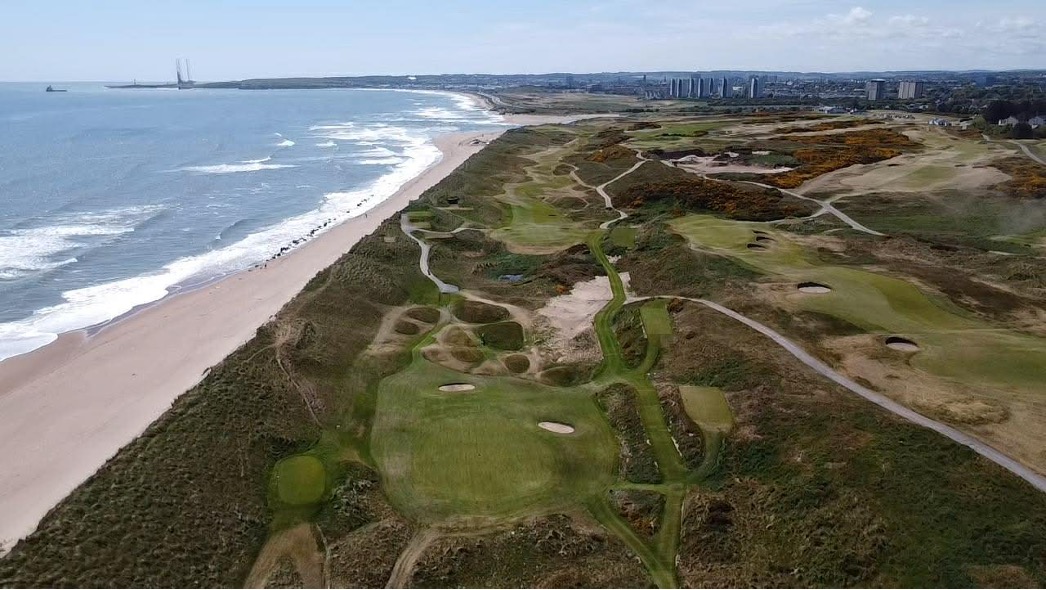
When Richard Johnstone arrived at Royal Aberdeen in 2024, he knew he was stepping into one of the most revered settings in world golf. He also knew he was inheriting a problem that did not care for history, reputation or sentiment. Coastal erosion had already been reshaping the edge of the Balgownie Links for years and the threat was growing, with land being lost at an alarming rate. On the 1st hole in particular, it had become critical.
“Since I’ve been there, it’s been close to 10 metres (lost) at the worst point,” said Richard, who took on the role of course manager after more than 20 years at Nairn Dunbar. “Right along the coastline, from the 2nd to 3rd and out towards the 9th, there’s been between five and just short of 10 metres at certain points. It is sad to see, but we’ve just got to face that issue head-on. We’re trying to do as much as we can to stop that process. It might not solve the issue, but it might slow it down.”
A problem on such a large scale requires a response to match, and the club has not been found wanting in that department. Work had already been planned before Richard’s arrival, and over the past two years in particular that planning has turned into action.
The team received the Greenkeeping Project of the Year award at the BIGGA Celebration in January, fitting reward for their efforts, and a rare opportunity for Richard to pause and take stock amid an ongoing challenge.
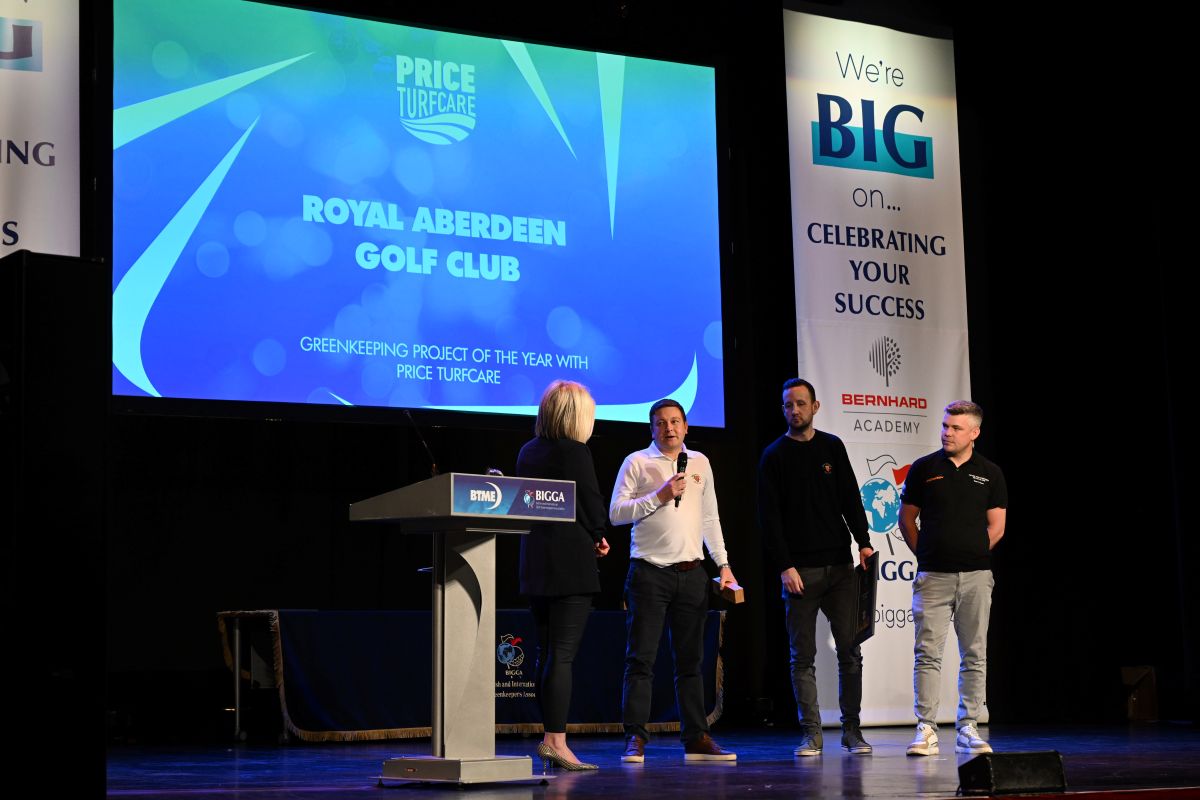
“It makes me incredibly proud of the team and the club,” he said. “It’s been a massive project undertaken over a number of years, and it’s great to see that recognised.”
The urgency upon Richard’s arrival was most obvious at the opening hole, which was teetering close to the edge and vulnerable to the relentless North Sea and the often unforgiving weather.
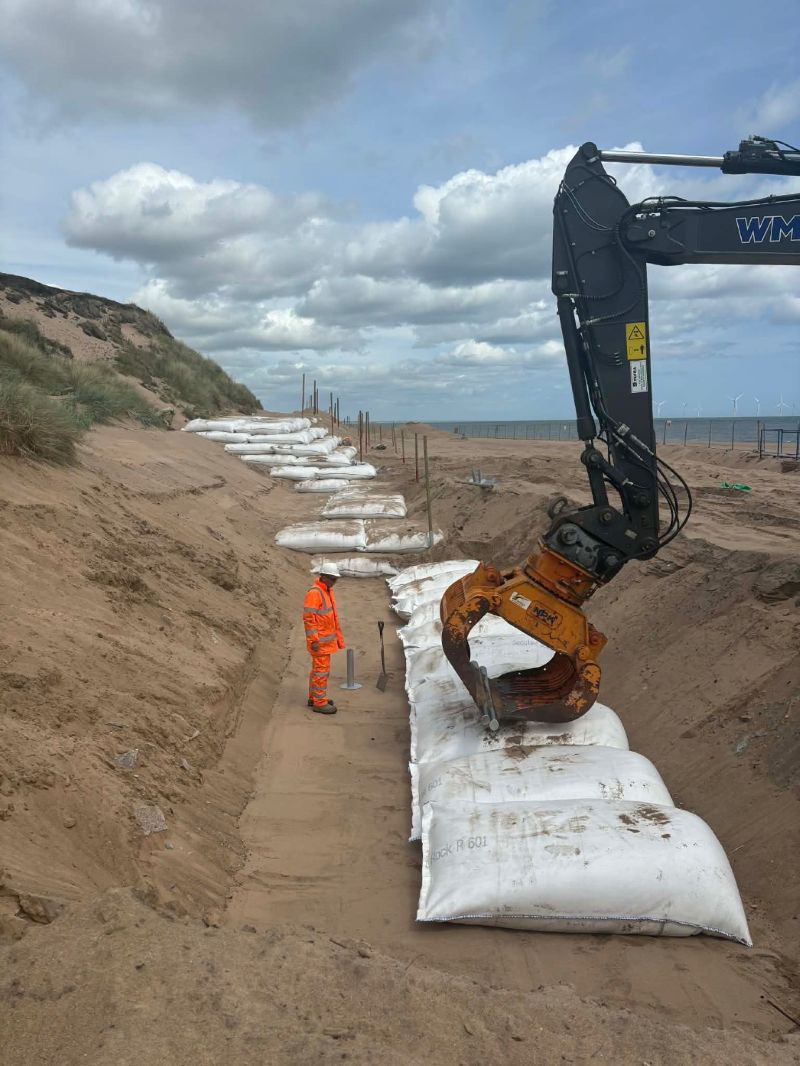
“The 1st hole was the priority because it was only 13 metres from the dune edge,” Richard explained. “We had to build a contingency hole so that, if we got a freak storm that damaged the green or approach, we would still have a playable option throughout the season.”
Alongside that contingency came a significant engineering solution behind the green.
“We spoke with various companies and took advice from architects, engineers and JBA Consulting. They suggested we put in 2,500 one-tonne sandbags behind the 1st green to lower the slope and try and stop the erosion, because it eats away at the bottom and it’s almost sliding because of the severity of the slope. It was a seven-week project to do the sandbags, bury them in sand and fence them off. It was a massive, massive project.”
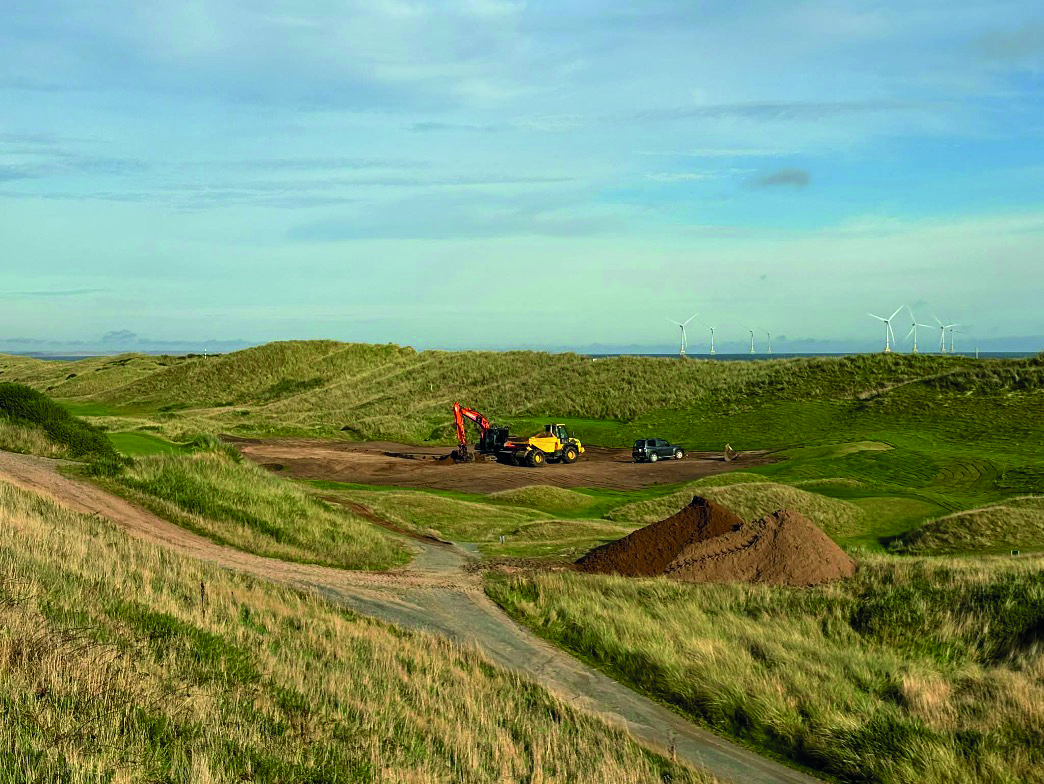
That work sits within a wider programme carried out over two winters, including a new 3rd green and tee complex, new 4th tees and a new walkway linking the 2nd and 4th holes. The thinking throughout has been to stay ahead of the problem rather than react to it.
“These are all part of our erosion mitigation measures,” said Richard. “It gives us the opportunity to jump across to the inner dune if the tees on the outer dune happen to be eroded or fall into the sea. We have a plan in place – we’re being proactive about it and thinking ahead.”
Delivering that level of change has required more than just technical execution. It has meant coordination across the club and beyond, and Richard is grateful to have been able to share that responsibility with others all pulling in the same direction.
“It’s not all on me,” he said. “There’s a whole club management team, from general manager to committees to council to master planning committees. There’s architects, engineers, construction experts. There’s lots of people within that process that you can rely on or feed back to.”
All along there has been a conscious effort to ensure any changes, however necessary, are designed to fit in with the unmistakable character of the links, rather than simply for the sake of practicality.
“We don’t want to make drastic changes that look totally out of character. People have played it for hundreds of years, so we’re trying our best to make it fit in and match the natural environment.”
While contractors carried out major elements of the work, much of the finishing was done in-house. Turfing, soil preparation and grow-in placed significant demands on the greenkeeping team.
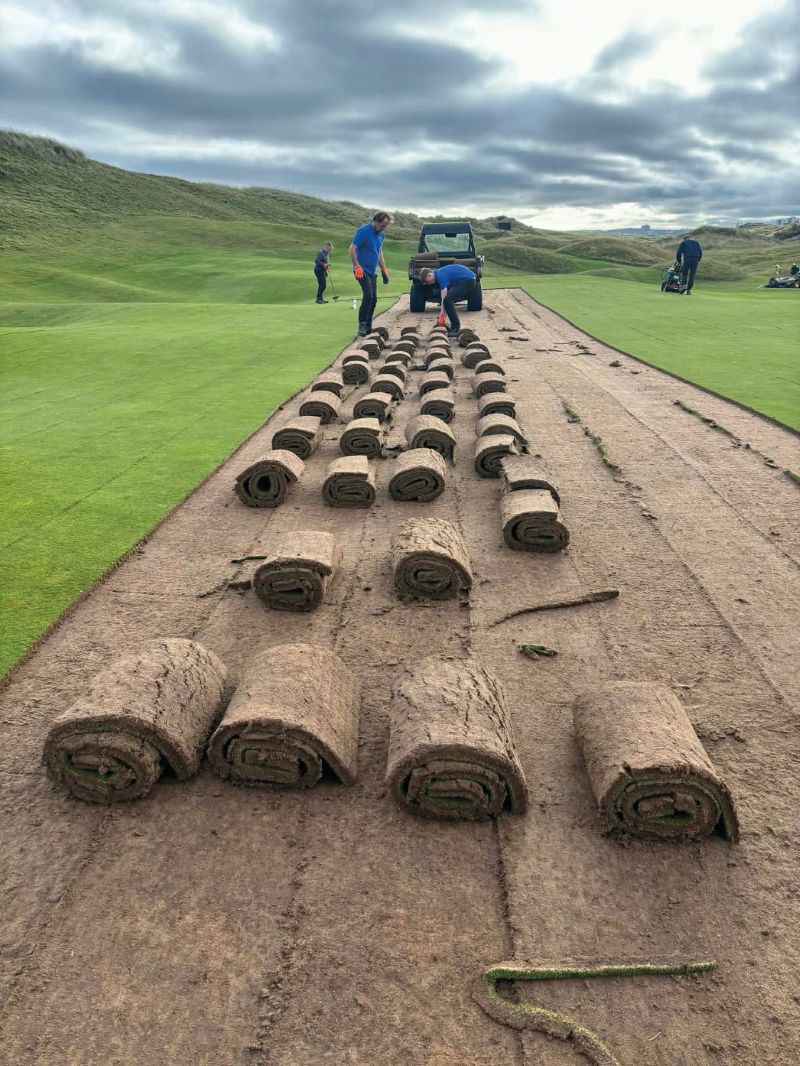
“The team really did a great job,” said Richard. “They all got stuck in. We did a lot of the turf work and the soil preparation. There was a lot ongoing, but it kept us busy.”
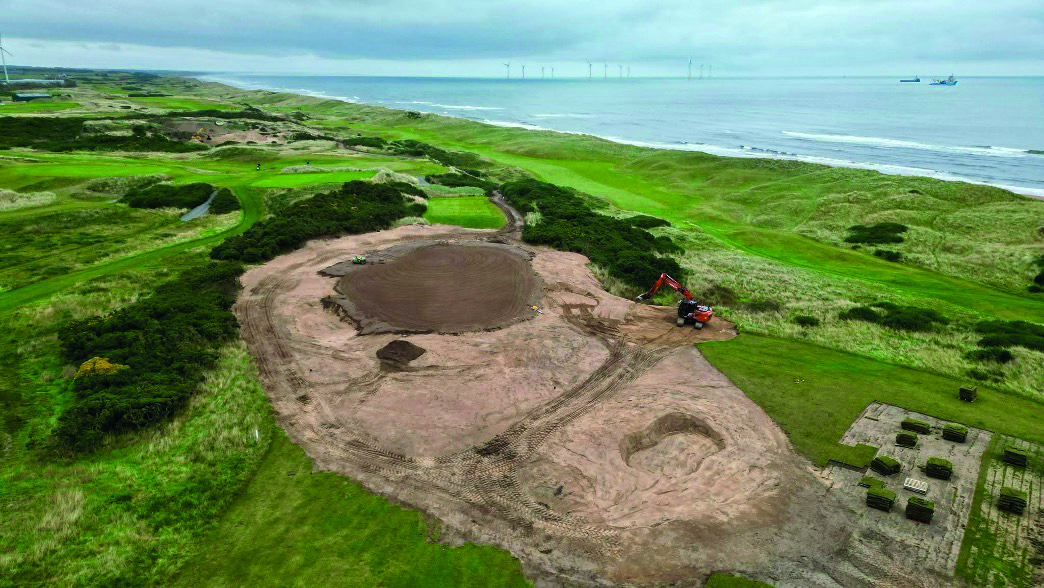
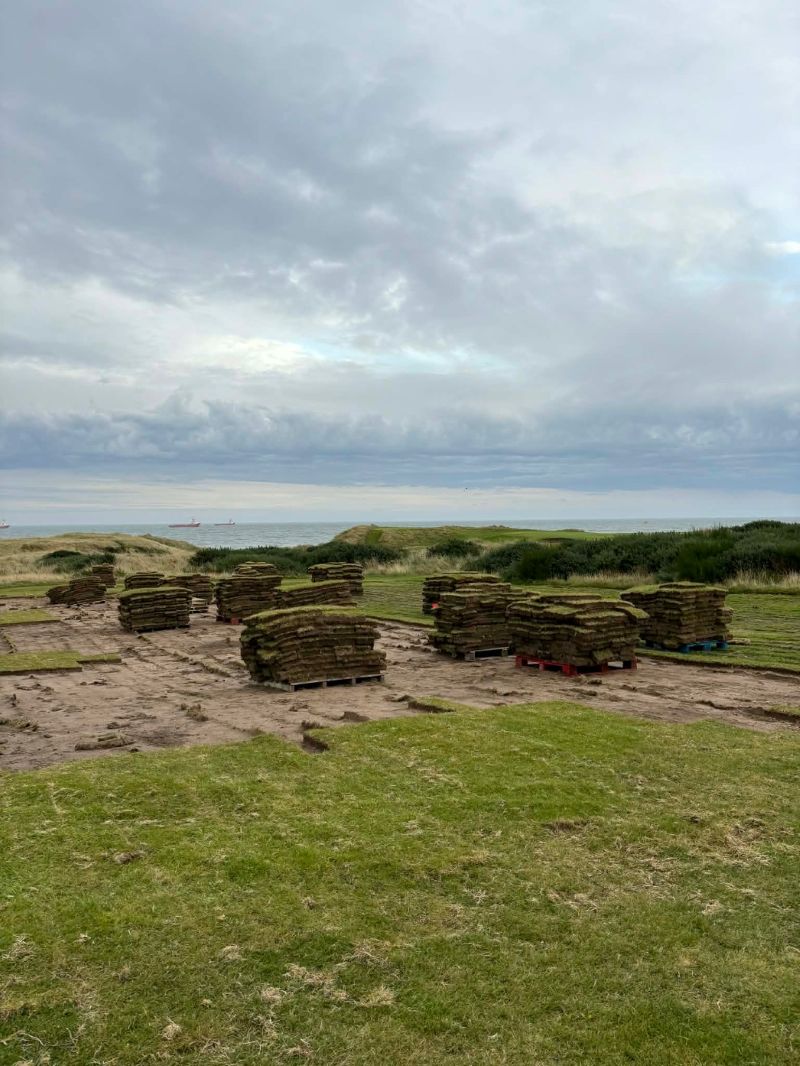
That included nearly 12,000m² of imported turf and around 2,000m² lifted and reinstated, all while dealing with high tides, frost and a cold, dry spring. For Richard, the experience has reinforced one key area above all others.
“I think communication is vital – conversation is key,” he said. “Working with everyone around you, whether it’s working up or working with your team, there’s lots of people in that process, from committees to construction experts to buying in turf. There are processes that need to be in place to make it run smoothly.
“I’m not going to lie, it was stressful, but at the same time it was enjoyable to see it take shape from start to finish.”
That emphasis on communication extends beyond the project team. Keeping members informed has been just as important.
“The feedback has been really good. The members have known for a long time that we were going to have to take these measures and put these things in place for the future. There were various meetings to get that agreed in the past, so it was good to get the backing of them, and then for them to see the finished article was quite rewarding.”
On the ground, patience has been just as important as pace. While some areas were brought back into play quickly, others have been managed more gradually.
“We’ve actually not taken it down to the same cutting heights and things as the normal 1st hole quite yet,” he said. “We’re leaving it, not stressing it too much. We’re keeping the surfaces healthy.”
The work completed so far has created breathing space, but there is no sense that the job is finished.
“That process is ongoing. We’ll be continually looking at that. At the moment, we’ve got plans to look further down the coast where we may have problems in the near future.”
Future priorities may include new tees on the 5th and 9th, with similar approaches likely if the coastline continues to move.
As the work has progressed, the club has also drawn on – and contributed to – a wider network of courses facing the same challenge, as Royal Aberdeen are certainly not alone in battling coastal erosion.
“Before we carried out the work, we reached out to clubs like St Andrews, North Berwick and Montrose,” said Richard. “Now that we’re part of that process, we’re in a position to share our experience with others. I think that’s what we’re quite good at in the industry – sharing information and being part of one family.” GI
What Royal Aberdeen has delivered:
- Contingency 1st hole
- 2,500 one-tonne geotextile sandbags installed behind the 1st green
- New 3rd green and tee complex
- New 4th tees
- New walkway linking the 2nd and 4th holes
- Nearly 12,000m² of imported turf laid
- Around 2,000m² of existing turf lifted and reinstated
Richard's lessons from the project:
- Communication is everything
- Build contingency before you need it
- Take specialist advice early
- Keep members informed throughout
- Don't rush grow-in for the sake of appearances
- Use the wider industry – ask questions, make visits, share knowledge
Author

About Richard
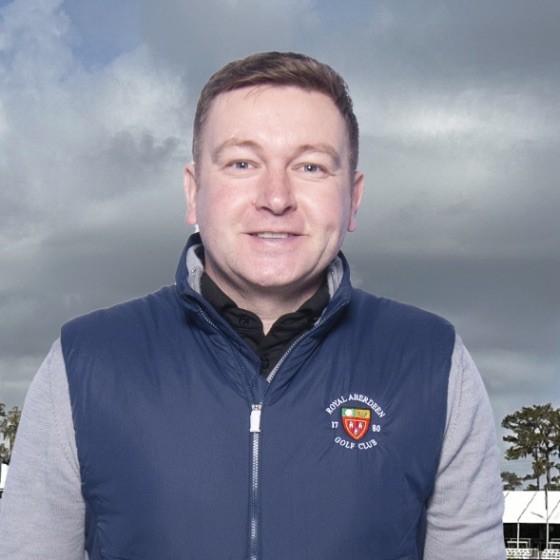
Richard joined the greenkeeping team at Nairn Dunbar back in 2000, fresh out of school. He learned quickly from his colleagues and during his apprenticeship at SRUC Elmwood College, showing early promise. That potential blossomed and by 2010 he moved up to deputy, taking on the course manager’s job six years later. He sought to restore the links characteristics of the 135-acre site using sustainable management practices, while raising the profile of the club. In 2021, he became the 86th Master Greenkeeper. Richard moved to his current role in 2024.