Efficient irrigation starts with understanding soil, sprinklers and software – then using data to apply water precisely
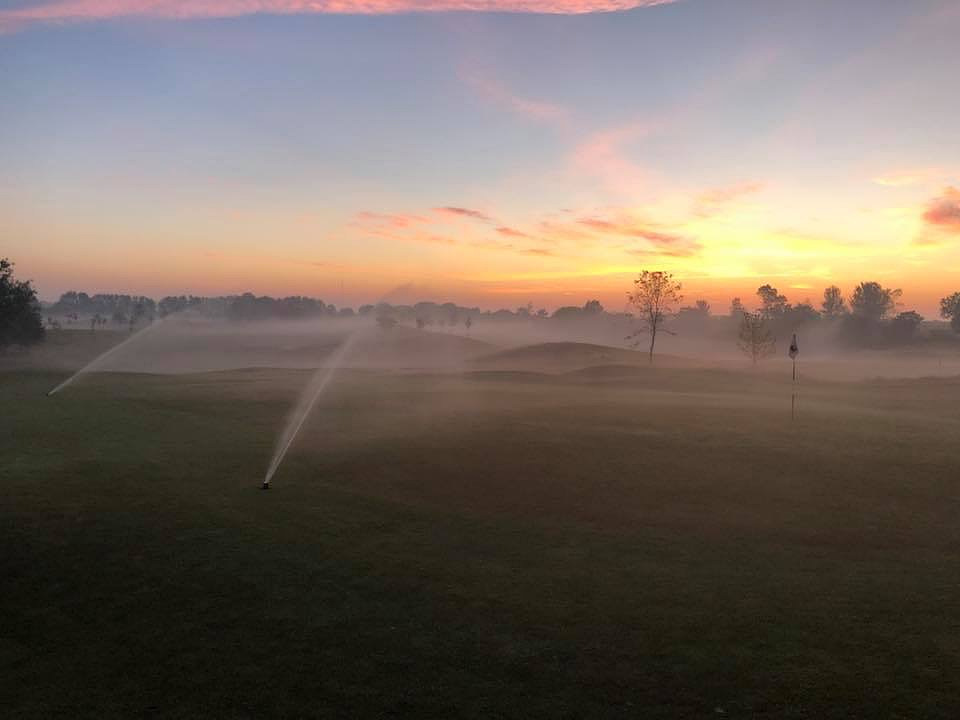
Greenkeepers know exactly how much rain fell yesterday. It was 3mm, 14mm or whatever the gauge recorded. But when it comes to deciding what to apply through the irrigation system, the language often changes completely. Suddenly, water is not measured in millimetres, but in minutes.
For R&A agronomists Pablo Muñoz and Luis Cornejo, who presented on the subject during BTME 2026, that disconnect lies at the heart of one of golf course management's most urgent challenges. As water becomes more scarce and its use increasingly scrutinised, efficient irrigation can no longer rely on broad averages or established routines. It has to be measured and targeted.

"When we talk about rainfall, we talk about millimetres," Pablo explained. "We say: 'Yesterday we had a rainfall event of 3mm'. However, when we are talking about what we are going to irrigate tonight, we talk about minutes. We are turf professionals. We need to talk based on science and numbers. If we talk about precipitation in millimetres, we need to do the same with run times."
That theme sat at the heart of a detailed session in Harrogate exploring efficient irrigation, water conservation and the practical steps course managers can take to improve uniformity, reduce waste and support more consistent turf performance.
Luis, an agronomist whose work includes managing irrigation projects, began by setting out the scale of the challenge. Although he and Pablo are based in Spain, where water pressure has long shaped golf course management, he warned that the same issues are moving steadily north.
Luis said: "We are based in warmer climates in southern Europe, but everything is approaching northern Europe in terms of hot summers and water availability. It is very interesting to plan for the future, even in colder climates. Water resources are more limited nowadays than 50 years ago. There is competition for the use of water. Golf sometimes does not have a good public image, so agriculture normally claims priority in terms of water use."
In parts of Spain, those pressures are already highly regulated. Luis explained that many courses are required to use reclaimed water, while others blend sources, including desalinated water, at significant cost. In some cases, that can mean an average price of around £1 per cubic metre. With an 18-hole golf course on the Costa del Sol potentially using around 300,000 cubic metres of water per year, the financial case for efficiency is obvious.
But efficiency does not begin with the latest technology. It begins, Luis argued, with understanding the basics.
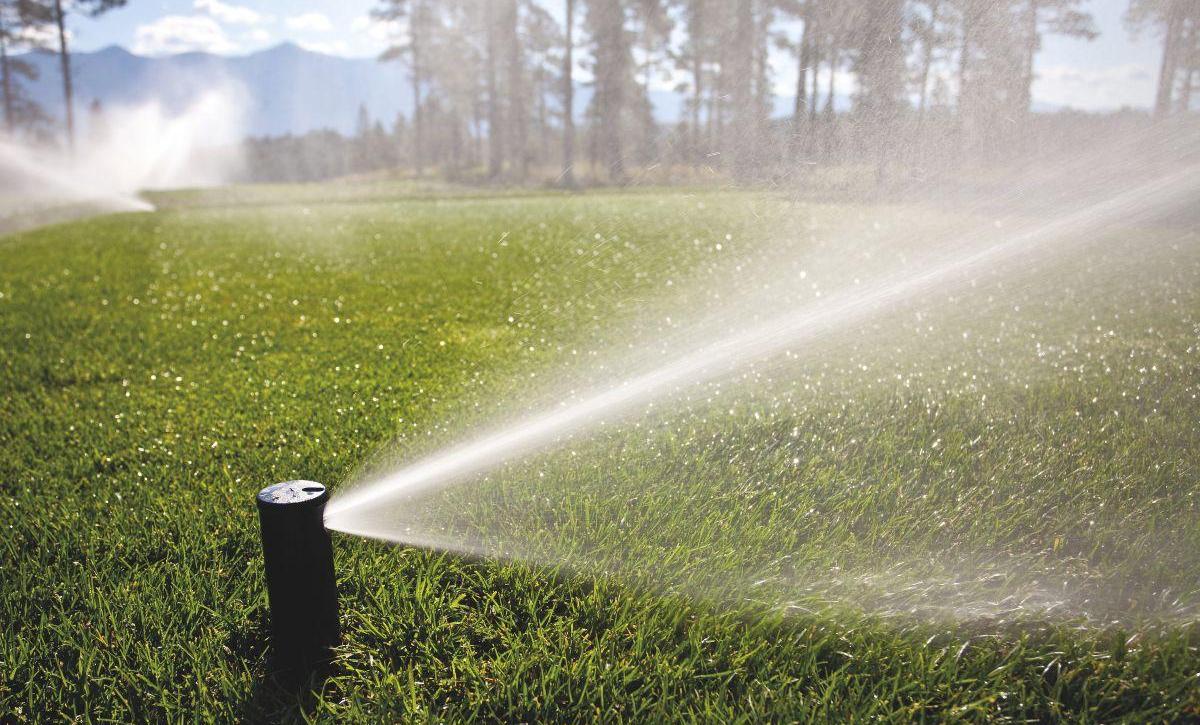
"In order to be efficient, the first thing we always like to make people understand is the basics," he said. "Irrigation can be complicated, yes, but the basics are very basic. Infiltration rate is the speed at which water infiltrates from the surface into the soil. Precipitation rate is the amount of water being applied by the sprinkler over time. What happens if the precipitation rate of my sprinklers is higher than the infiltration rate? Run-off."
The consequences are familiar on many courses. If 5mm of water are applied but 2mm are lost to run-off, the intended irrigation programme has already failed. Dry patches appear where water has moved away, while lower areas become wet where it has collected.
Pablo stressed that infiltration does not need to be difficult to assess. Formal tools such as infiltrometers and laboratory testing can provide data, but even basic observation can reveal much about how a green is performing.
"It is not difficult to measure the infiltration rate on your greens," he said. "You can use an infiltrometer, send samples to a lab, or very simply go to a green, turn on your irrigation sprinklers and wait until you see water running off. That will vary through the year. You might have verti-drained your greens a couple of weeks ago and your infiltration rate will be great, but it is good to check that and know how it changes through the year."
With an understanding of how quickly water can enter the soil, it is also important to understand how quickly the irrigation system is applying it. That precipitation rate depends on sprinkler model, nozzle, pressure, spacing and pattern. A single average value across the course is not sufficient.
"It is not enough to have one average value and apply that to all the programmes in the software," said Luis. "You need to adapt the different precipitation rates to the different possible infiltration rates you can have in a topsoil rough area, a sand-capped tee deck or a fairway."
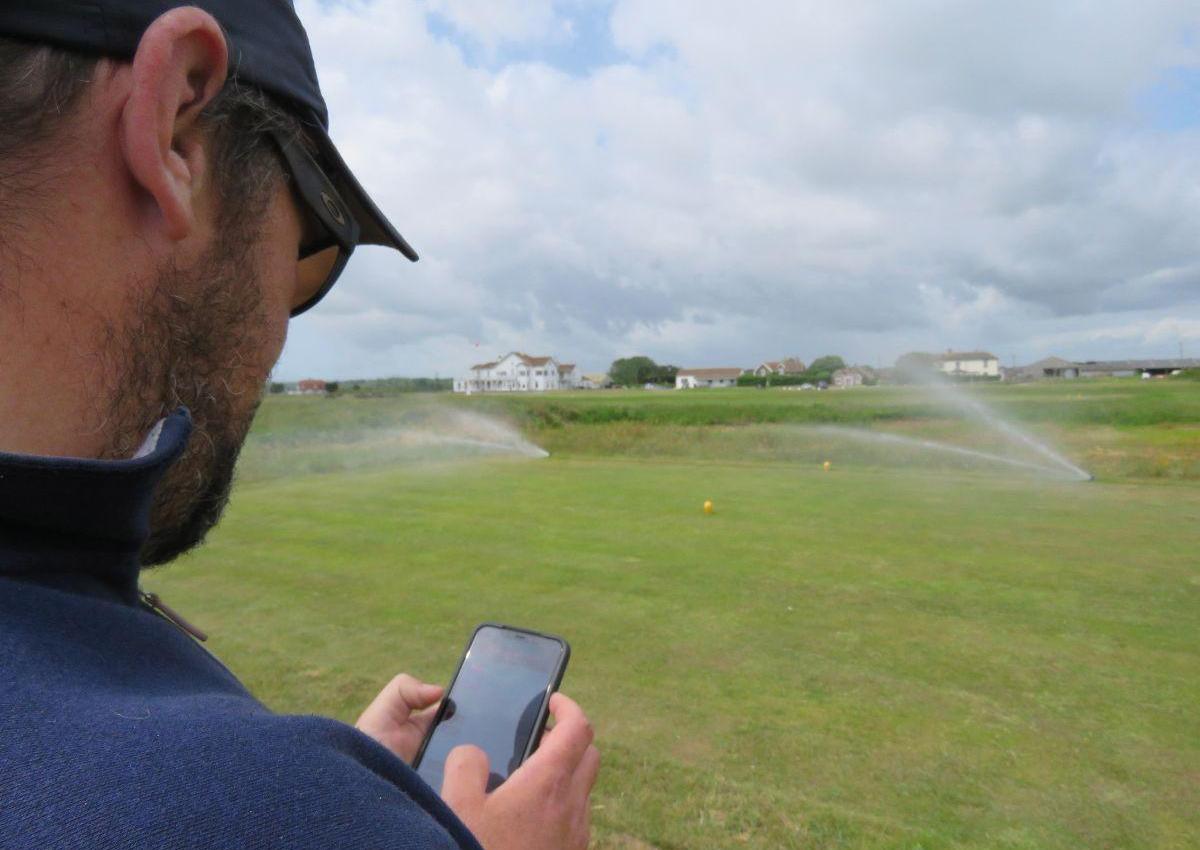
Modern irrigation software can help, but only if the information entered into it is accurate and if the team uses it correctly. Pablo explained that systems can calculate how much water individual sprinklers apply when details such as nozzle, pressure, spacing and layout are correctly configured.
That is why the shift from minutes to millimetres matters. A 10-minute run time does not mean the same thing across different arcs, nozzles or pressures.
"We should not be saying: 'Tonight I need 10 minutes'. We should say: 'Tonight I need 10mm'. You should know the precipitation rates of your sprinklers. If your precipitation rate is 60mm per hour, then your precipitation rate is 1mm per minute. So in 10 minutes, you will apply 10mm," said Pablo. "It is a very simple exercise, but if you understand that, you will be able to say: 'Tonight I'm irrigating 3mm', or, 'Tonight I'm irrigating 5mm'. If you don't do that, you will be working with misleading concepts and you will be lost."
The point becomes even more important when arcs differ. Luis highlighted the problem of applying the same run time to sprinklers operating at very different angles. He said: "If you work in minutes, how do you apply those minutes to one sprinkler that goes 270 degrees against one that is 150 degrees? If you apply the same minutes, you are applying more water with the one that has the wider arc."
Where precipitation rate is higher than infiltration rate, the answer may be to split the application into shorter cycles with soak periods between them. Rather than pushing water on faster than the soil can accept it, the system can apply part of the requirement, pause, then return to apply the remainder.
The same move towards precision applies to evapotranspiration. Luis explained the role of crop coefficients, which adjust reference ET to reflect the specific needs of different turf types. Traditionally, fixed values have been used for cool-season and warm-season grasses, but newer research suggests those values should change through the year.
Pablo said: "If I put 0.85 all through the year, I will always be up there adjusting my ET. However, with an adjustable crop coefficient, water savings can rise up to 15%, 20% or 30%. We all know we need to put back the water lost through evapotranspiration. With this adjustment, we will be much more accurate."
Technology is also changing how greenkeepers understand soil moisture across the whole site. Pablo discussed handheld meters, sensors, soil suction data, salinity monitoring, satellite imagery and vehicle-mounted mapping. The value, he said, is not simply in collecting numbers, but in understanding how they relate to turf condition and irrigation decisions. "It is important to know your field capacity and your permanent wilting point," he said. "It is not enough to say: 'My green target is 20, 18 or 25'. You also need to understand where you are in your deposits – are you in the middle, up or down?"
Timing also matters. Many courses take readings first thing in the morning, but irrigation decisions are often made for the following night. Pablo suggested late-afternoon mapping can provide more useful information because it reflects what has happened through the day. "We should be mapping the course in the late afternoon, not the early morning, because we don't know what has happened through the day," he said. "That information is much more useful when deciding the runtimes for your golf course that night."
He also encouraged course managers to test the relationship between irrigation inputs and actual soil moisture response. "It is so simple. Map, irrigate, map again and understand how that varies on your golf course," he said.
Beyond applying water more accurately, Luis said courses must also consider whether they are irrigating too much land in the first place. GPS tracking of player movement can show which areas are genuinely in play and which might be converted from maintained turf to lower-input alternatives without affecting pace or playability.
"What you don't want to do is remove turf from an area where you have landing balls and where members are playing, because that will be a disaster and they will not be happy," he said. "This tool helps us to be sure that if we are converting an area from turfgrass to another solution, we will not have an impact on play, pace of play or the game."
On one course in eastern Spain, Luis said irrigated area was reduced from 55 hectares to 42 hectares after that type of analysis. In other areas, recycled pruning waste was reused as a surface treatment, reducing the need to maintain and irrigate turf that was rarely in play.
Drip irrigation is also attracting attention, particularly on bunker noses, tees and in pilot projects on fairways. By delivering water below the surface, it can reduce losses from evaporation. "Drip irrigation in other playing areas, such as tee boxes and fairways, is under trial or in pilot cases," said Luis. "The USGA has been researching this on different courses and the results are very promising. Evaporation is completely eliminated. This can lead to reductions of 40% or 50% in water use."
Water quality must also be part of the conversation. In warmer climates, courses may rely on multiple water sources, using lower-quality water for fairways, tees and roughs, while reserving higher-quality or desalinated water for greens. Where salinity is an issue, flushing programmes must be planned, measured and supported by pump station capacity.
Pablo stressed that as much as technology can help course managers irrigate with greater precision, it cannot compensate for poor maintenance. In his work as an irrigation auditor, he still sees too many systems undermined by avoidable problems. "There are amazing tools and opportunities," he said. "But there are three things that will drive how precise your irrigation system is and your potential for water conservation. The first is the pump station. The pump is the heart of your golf course."
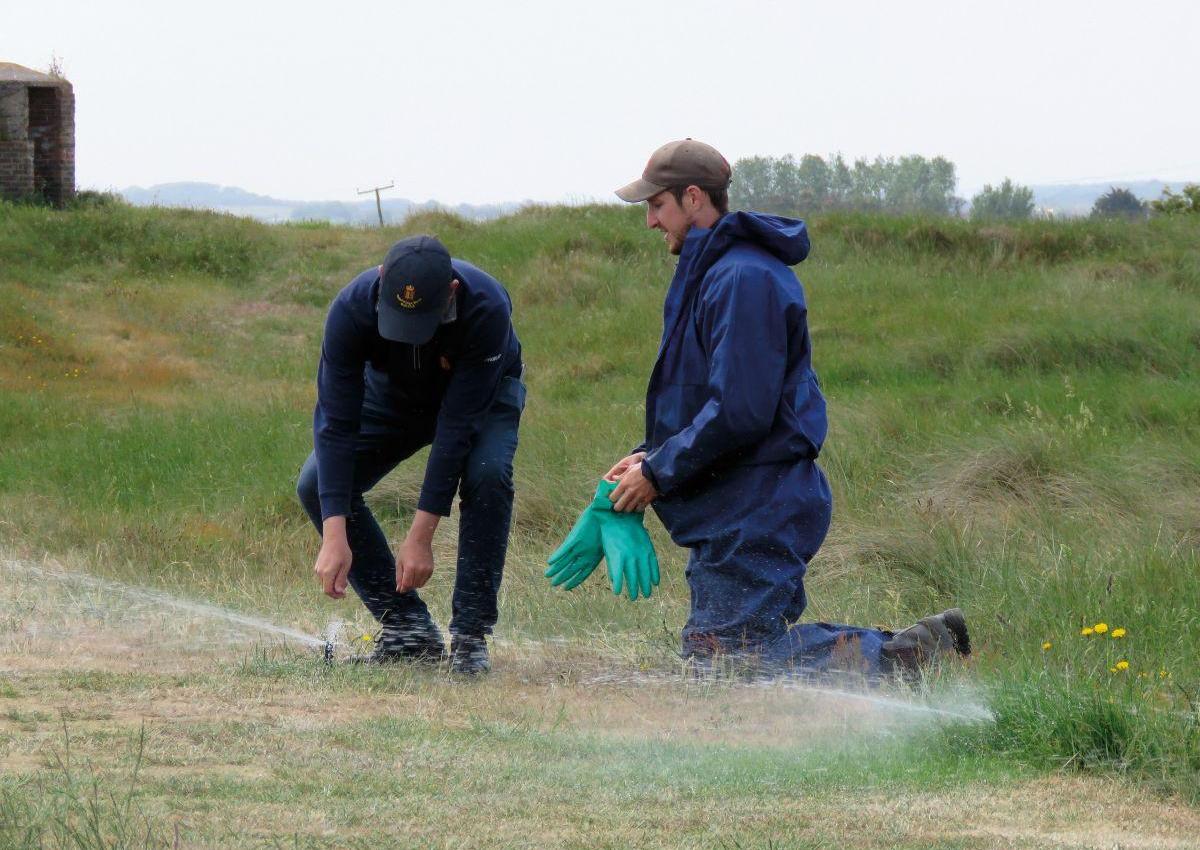
Monitoring pressure, flow and pump behaviour through the night can reveal whether the system is performing as expected. The software must also be kept up to date, with correct nozzles, arcs, spacing, station numbers and pump flows. Finally, sprinklers themselves must be checked for missing nozzles, clogged nozzles, sunken heads and incorrect arcs.
Pablo said: "I have seen courses investing massively in technology, but then they have a really poor situation causing problems on the course. So pump station, software and sprinklers. Have these properly managed."
As hotter, drier summers place greater pressure on water use, efficient irrigation will depend on much more than a single product, decision or software upgrade. It will come from understanding how each course behaves, measuring what is happening in the soil and using that information to apply water with greater precision, exactly where it is needed.