
Built to last: Robert Sandilands on his decade at Formby Ladies
After 10 years at Formby Ladies, Rob Sandilands could hand over the reins to another course manager tomorrow with the utmost confidence in what they would inherit.
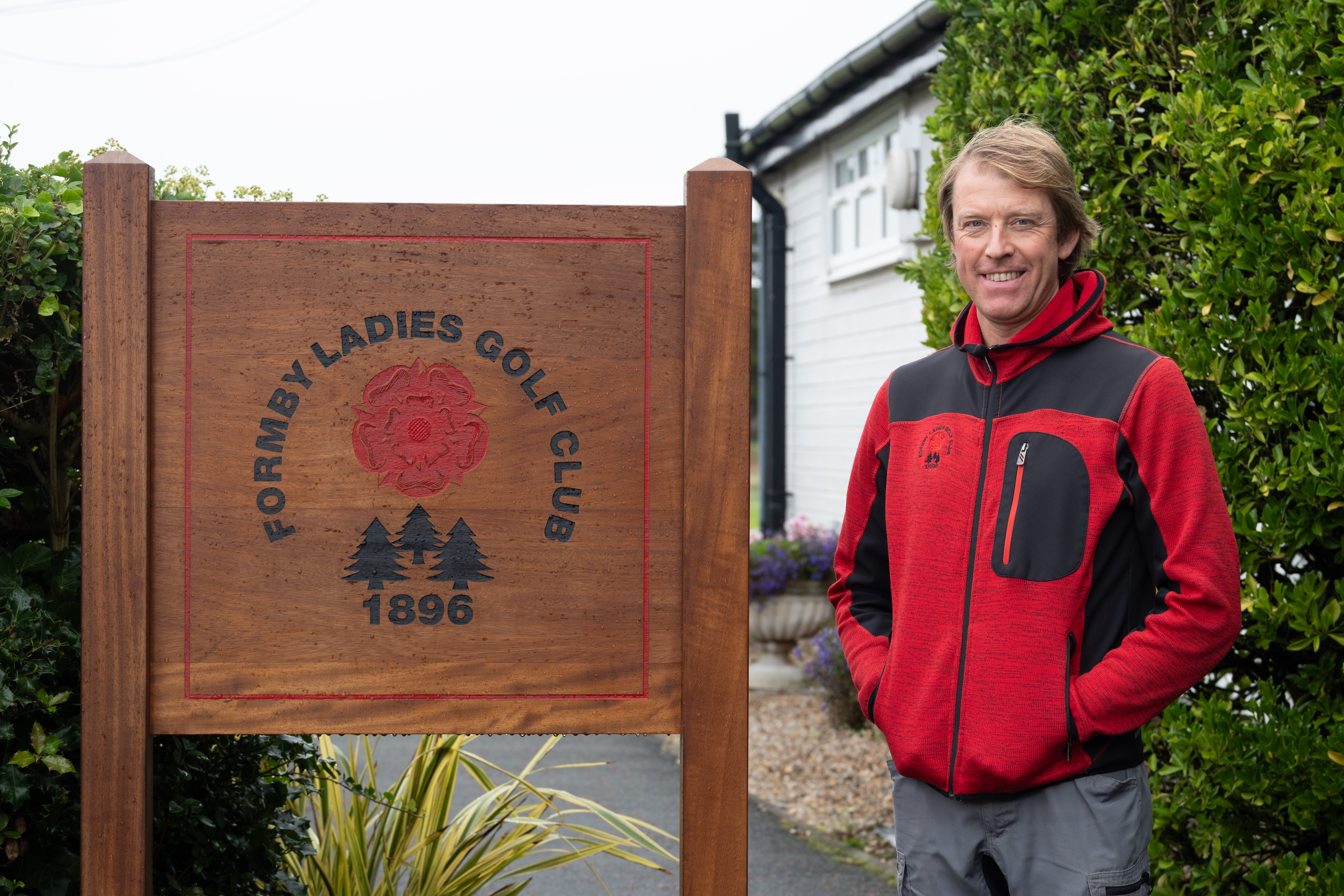
Investment in the course’s infrastructure, clear policies for its management and a commitment to its staff have established solid foundations for the club’s future.
But Rob isn’t looking towards the exit. Having put in the hard yards to help create a renowned course and a rewarding place to work, he is enjoying the results alongside the colleagues and members who helped make it happen. Why would he want to leave?
“If nothing else ever changed, I would be perfectly happy,” he said. “For me personally, and under my personal circumstances, I’m in one of the best jobs I could be in. That’s a really great position to be in, and I know I’m fortunate.”
Becoming a father during his time at Formby Ladies has given Rob a different perspective on his career. His ambition remains, as does his enthusiasm for improving the course, but he has come to place greater value on the circumstances in which he can do that work.
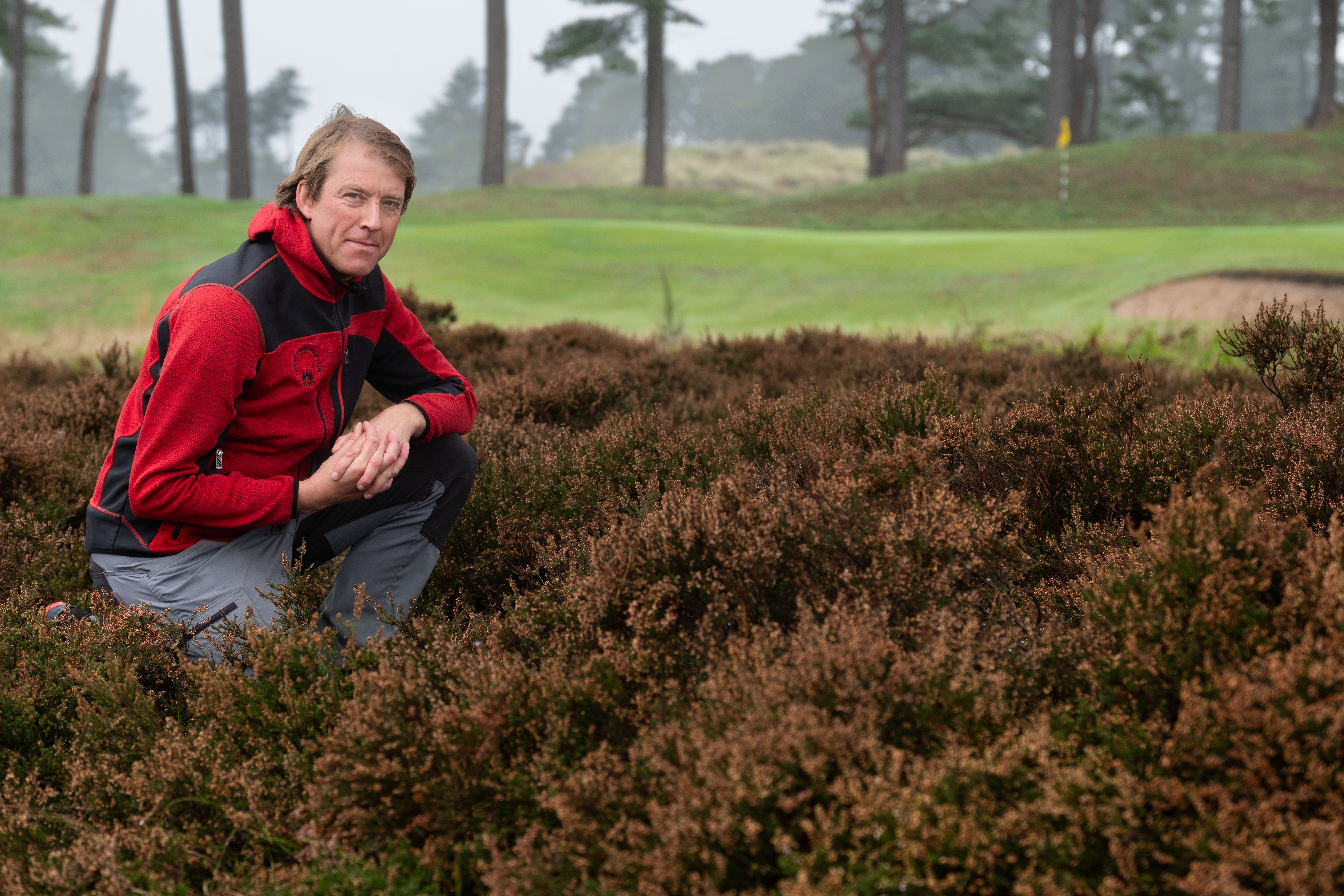
“The longer you do the job in greenkeeping, the more you value who you work for, how you’re looked after, the autonomy you’re given and the governance structure at a club,” he said. “It sounds really boring, I know, but it matters more than ever. For me, it’s about the atmosphere and the product you’ve created together.”
The setting had captured his imagination before he took the job in January 2016. Rob had heard of Formby Ladies but had never visited, and a photograph of the first hole, with its heather and contrasting textures, made a particular impression. Walking the course confirmed that there was something special about the land.
His experience at Grange-over-Sands, where flooding presented considerable challenges, had also taught him to look closely at the infrastructure supporting a course. At Formby Ladies, he could see opportunities to secure its future while bringing more of its potential into view.
“Obviously, your greenkeeping brain is looking at things that you can improve,” he said. “But everywhere improves in phases, on the shoulders of other people, and I would hope, when the time comes, the person who follows me will be in a good position, like I was.”
Rob is careful to acknowledge his predecessor’s 46 years at the club and the work previous committees had done to implement improvements.
His task was to continue to build on the good work of those before him to achieve a future-proof infrastructure.
“A lot of people will focus on the end product, but the end product is only as good as what’s underneath it,” he said.
Putting the plan into practice
Formby Ladies occupies a Site of Special Scientific Interest (SSSI) on the Sefton Coast, where dune grassland and heather are integral to the course’s character. Encroaching trees and scrub had affected the habitat, while the club’s water supply and ageing drainage presented risks to the playing surfaces.
An early course policy brought the objectives together. The team would encourage finer grasses suited to the site, improve the SSSI and establish an operation that the club could sustain. Rob wanted the principles to guide whoever held the relevant roles in future.
“The reason we came out on a path of wanting to be sustainable and responsible was largely because we cut our cloth according to our resources,” he said. “We were making sure that, for a club that’s relatively small, what we do was going to see us into the future and be sustainable for whoever was doing it. There are a lot of course policy documents gathering dust around the country, but it’s just putting in place those simple principles of what you’re doing. For us, it was trying to make sure the playing surfaces had a good amount of fine grass in there, and that what we produced and maintained was suitable to our resources and authentic to the site.”
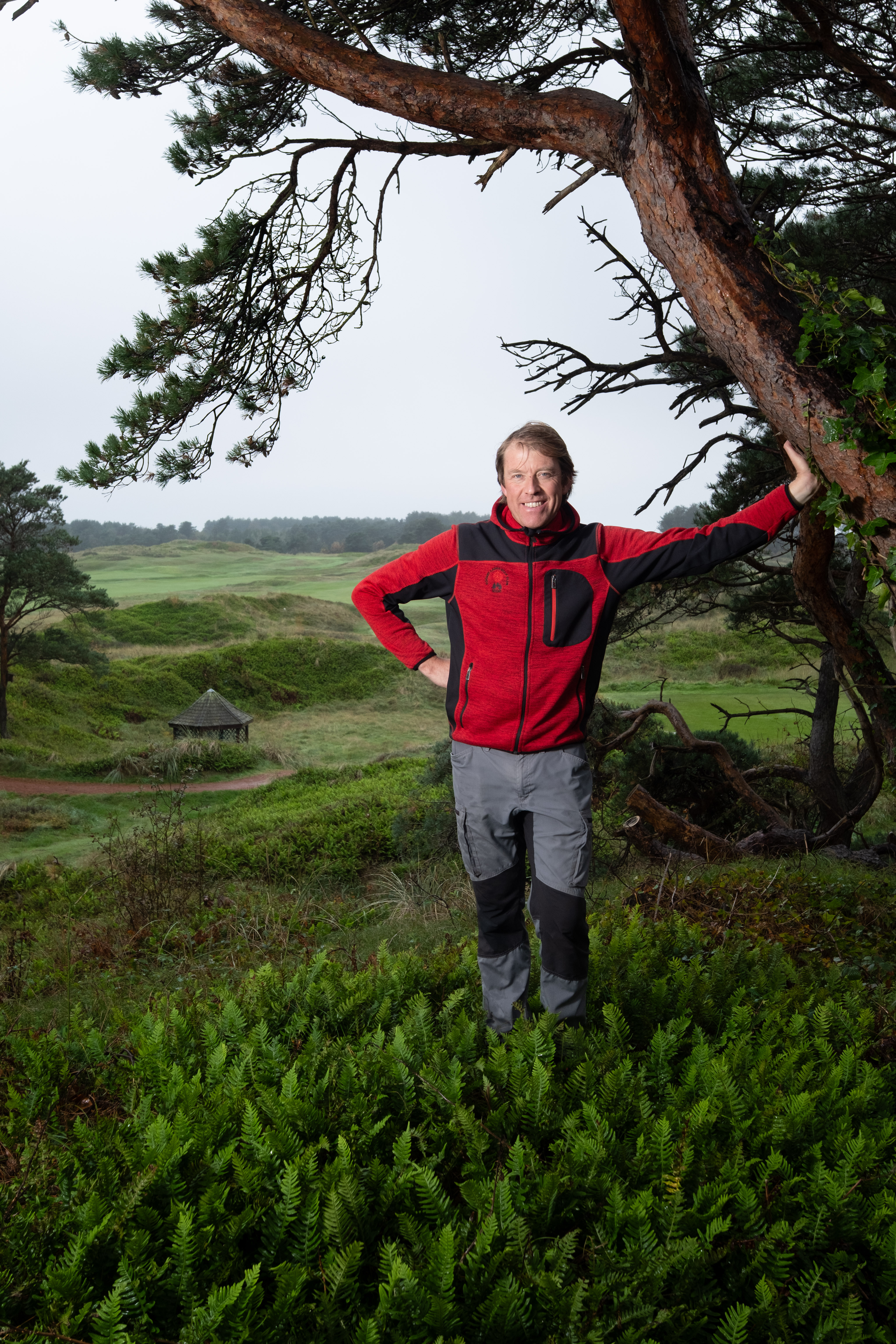
The club’s governance has provided continuity for that work, with incoming chairs of green gaining experience on the committee before taking the role. Rob credits the club with respecting professional advice and giving the greenkeeping team the freedom to put agreed plans into practice.
“They’ve always sought to make sure there was a governance structure that let us get on with our jobs and gave us a certain amount of autonomy,” he said. “You’re the paid experts at the end of the day, and that’s how we’re treated. We still have professional advice, whether it’s agronomists or Natural England with the SSSI, but everyone’s worked together.”
The habitat work has brought the club’s SSSI compartment back into favourable condition. Meanwhile, the drought of 2018 demonstrated how exposed the course was to a dwindling supply from its groundwater-fed pond.
Rob’s predecessor and earlier committees had considered alternative water sources and fairway irrigation. With the pond running low just when the course needed it most, the case for completing that investment became compelling.
“We sailed very close to the wind in 2018, and I think that was enough for most of us,” Rob said. “Any lingering doubt from anybody went, ‘Right, we’ve got to do something about this.’ And, to their credit, they absolutely did.”
The water-harvesting system, new tanks and pumps were accompanied by drainage improvements. Old clay pipes were replaced, obstructions removed and greater falls established in parts of the network, helping the team manage wetter areas more effectively.
The scale of the work has sometimes been disruptive, though careful planning and proper communication ensured nothing came as a shock.
“Our members have put up with a lot of disruption, whether it’s improving the irrigation or going across the fairway with a 13-tonne digger,” he said. “You always try your best to communicate and let people know what you’re doing and why you’re doing it. All the work, all the recovery, all the establishment, if it’s seed or anything like that, is done in play. It’s never easy.”
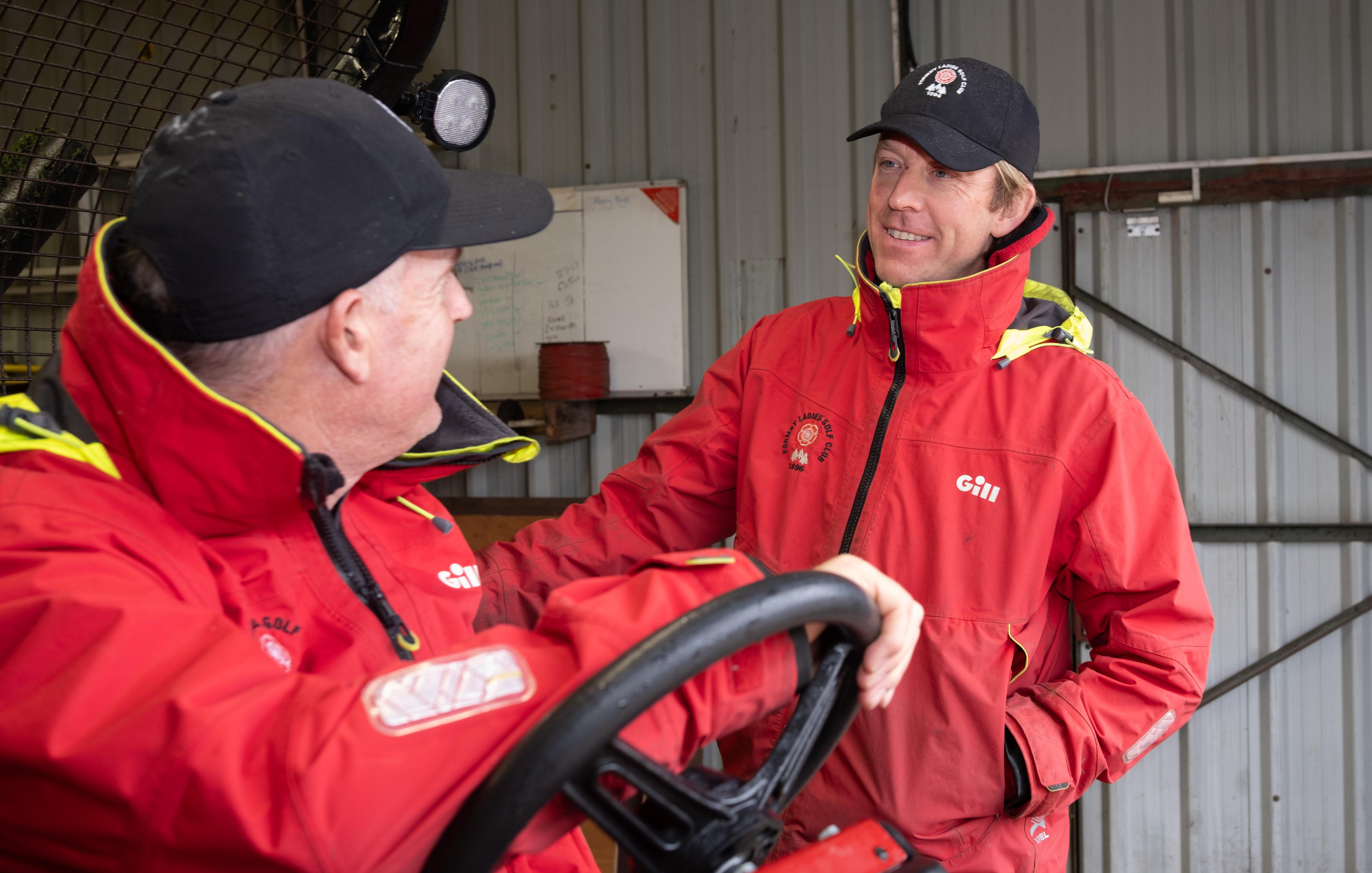
The members’ willingness to accept that upheaval, the committee’s commitment and the team’s work have produced a course that is more predictable to manage, even through demanding conditions.
“If you’re fortunate enough at any club to be as close as you can be to being in control of getting the water on and getting the water off, you can’t ask for much more than that,” Rob said. “Years like this prove that you’re never fully in control, but we are now starting to have that consistent product and that consistent site that can hopefully cope with most things.”
A shared achievement
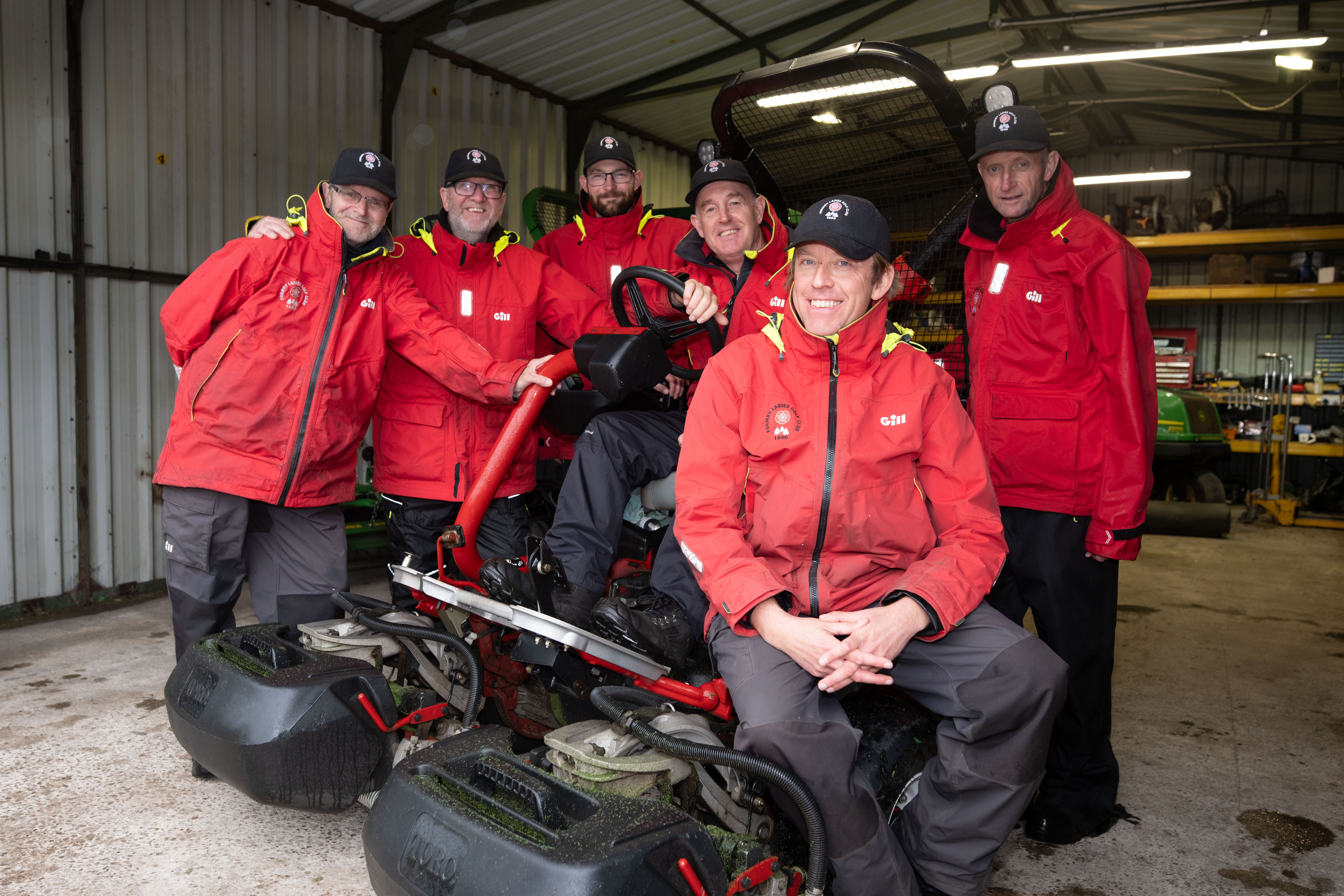
Three members of the small greenkeeping team have each worked at Formby Ladies for more than 40 years. Their knowledge of the land is a considerable asset, and Rob sees the course’s recognition in England’s leading rankings and at the Golf Environment Awards as a reward for their contribution.
“That’s one of the reasons we manage to do what we do with a small team because it’s a huge amount of experience,” he said. “They’ve played a huge part in what we’ve done. Things like the Golf Environment Awards and getting in the England Top 100s are exactly what all these guys deserve. I think they realise now, more than ever before, that they’re riding the wave they’ve created.”
Earning that recognition on England’s Golf Coast is an achievement in itself. With Royal Birkdale and Hillside nearby, and Formby Golf Club sharing the same stretch of land, Formby Ladies has established its own reputation among some of the country’s most celebrated courses.
The increased visibility has helped the club attract visitors. That income has helped build budgets, improve welfare facilities and give greater weight to recommended salaries. He hopes the next phase will allow the department to develop its staffing and bring younger greenkeepers through.
The club has also expanded its education budget. Staff who once visited BTME for a day have been able to stay overnight, while course visits and conversations with other greenkeepers have broadened their experience.
Bringing club officials to Harrogate helped them see the scale and professionalism of Continue to Learn, giving them confidence in what staff could bring back.
“It’s been really nice to give some of these guys, who are so experienced and have given so much to this club over the years, the chance to go to award ceremonies, pick up awards and go on stage,” Rob said. “Whenever anyone comes through here, they’re going to have a huge amount of benefit from these experienced guys who will teach them. But they’re also going to have the opportunity to do a lot of these things.”
The course retains a distinctive character, something Rob believes is reflected in its presentation. Holes have a single set of tees and markers, creating a simplicity that suits the landscape and its management.
“People enjoy getting round in a sensible amount of time and still having half the day left to do something else they want to do,” he said. “It’s a really homely club that looks after you, with an authentic experience that’s pretty unique in the world of golf.”
Rob’s satisfaction comes from seeing all those elements develop together. Infrastructure will need renewing again, water security will continue to demand attention and new staff will bring their own ideas. He believes the club is equipped to keep making those decisions, and he remains eager to be involved.
“There’ll be challenges here for as many years as anybody wants to take them on,” he said. “We’re fortunate that we’re in a good place, but we’ve worked hard at it. You could work away at any of these great golf courses until you retire, every day, and you’d have a new challenge and new things to do.”
Making water security a priority
The drought of 2018 laid bare a weakness in Formby Ladies’ water supply. Its groundwater-fed pond fell as the club’s need for irrigation rose. The annual abstraction allowance was 6,000m³, and the course had no fairway irrigation.
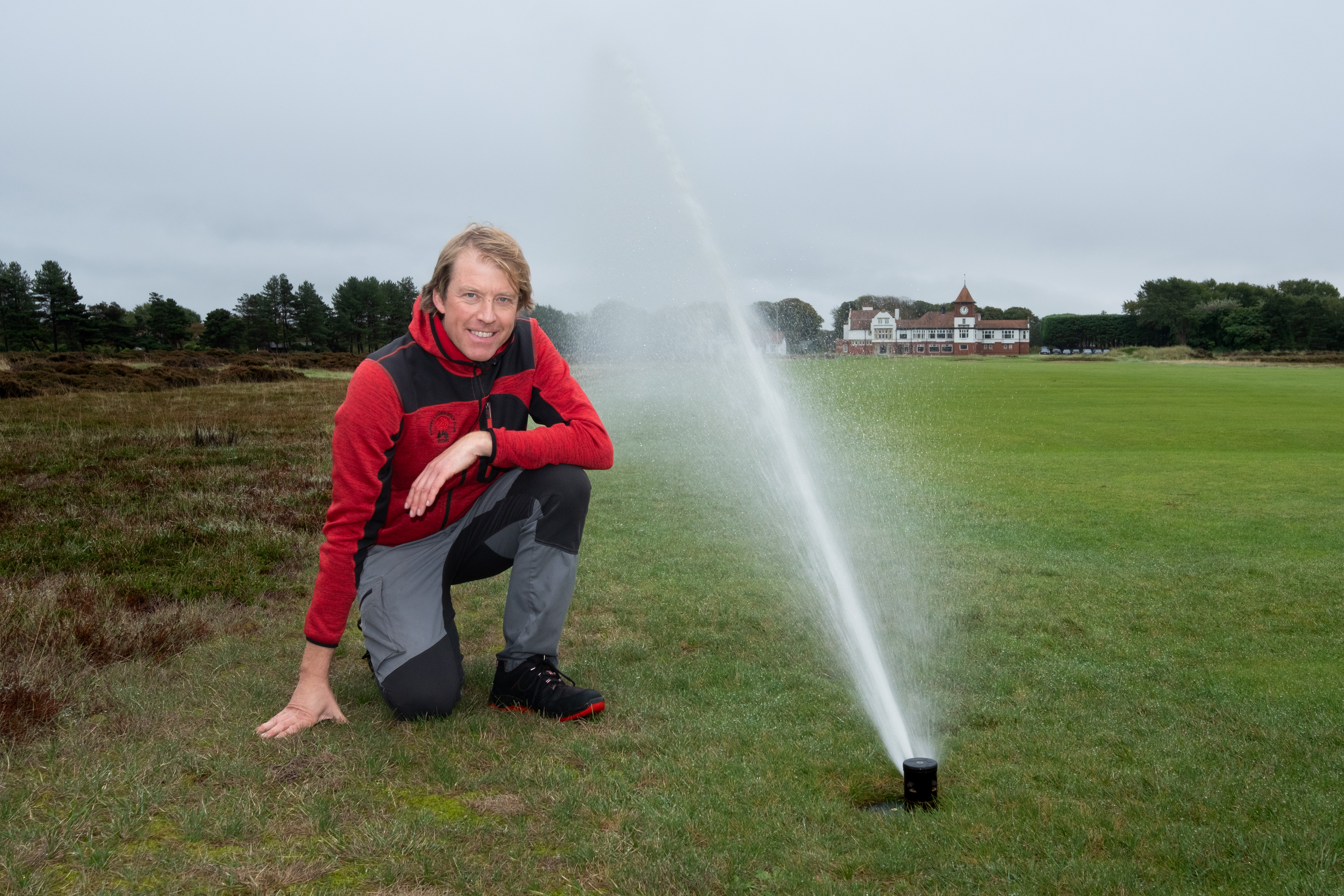
The club’s answer was a horizontal well suited to the coastal site’s shallow water table. A perforated pipe, wrapped in geotextile, runs approximately 300 metres at a depth of around six metres. It collects water into a chamber, from which it is pumped to the irrigation tank.
The project also involved new tanks, pumps and fairway irrigation. The club’s new licence allows abstraction of up to 24,000m³ a year. Rob has described the system as an insurance policy: its purpose is to help keep turf alive during prolonged dry periods, rather than preserve a uniformly green appearance.
It is a site-specific solution, and one that took substantial planning, investment and disruption. Rob’s wider point is applicable elsewhere: clubs need to understand how secure their water supply is before a drought makes the answer urgent.
A career-changing trip with the Bernhard Delegation
Rob was the only deputy head greenkeeper on the 2011 Bernhard Delegation to the United States, joining experienced course managers while applying for his first management role.
The trip gave him access to colleagues who reviewed his CV and offered practical advice on taking that next step, while visits to American facilities broadened his ambitions for what he could achieve.
“It was one of those sliding doors moments, without a doubt,” he said. “I found myself with people who, at the time and since, have done amazing things in greenkeeping. They gave you advice you couldn’t really buy, but also enough of a reality check and a head wobble to go, ‘Right, there are a few things here I could be doing better.’”
That guidance helped Rob secure the head greenkeeper job at Grange-over-Sands. He immediately turned to his fellow delegates again.
“I went back and said, ‘Right, I’ve got the job. What’s everyone’s start-up tips?’ I’ve still got that email somewhere, and I still think about some of the things in it now.”
The value of the delegation extended beyond career advice, giving Rob first-hand experience of what could be achieved in a different greenkeeping environment.
“It’s not just that you’ve seen pictures of it. You’ve walked it, you’ve seen it, you’ve felt it. You’re there,” he said. “I don’t think any of us who’ve been involved ever take that lightly. I’d encourage anybody to apply. There are so many opportunities that we get, and it’s down to us to try to take advantage of them and hopefully allow our staff to take advantage of them.”
Author
