
Behind the scenes at Birkdale
Royal Birkdale Course Manager Sean McLean outlines the sheer scale of the work he and his team have tackled at the famous Southport venue to make it Open-ready ahead of - and during - this summer’s championship
Arnold Palmer’s miracle out of a bush in 1961. Tom Watson’s drilled 2-iron from the 18th in 1983. Padraig Harrington’s incredible 5 wood into the 17th in 2008. Jordan Spieth’s crazy, electrifying back-nine surge in 2017. What do these memorable Open moments have in common? They all happened at Royal Birkdale.
The Southport course is perfect for Open drama. But as the Claret Jug returns to the North West this summer, it’s not only the players who have been making the headlines. Royal Birkdale has never been shy when it comes to tinkering with its layout. The 12th is one of the most iconic par 3s in major golf but was only added in the 1960s by Fred Hawtree Jr. After Ian Baker-Finch won The Open in 1991, Martin Hawtree famously relaid every green.
Even by those standards, though, the changes made to the golf course ahead of The Open in July have been extraordinary. Course Manager Sean McLean and his team of greenkeepers have been at the very heart of the project. If watching Spieth’s heroics nine years ago was the last time you set eyes on Royal Birkdale, prepare for a surprise. Architect Tom Mackenzie and the club have rung the changes.
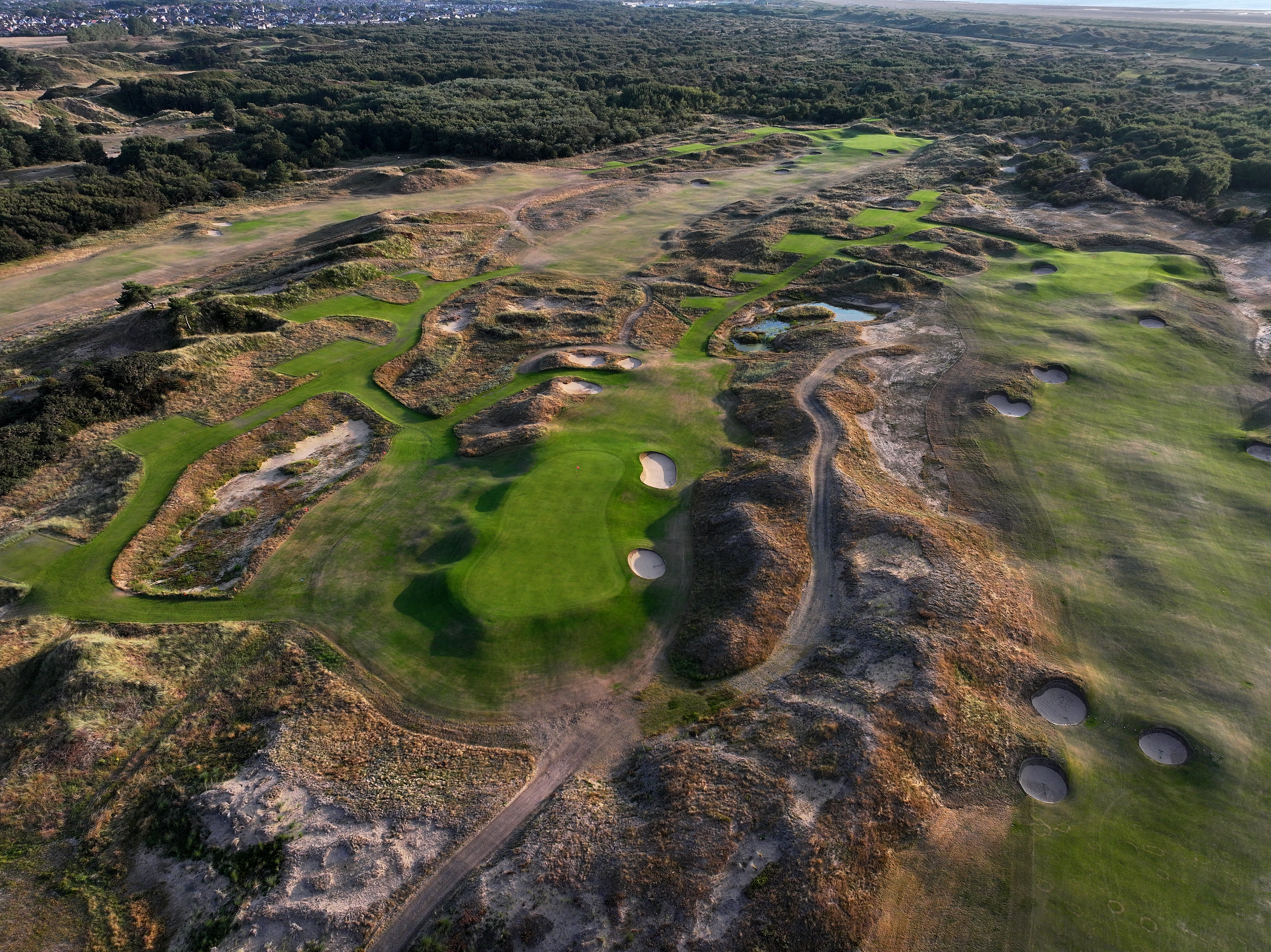
“We rebuilt five greens. They were the putting green, which was extended to make it bigger for day-to-day play and for The Open. The 5th, 7th, 14th and 15th were changed,” explained Sean, who has been the course manager for three-and-a-half years. “The 5th and 7th are completely new holes, really. The 14th was a par 3 but we built a new par-3 15th, and the 14th has been made into a par 5. It’s not just the five new greens. It’s 18 holes worth of new tees and path complexes. We’ve rebuilt every bunker on the golf course – probably about 110 in total, including the practice area, and we’ve reshaped some surrounds. There have been various other smaller projects, including the new practice facility, and alongside that we’ve installed drainage on lower-lying, wetter fairways, which were the 2nd, 3rd and 6th.”
The work was carried out in two phases. The first started in September 2023 and consisted of building the new greens. The second phase began a year later.
“Phase one was difficult because it was actually quite a wet phase of work,” Sean said. “It got quite difficult to get the 5th fairway returfed because it was hard to prep the area and prep the soil. Flip that over to phase two and it was the complete opposite. It was dry. That’s quite good for construction, but when it came to establishing the turf, from February pretty much through to September, it was a drought. When you’re trying to nurse new turf through that, it’s quite difficult. The green staff rebuilt all the bunkers. They pretty much returfed every tee that was built. We used contractors for most other things but we reinstated all the drainage turf lines as well. It was a monumental effort by the green staff and the contractors.”
Once the renovation works were complete, and the countdown to The Open really began in earnest, the focus for Sean and company became one of preparation and protection.
“Through the winter, we go onto mats on fairways, and it’s just trying to reduce the amount of divots and any wear and tear,” he said. “There are a lot of ropes up to protect the rough, so people aren’t driving through it and trampling it down. There’s a lot of ropes and posts protecting surrounds and all these high-traffic areas close to greens – or to try and push traffic away from hot spots. You’re constantly fine tuning. Because of the last three years of construction, it has been busy and we’ve obviously got a lot of young turf out there. The main thing has been looking after and nurturing the young turf and the new greens and trying to make them consistent with the rest of the older turf. It just takes a little bit more TLC to get everything up to speed. We try and get into a routine, and if everything becomes a routine then all it really is for The Open is upping your frequency of cuts.”
Come Open week itself, it will be no less busy. Sean reckons the alarm will go off at 3.30am each day as his staff – aided by the R&A’s Championship Agronomy team – race to get the course ready for the first tee time. Over the opening two days of the tournament, that’s usually a 6.30am start.
“We’ll likely have our morning meetings at 4am,” he said. “The evening shift probably won’t finish until 9.30pm or 10pm so there’s not much sleep in there. Maybe we’ll try and get a siesta in the afternoon. It just depends on what happens. You can plan as much as you want, but you just need to be prepared for the worst. Hopefully I’ll have time to look and appreciate it during the week, but it will probably be more after events are over and you’ll look back with pride at the highlights and take it all in.”
The arrival of defending champion Scottie Scheffler, Rory McIlroy and the rest of the game’s elite will be the culmination of years of hard work from Sean and his greenkeeping team.
“We’re definitely going to be proud,” he said of the prospect of such luminaries treading the turf. “Especially when you see it on the TV and the pros playing it. There’s always going to be a sense of pride. But I’ve not thought too much about it because I’m too busy thinking about the actual running of what we’re doing. I’m probably thinking about that more than anything.”
He added: “It will be [the highlight of my career], but you can also look at the construction phases. I’ve been lucky enough to work at some great golf courses and there are lots of proud moments there. The Open will definitely be up there with them.”
What are the main changes at Royal Birkdale?
- A new par 3, which plays at the 15th
- The previous par-5 15th has been redesigned as the new 14th hole
- The previous 14th green has been converted into a short game area
- The 5th hole has been completely redesigned
- The 7th has been redesigned to become a short par 3 with a raised green
- Every bunker, tee and pathway on the course has been renovated
Why have Royal Birkdale taken out some bunkers?
What comes to mind when you think about a links course? If sea views are right at the top of your list, bunkers probably aren’t too far behind. Open rota courses are renowned for their sand and the jeopardy it can cause, but at Royal Birkdale they’ve reduced the number of traps around the layout.
“We had about 125, and there’s 106 on the course now and probably five on the practice area,” Sean said. “Some just weren’t needed anymore. They were way short and were only punishing high handicap golfers. There was no point in having bunkers there. We were really just updating the bunkering and the strategy of the bunkering – and taking out ones that didn’t need to be there.”
He added: “The bunkers were quite small before and were quite deep. With them being made bigger, the reality is there’s probably just as much sand area, it’s just there are fewer bunkers. You’ll probably find that at most, if not all, golf clubs, most of the time is spent looking after bunkers. It’s just the reality of it. We’re always looking at ways to try and reduce that. Is that where you really want to be spending the majority of your labour?”
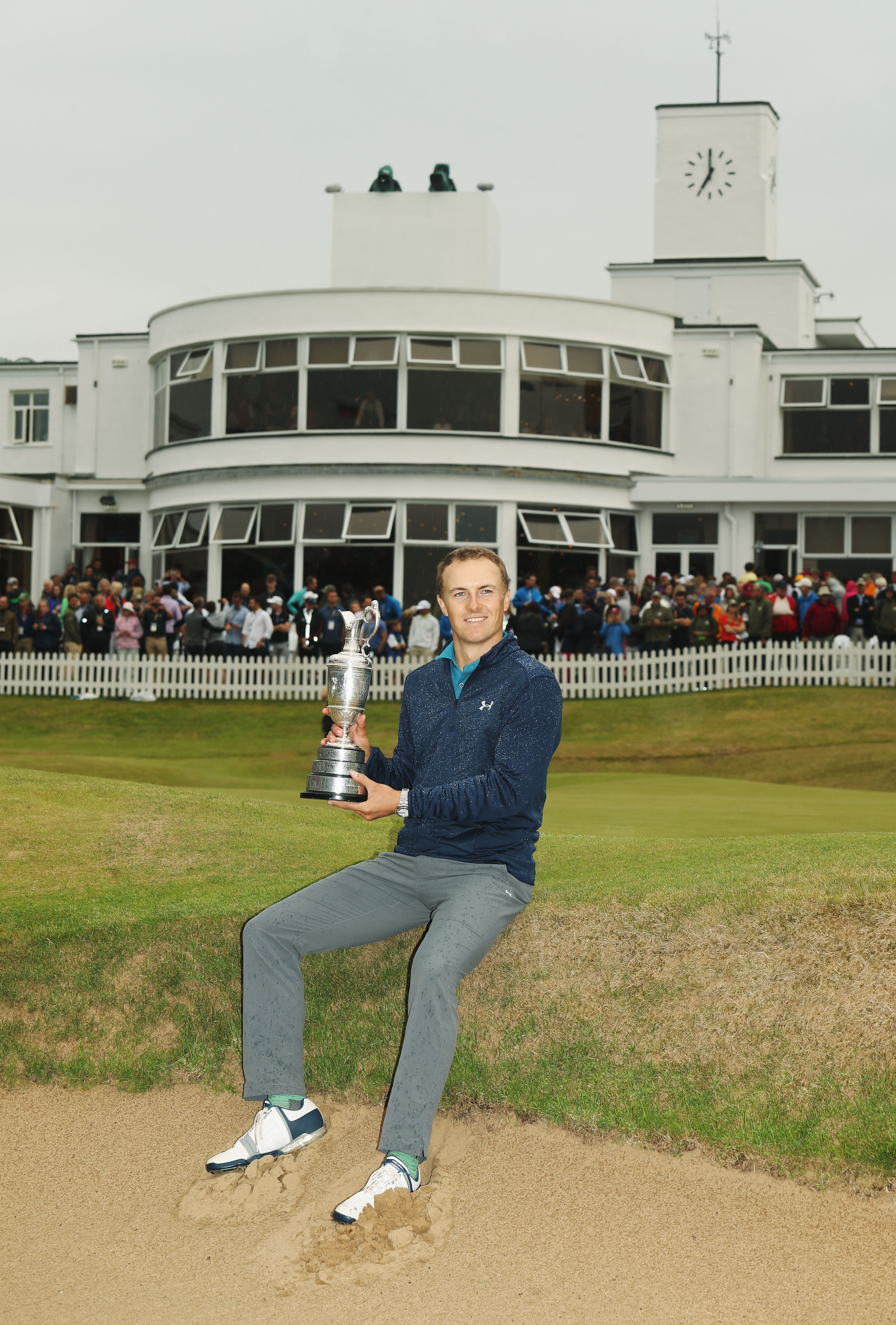
Jordan Spieth cradles the Claret Jug in front of the Birkdale clubhouse after his 2017 triumph
Author

About Sean McLean
Originally from Edinburgh, Sean began his career at Craigmillar Park Golf Club. He served internships at Oak Hill and Southern Hills in the United States and worked in Australia at Huntingdale and Avondale in Melbourne and Sydney.
In the UK, he has enjoyed spells at Archerfield, Turnberry and The Duke’s Course (now The Craigtoun Course) before moving to Prince’s as Project Manager in 2009.
In 2013, Sean was promoted to Links Superintendent at Prince’s – a role he held until moving to Royal Birkdale as Course Manager in the autumn of 2022.
The Open at Royal Birkdale will be his first major championship as a Golf Course Manager.