
American adventure is giving me the confidence to aim higher
Before Lucy Clarke knew greenkeeping could become her career, she had already discovered the satisfaction of improving a patch of ground.
She took great pride in looking after her own garden and soon began doing the same for friends and family alongside her job in carpentry. Then she spotted an advert for an apprentice greenkeeper at King’s Lynn Golf Club and found a profession that combined practical outdoor work with the chance to earn a qualification.
Lucy threw herself into learning, gaining experience across the playing surfaces, securing her PA1 and PA6 spraying qualifications and completing her Level 2 in greenkeeping in just over a year.
Volunteering at the BMW PGA Championship, LIV Golf at JCB Golf and Country Club and the Women’s Rugby World Cup final at Twickenham broadened her horizons further.
Now, through the Ohio State Programme, Lucy is spending six months at Robert Trent Jones Golf Club in Virginia before moving to Lake Nona Golf and Country Club in Florida.
Why did you apply for the Ohio State Programme?
I first heard about the programme from my Level 2 greenkeeping tutor, Martyn Lumb. He told me about the great opportunities that come from completing the programme and the amazing experience that comes along with it. This alone made me want to apply, but after a couple of golf volunteering events and meeting others who had completed the programme and hearing about their experiences, it only solidified my decision to apply.
What did the application involve?
A quick rundown of the process is that you first complete a CV-like form, talking about yourself and your achievements and experience. After that, and being in contact with Mike O’Keeffe, global intern manager at Ohio State University, he said I had a place.
I felt happy and excited that my journey to really kick off my career as a greenkeeper had begun. The following steps included paying a small amount in fees and getting my visa. Thankfully, Syngenta has sponsored me, so they helped with some costs. I will be glad to represent them at the GCSAA Conference next year.
Where have you been placed?
For the first six months, I have been placed at Robert Trent Jones Golf Club in Gainesville, Virginia. On my first day, I was put on a John Deere sprayer and sent out to spray the rough. I had never used one before, so it really gave me an insight into how much I had to look forward to learning.
Scott Furlong, the superintendent, is very keen on getting the interns to learn all the jobs there are to do, ranging from course set-up, spraying and mowing to identifying diseases and weak areas and, overall, just how to keep the course at the high standard that it is at. This is great, as I get to learn something each day.
My second course will be Lake Nona Golf and Country Club in Orlando for six months. I am looking forward to it.
What does a typical day involve?
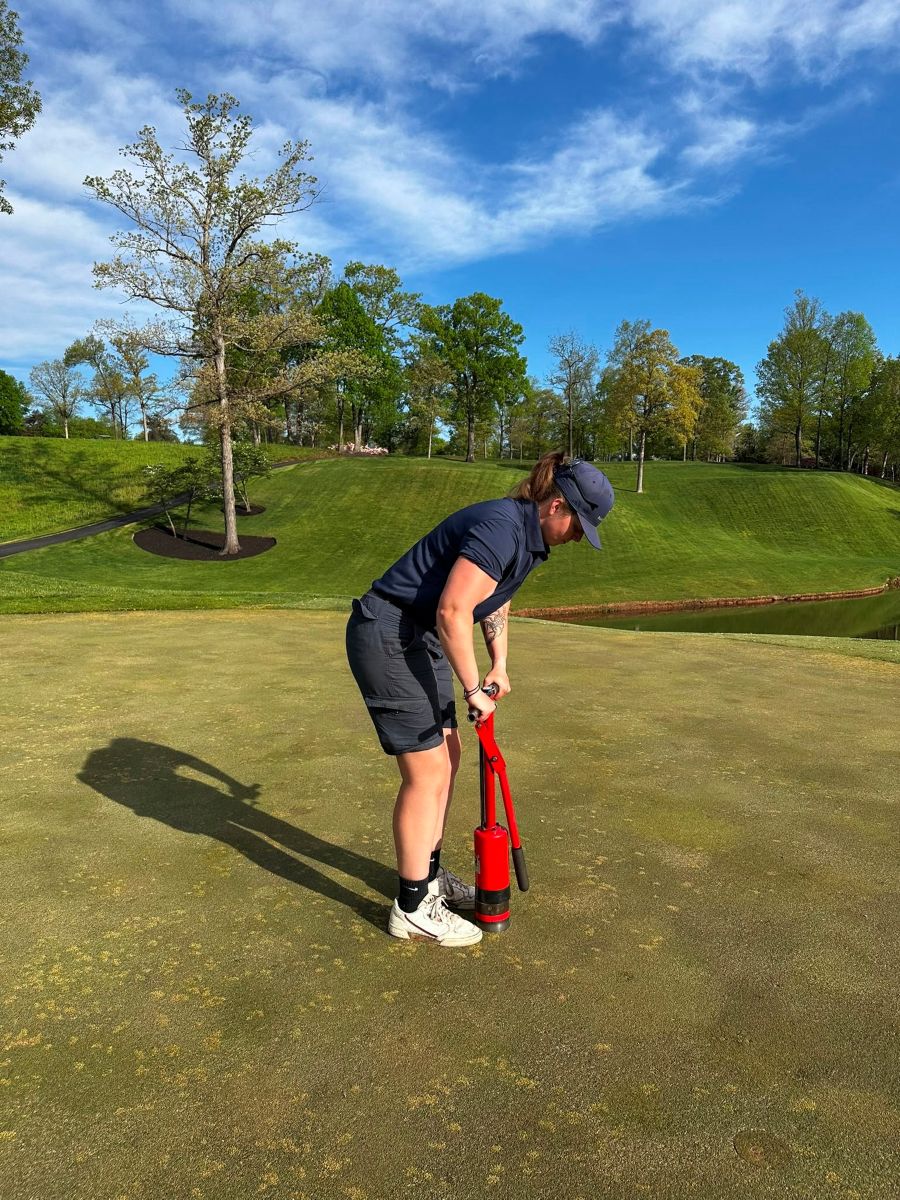
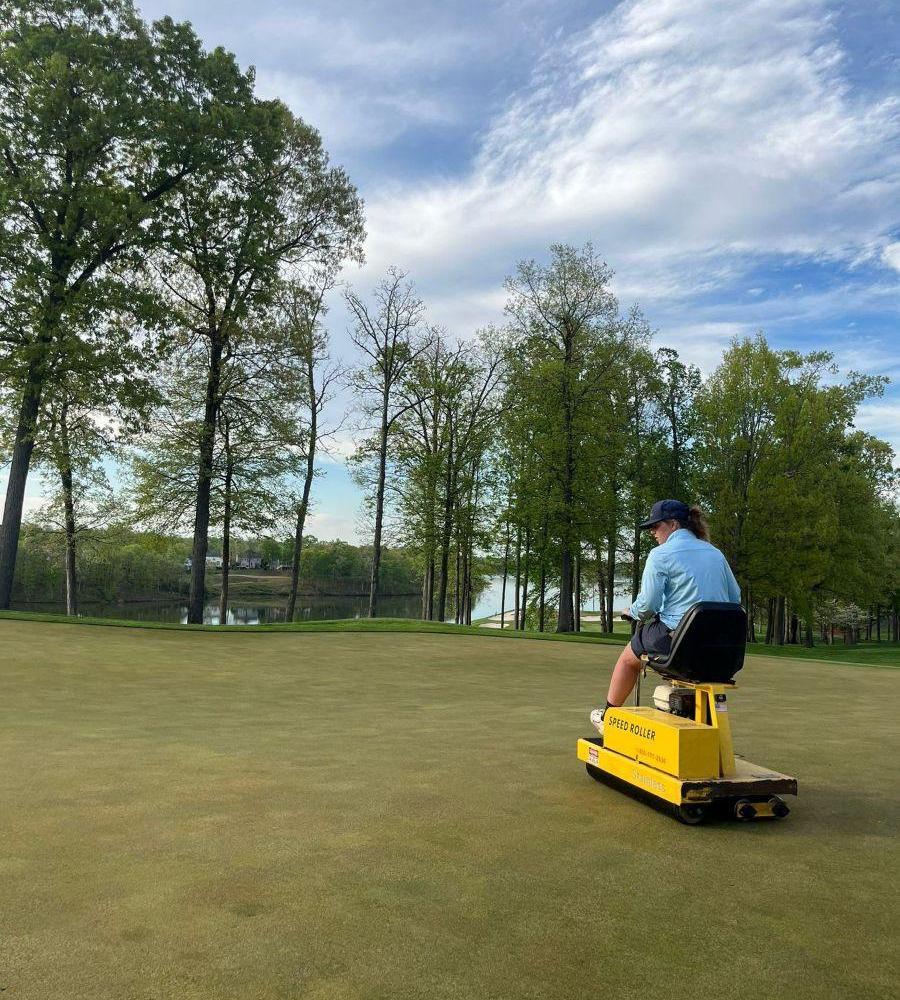
A typical day can start with either changing cups and moving tees, mowing greens, spraying an area of the golf course, using POGO on the greens or turfRad on the fairways. Then it can be any job, such as detail work or, if we are very lucky, digging a trench for some wire.
Afternoons in this warm weather consist of hand watering greens, tees and fairways. This is quite different to King’s Lynn as there is a lot more to be done due to the sheer size of the course and the standard that has been set is very high. There are more hours and it takes a lot of demanding work to maintain it.
RTJ uses a lot of technology to help with how the team manages the course, which was something we did not have much of at King’s Lynn. Learning the technology is important to me as I think it will play a big part in the future decisions I will make when I am using it as a deputy or even as a superintendent.
What are the biggest differences from the UK?
The biggest difference definitely has to be the staffing. I have come from a group of seven to a group of around 30. The amount of work that can get done in a few hours at this course in America is insane to me.
Other big differences are the resources. I have come from a small local club to one that seems to have an unlimited budget. The equipment and technology that we are fortunate to have at RTJ really help the greenkeeping staff to look after the course in the best and most efficient way possible.
Expectations, I would say, are the same, though. The courses I worked at back in England aim to achieve the same goal as the ones over in America do - to look and perform to the best standard.
What have the highlights been so far?
My highlights so far include working at the PGA Championship at Aronimink Golf Club, where I got to mow greens all week. It was a lot of pressure at first, but I eased into it and hugely enjoyed it, as well as really enjoying meeting all the other greenkeeping staff.
Highlights at RTJ happen most days, whether I get to try a new bit of kit or Scott invites us interns to speak with a sales representative or expert to teach us about a new topic or something that is up and coming.
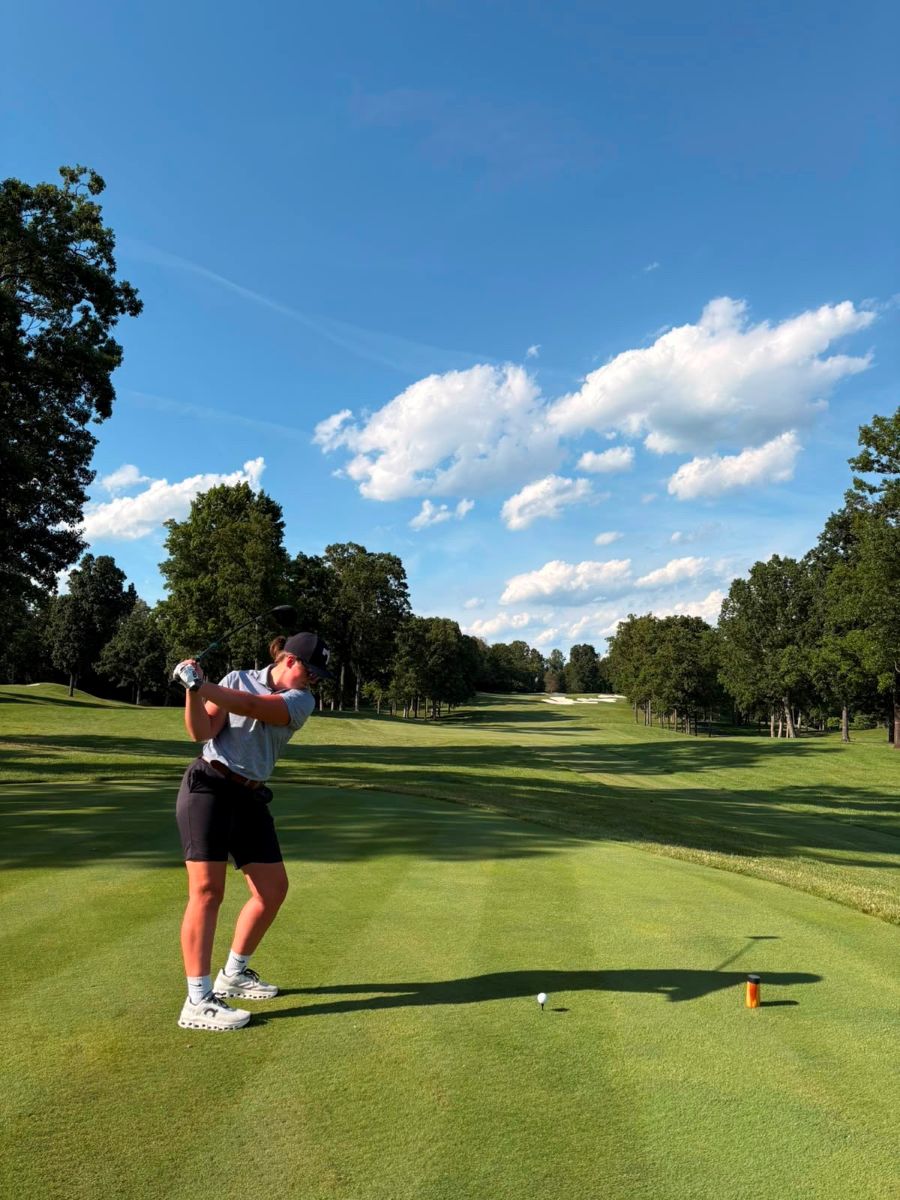
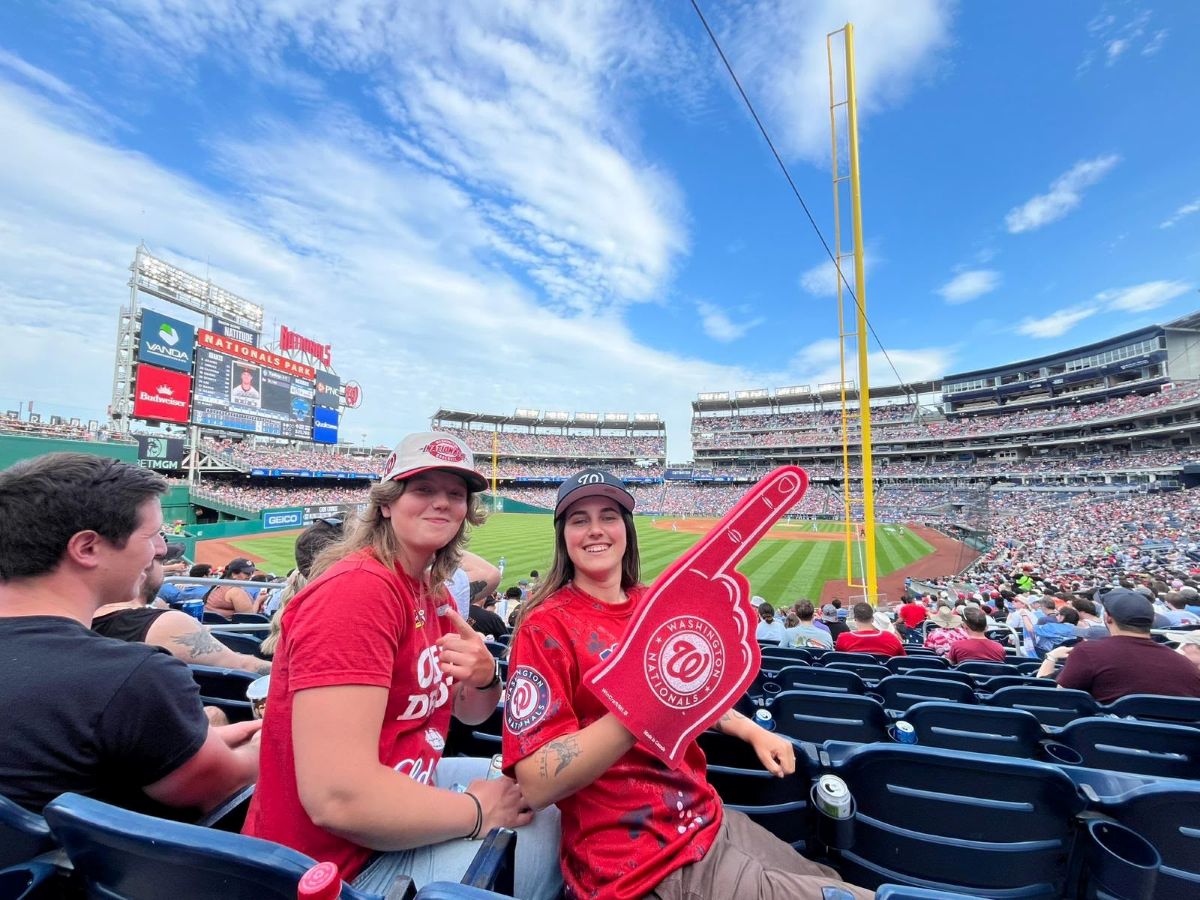
Other highlights include visiting Washington DC, attending baseball games and visiting New York, which was incredible. I also get to play the course, which is great because I can really see that the vigorous work from us greenkeeping staff is paying off.
I look forward to the GCSAA Conference in New Orleans next year, as well as getting started at Lake Nona and living the Florida lifestyle.

What agronomic challenges are you encountering?
At RTJ, it is mainly bentgrass all around the course and, with the exceptionally hot weather, it is a job and a half to keep it alive through hand watering, but we get the job done. There have also been little outbreaks of diseases, disorders and insects, such as dollar spot, fairy rings, weevils and wilting.
Dealing with these on a larger course scale has been challenging but, with great management, it has all been kept under control. This is something I can learn massively from, so props to Scott and the assistants for that. It is different to back home simply because of the resources RTJ has access to.
How is data used at RTJ?
RTJ is a huge user of data. POGO and turfRad are huge helpers with finding and collecting data on dry and wet areas. We are also moving on to using the USGA GS3 ball, which is super exciting because of the data it can collect, such as firmness, stimp and trueness.
Technology and data collection are the future of greenkeeping. They really do help you understand why your course is the way it is and give you an idea of what you need to improve. They are also great for ensuring you are improving the playing surface while keeping plant health at its best.
Has the experience changed your ambitions?
So far, this experience has only solidified that a deputy, course manager or assistant position is something I can definitely achieve. Obviously, I would like to gain more experience before doing so, but I feel that, at the end of the year, I will have the knowledge and confidence to begin my journey towards one of those job titles.
I want to bring back to the UK the standard that US golf courses have and the way they approach pushing the course past its comfort zone while keeping it in pristine condition, knowing and understanding what it can and cannot take. I also want to understand what a course needs in terms of sprays, heights of cut and water usage.
What has moving abroad demanded from you?
It has demanded a lot of individuality and self-awareness. Speaking for myself and making sure I make good first impressions on multiple new people on an almost weekly basis requires a lot of composure and comes with doubt, a little anxiety and nerves. But I am gradually getting more accustomed to it, thankfully, and getting better.
It takes a lot mentally, too, to leave your family and friends behind and come to a place where you know no one. I truly do miss everyone back home, but I keep it together by thinking that I am grateful to be in this position and that I know I am making them proud.
This experience so far is definitely making me a stronger-minded person. The hours I work are physically demanding too, so my time management has improved so that I can fit all my own plans and rest around the long hours that I work. It is important to have that work-life balance.
Put yourself in unfamiliar environments
Lucy had already volunteered at the BMW PGA Championship, LIV Golf at JCB Golf and Country Club and the Women’s Rugby World Cup final before heading to America.
Those experiences helped prepare her when she was selected to mow greens during the PGA Championship at Aronimink Golf Club.
“I cannot stress enough how important it is to put yourself in unfamiliar environments,” she said. “It builds your confidence hugely, as well as your composure. You learn to adjust better under pressure. After a couple of volunteering events, I stopped being nervous about the next ones, which honestly made them more enjoyable. I was picked to mow greens at Aronimink and, thankfully, because of my other volunteering experiences, I was familiar with the machinery. I had the mindset: ‘This is a huge event and I can’t mess up, but I know what I’m doing and I have the other greenkeeping staff around me, supporting and not judging, so just crack on with it and it’ll only get easier.’
“That was exactly the case.”
Author
