A life’s work at Nairn
After four decades at one club, Richie Ewan is still finding ways to move a famous links forward
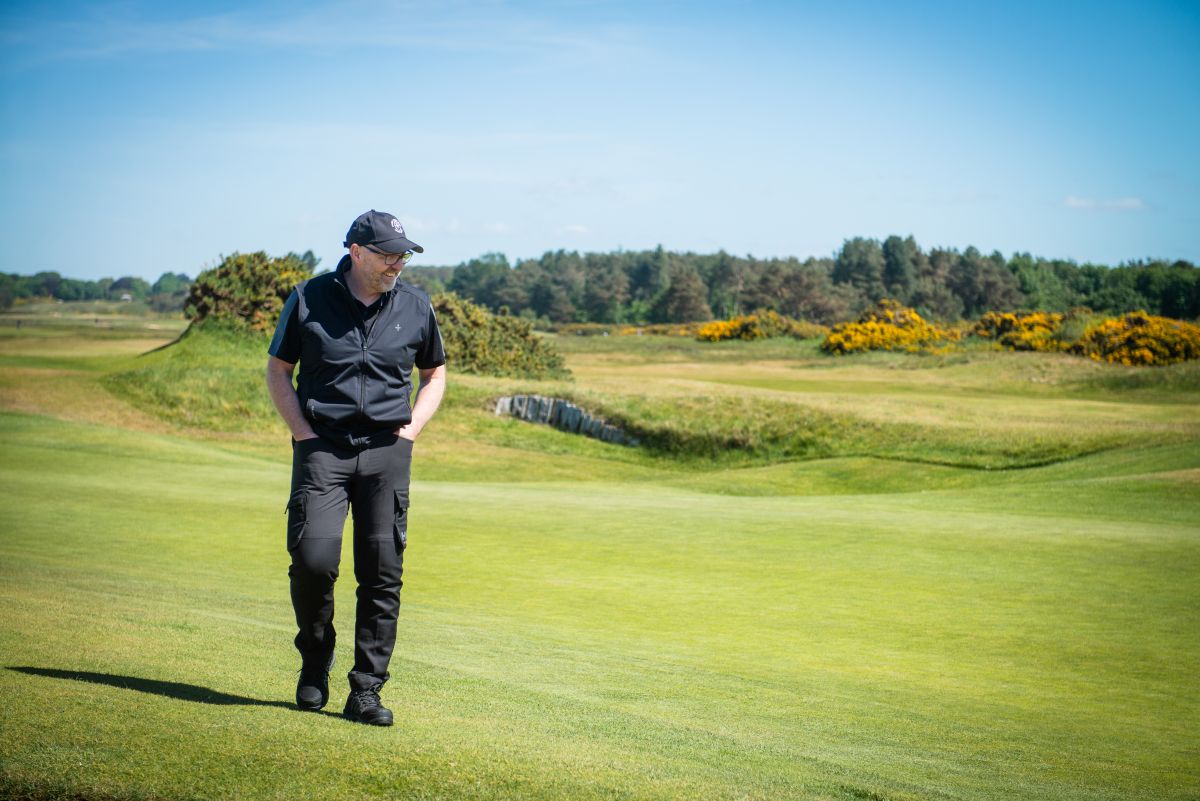
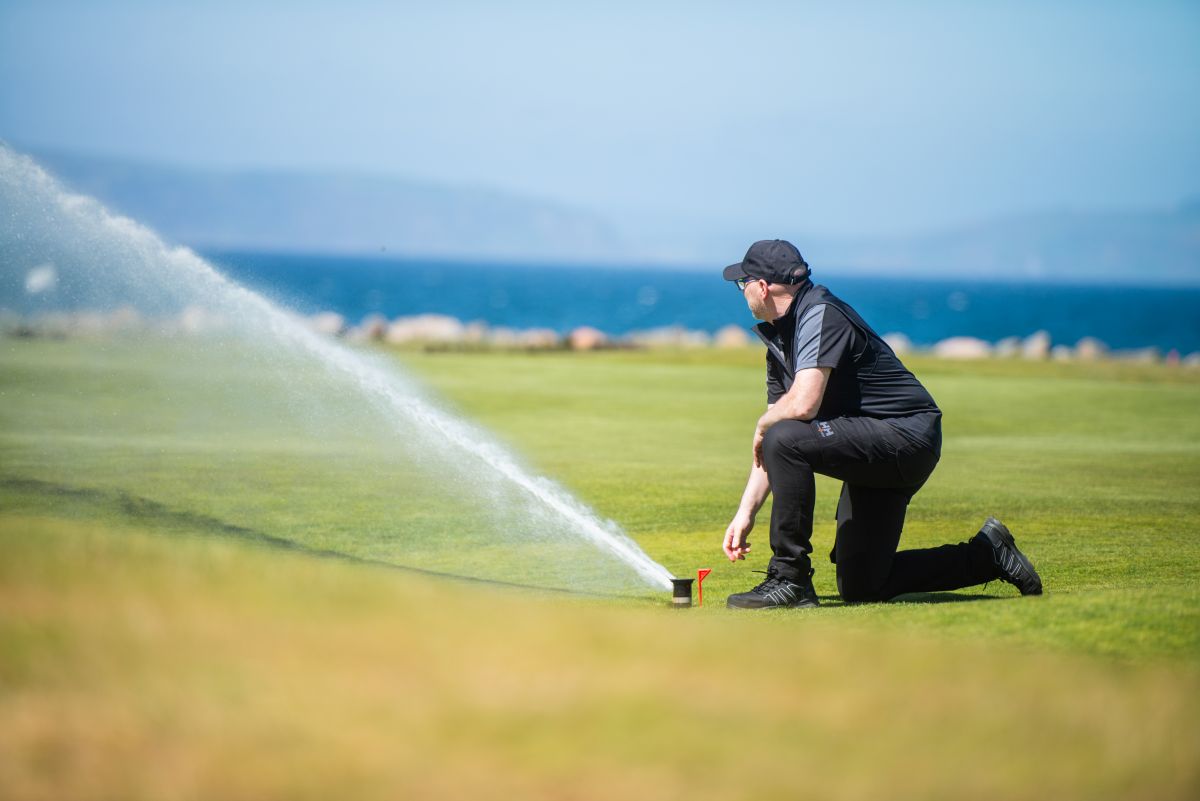
Familiarity has done little to diminish Richie Ewan’s appreciation of Nairn’s coastal setting or his enthusiasm for the work required to keep improving the course. The landscape still encourages him to pause from time to time to take in the views, while the demands of chasing ever-higher standards ensure his motivation is as sharp as ever.
“We quite often see dolphins in the Moray Firth; the course is also a haven for wildlife,” he said. “The sunrises and sunsets are very special, due to the course positioning, links undulations and closeness to the shoreline. I’m most definitely still fully aware of our stunning location and what a great place this is to work.”
It is during the early morning course set-up, before golfers arrive, when the only people on the course are the greens team, that Richie takes the greatest satisfaction.
“Being out on the course early in the morning, when it is just the green staff, is naturally the best part of the job for me,” he said. “Preparing the course for the day ahead and seeing the team work seamlessly ahead of play is a continual highlight.”
Richie began his apprenticeship at Nairn in 1982 and, aside from a short spell away, has spent his entire greenkeeping career caring for the links. That adds up to 41 years in greenkeeping and 38 years of continuous service at Nairn. Across that time, he has helped transform the grass composition of the greens, overseen major course changes, enhanced the fairways after extreme weather and prepared Nairn for some of amateur golf’s greatest occasions.
A return to the links
Richie’s first experience of greenkeeping came during his junior years at Nairn. A keen golfer, he spent two summers helping on the course before beginning his apprenticeship. When he qualified in 1985, there was no permanent position available, and he joined his father’s business instead. It did not take long for him to realise what he had left behind.
“I missed the outdoor life and the different work aspects greenkeeping can give you,” he said. “There is the variety of work that the seasons naturally provide. It also gives you the chance to express your skillset through working with course design changes, machinery or being hands on with the turf.”
A position became available in September 1988, and Richie returned as a qualified greenkeeper. He progressed through the operation before succeeding the late Iain Carson as course manager in 2012.
The appeal of the workplace is easy to understand. Nairn’s opening holes hug the shoreline, with the Moray Firth remaining in close view for the first seven before a change in direction and moving slightly more inland on the back nine. The prevailing westerly breeze commonly meets golfers through the exposed opening stretch, while an old salmon fisher’s bothy and icehouse has been converted into the halfway house.
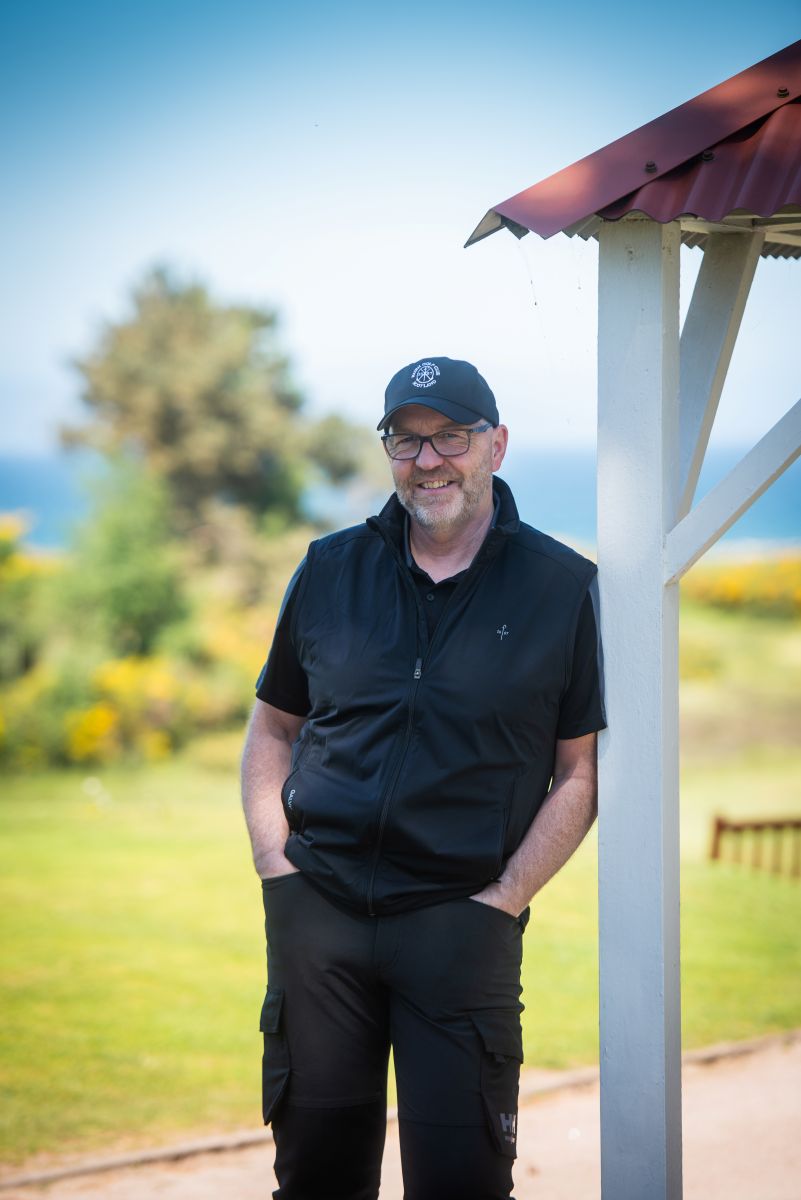
“It retains quite a fabric and is steeped in history,” said Richie. “The water plays a major factor, with the scenic aspect beyond creating a wonderful backdrop. The course has stood the test of time, and we’ve had the pleasure of hosting a number of top amateur events over the years.”
There were moments when Richie’s career could have taken him elsewhere, but his attachment to Nairn was reinforced by a positive relationship with the club’s leadership and a shared belief in what could be achieved. The board has consistently supported the direction of the course and the long-term programmes Richie wanted to pursue, allowing improvements to be planned over years rather than judged solely on immediate results.
“I always felt quite strongly that I had unfinished business here with a number of things I wanted to achieve,” he said. “The club was very proactive and supportive of me, both before and since I became course manager, so I felt comfortable in this environment and with what could be achieved. You grow an attachment to Nairn and the environment it sits in. For me, it is quite a special place and there are not many, if any, places I would rather be.”
Preparing to lead
Richie’s long working relationship with Iain produced many great memories and a grounding in both the demands of Nairn and the responsibilities of leading the operation.
“We didn’t always have the same views, but I think that’s healthy,” said Richie. “I would put my case forward for certain things and likewise for Iain. We had a good, strong working relationship, and it was always about what was best for the golf course and Nairn Golf Club.”
As the 2012 Curtis Cup approached, Iain allowed Richie greater responsibility, providing valuable experience of the work surrounding a major event. By then, Richie had already begun to consider what he would do if given the course manager’s position.
“There have been a lot of practices through the years that became fashionable and then disappeared,” he said. “It was about seeing through all that and trying to find a sustainable programme tailored for our course and location, with minimal impact on the environment.”
The eventual transition after the Curtis Cup felt seamless. One of Richie’s first major priorities was the green swards.
Changing the greens
The putting surfaces Richie inherited were predominantly Poa annua. The long-term ambition was to create a healthier and more resilient profile, increase the proportion of bent and fescue and reduce the presence of Poa. Topdressing levels increased, while overseeding increased to four or five passes each year.
“We’ve flipped it around from what was initially a fairly Poa-dominant sward,” said Richie. “Bentgrass is now by far the most dominant species and fescue has also increased to an encouraging level. We haven’t fully got rid of the Poa, but it is present in a far lower percentage. That took considerable persistence and hard work. It is by no means achievable without a fantastic team effort.”
An intensive programme of scarification and sand injection using a Graden machine, combined with increased topdressing levels, helped reduce organic matter to under 6% in the top 20mm. DryJect and the VGR TopChanger were subsequently introduced to keep working material into the profile and support the pursuit of finer grasses and firmer surfaces.
The programme took on additional importance when Nairn constructed new greens at the 1st, 7th and 14th holes. The challenge was to ensure the original green profiles did not behave differently from the newly constructed greens.
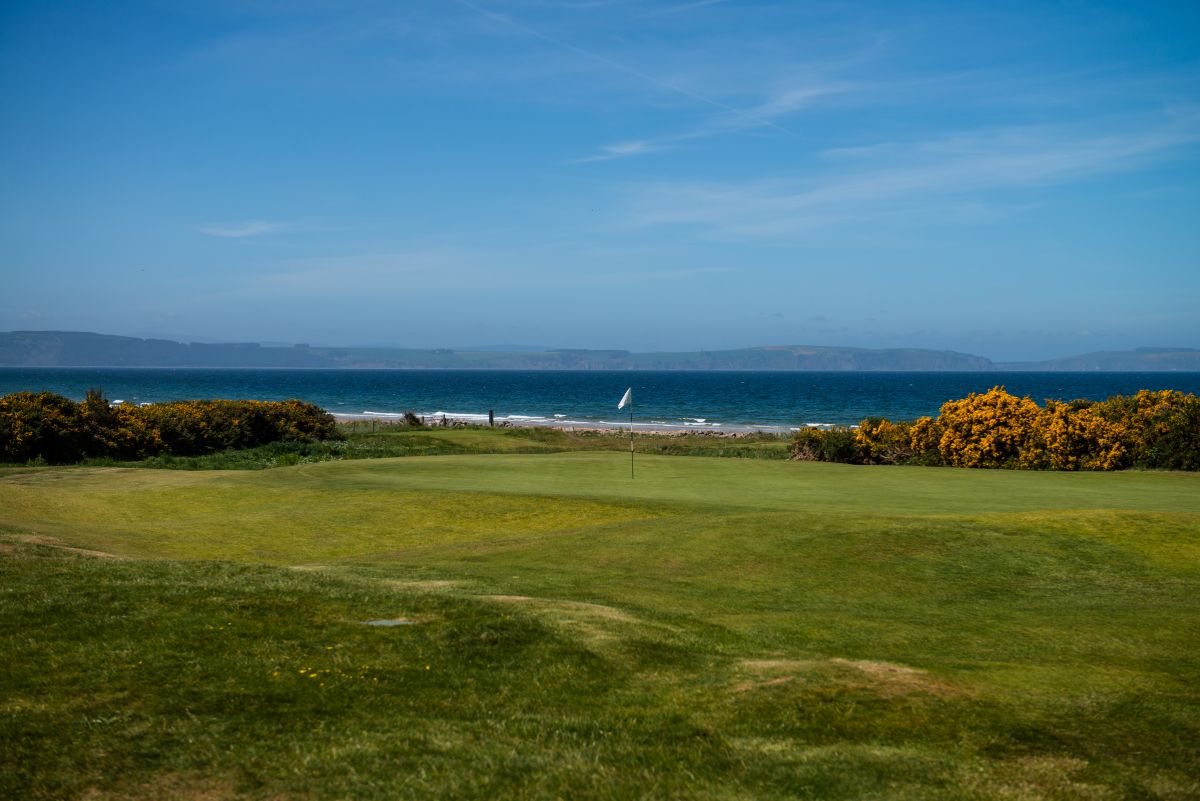
“The objective was to get the original greens to perform as closely as possible to the new ones,” said Richie. “I think we’ve been successful in doing that. Their performance and data gathered are now very similar, and with using native turf from the original greens you would visually never be able to tell the difference.”
Modernising a historic links
The new greens formed part of an extensive programme delivered with Mackenzie & Ebert between 2018 and 2020.
Alongside the three greens, the work included 13 remodelled green surrounds, 62 newly constructed bunkers and 26 new tees. Richie described it as the most significant period of alteration since James Braid’s final visit in 1926.
“There have been a lot of smaller changes over the years, but that was undoubtedly the biggest change during my time,” he said. “There has also been a significant change in expectation and demand for play. We have a high level of play from members and visitors, more than at any point I can remember. The recent changes have matched that demand and taken the golfing experience at Nairn to a new level.”
The timing added another layer of difficulty. The work followed the Beast from the East in spring 2018 and Nairn’s driest summer in around 60 years.
The combination caused extensive fescue loss on the fairways, particularly across exposed high points. Scarification, disc seeding, pot seeding, continual aeration and wetting-agent applications were used as the team tried to re-establish cover. Hard fescue was initially introduced in the most vulnerable areas, and the fairways have been overseeded once or twice annually ever since.
“We had taken a massive hit and lost a fair amount of fescue. The irrigation water supply at the time just couldn’t cope,” said Richie. “Getting the fairways back to championship standard took another substantial effort by the team. An opportunity to improve their sward quality arose and they are now arguably the best they’ve ever been.”
The fixed date
There was little time to admire the completed work. Nairn hosted The Amateur in June 2021, and the Women’s Amateur followed four years later.
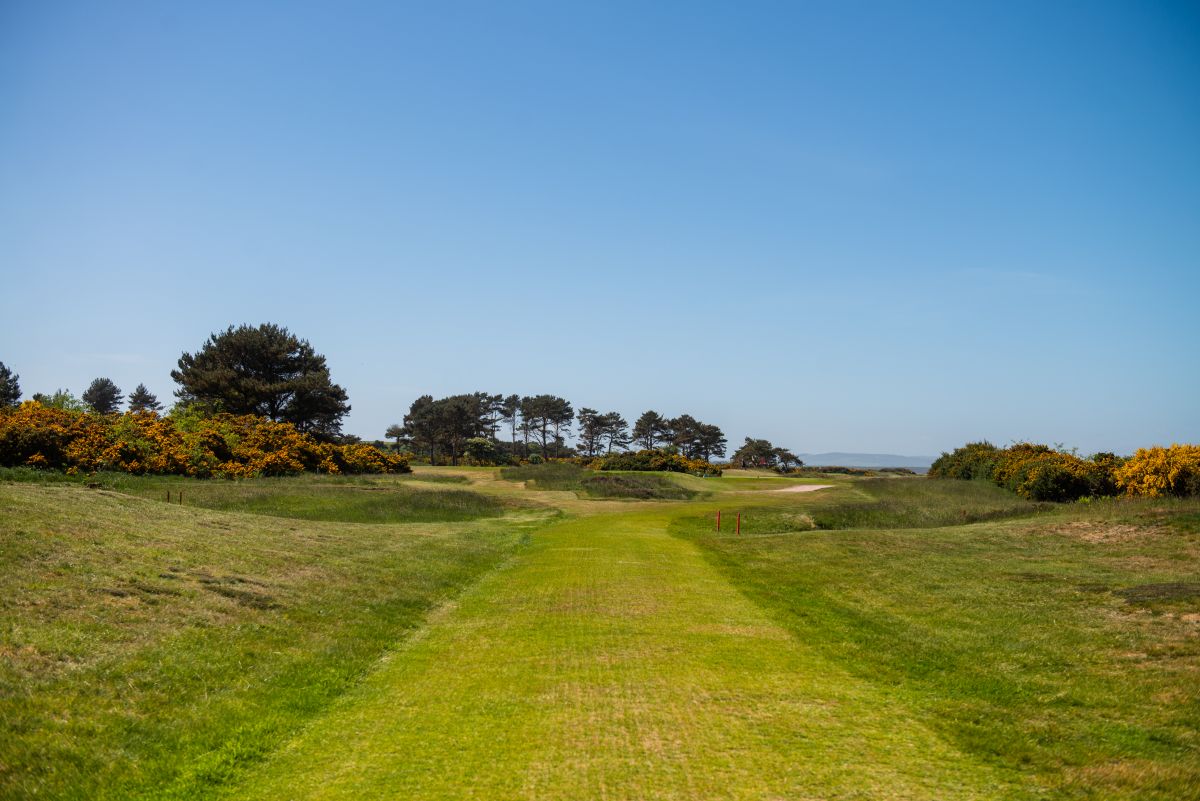
The team’s preparation and presentation for the 2025 championship earned Nairn a place among the finalists for the BIGGA Championship Greenkeeping Performance of the Year Award. The recognition followed a difficult winter and spring. Damp, dull conditions brought high disease pressure, snow arrived unusually early in mid-November and frost and ice followed. Through late winter and early spring, sunlight remained limited and cold north-easterly winds from the Moray Firth held back growth.
“We didn’t winter well at all,” said Richie. “We came out the other side knowing we had a race against time for the Women’s Amateur.”
The team took every suitable cold-seeding opportunity and laid the foundations for recovery but did not try to force the surfaces before temperatures would allow.
“We felt we’d done as much as we could to protect the putting surfaces and give them the best opportunity to move forward when the conditions allowed,” said Richie. Those conditions finally arrived in mid-to-late May. Soil temperatures rose and areas scarred by disease regenerated fully packed with bentgrass.
“It was a massive relief,” he said. “It was excellent to get over the line and present the surfaces we did for the best women’s amateur golfers in the world. The team received recognition for their considerable efforts after what had been a pretty hectic eight months.”
Most of the work would have been undertaken regardless of the championship, but a fixed date in the calendar sharpened the mind.
“You have competitors arriving and expecting a certain standard,” said Richie. “You can’t say, ‘Another couple of weeks and everything should be fine’. We remained determined to present the surface quality required for the best amateur players in the world and at a level of presentation which would make our members proud to be associated with Nairn Golf Club.”
A growing operation
The greenkeeping team has expanded alongside the demands placed on the course. Nairn once operated with around eight staff, while Richie now targets a permanent team of 15 supported by one seasonal member.
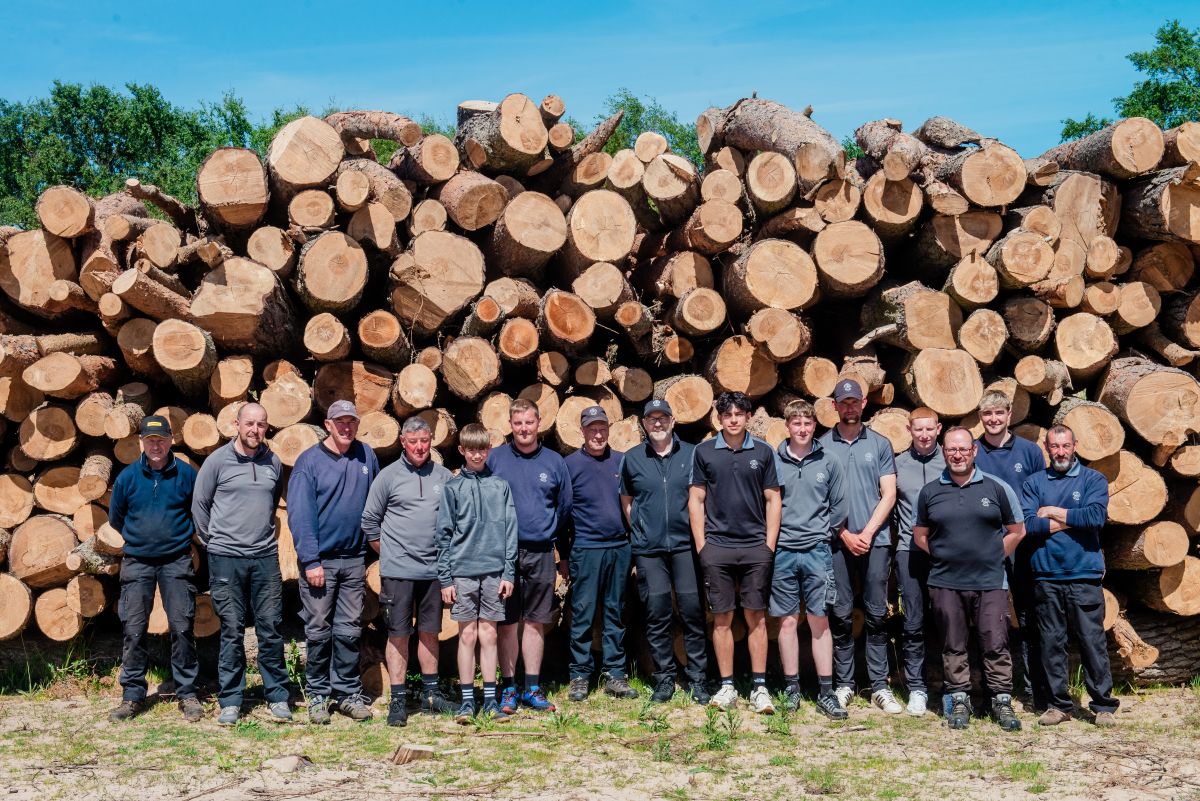
Deputy Course Manager Marty Smith plays a key role in the operation, giving Richie the confidence to divide his time between the golf course and the wider responsibilities that have grown with his position.
“I still love being on the golf course, but there are a number of meetings to attend, reports and data to configure, budgets to present and monitor – a range of tasks that have gradually changed my daily routine,” said Richie. “The team allows me to do that because I know the course is in good hands if I’m unavailable.”
Maintaining an open and constructive relationship with the club’s leadership has also been central to the progress made during his time as course manager. Richie regularly updates the greens committee, greens chairman, board and members through meetings, reports and newsletters, ensuring there is a shared understanding of current priorities and the longer-term direction.
“Information for members, the greens committee and the board is critical,” he said. “You need transparency about where we are, what’s happening and what areas we want to progress.”
That communication has helped underpin the club’s support for the course operation as staffing, expectations and improvement plans have grown. Some of the figures demonstrate the scale of the modern workload.
With around 240 club events in the golfing diary each year, consistent presentation is required across a packed calendar. Bunker raking and divot filling alone can account for 150 staff hours per week.
“Those might be seen as basic jobs, but they are fundamental to producing an excellent standard of presentation when they’re completed daily,” said Richie.
Always adapting and moving forward
The list of improvements has not run out. Some tees constructed during the 1980s and 1990s are no longer large enough for the traffic they receive. Alternative tee-to-fairway walkways are required to deal with the foot traffic. The team is also considering areas left outside the irrigation system installed in 2007 because sprinklers were not then considered necessary within those areas.
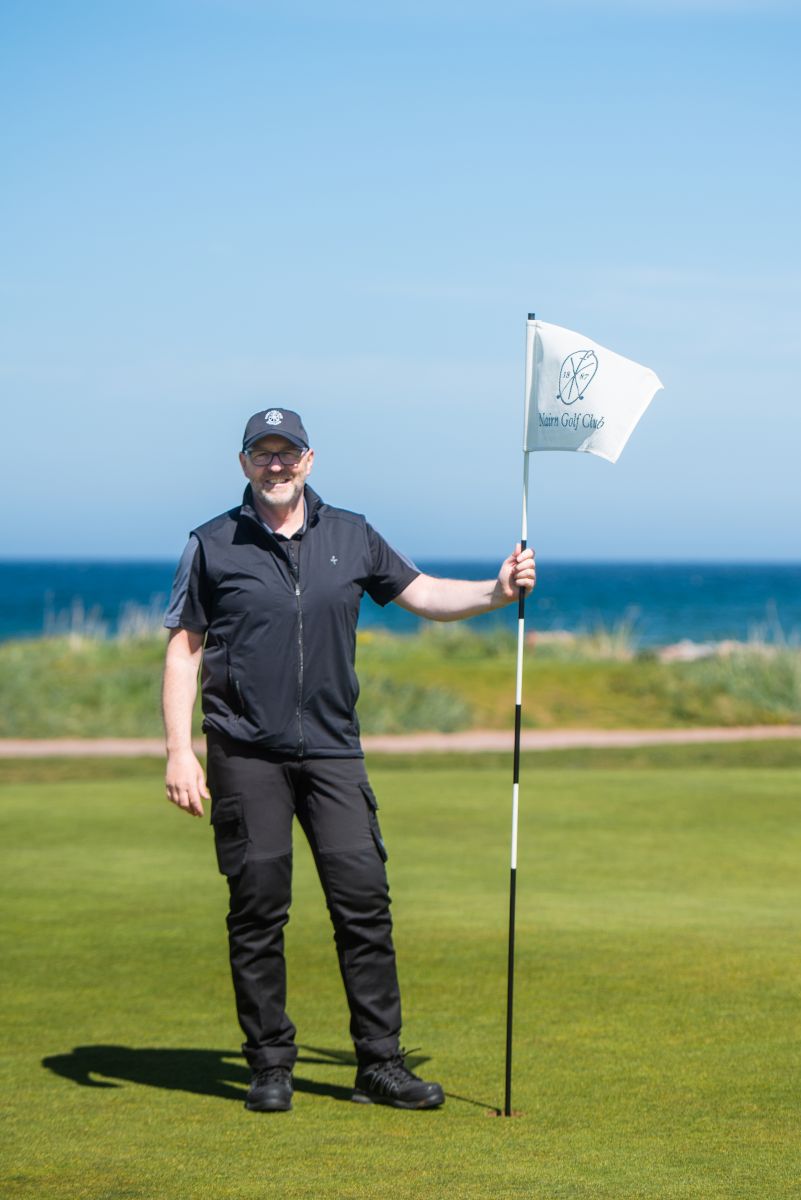
“The extremity of the weather certainly remains at the forefront of my mind,” said Richie. “The ever-changing and increasingly extreme cycles are the biggest factors causing concern. We’ve increased the number of boreholes and the irrigation system in general is working well, but there are areas that still remain without irrigation. That is something we seriously have to consider.”
Course management is about “always adapting and moving forward”. There will always be another piece of infrastructure to improve, another busy season to negotiate and another prestigious event the club would like to host.
That work continues in surroundings he has learned to not take for granted. His favourite vantage point is the elevated 14th tee, looking across one of Nairn’s strongest par-3s towards the Moray Firth and the Black Isle beyond.
“Nature can make you stop and fully appreciate the surroundings we’ve got,” said Richie. “Maybe not quite as much when there’s a 25-mile-an-hour north wind and horizontal rain coming at you.
“We’re very fortunate where we are.”
Author

Four championships, four perspectives
Richie Ewan’s career at Nairn has given him a different vantage point on four of amateur golf’s leading championships.
1999: Walker Cup
Richie was part of the greenkeeping team when Great Britain and Ireland defeated the United States. The event provided an early insight into the demands and atmosphere surrounding elite course preparation.
2012: Curtis Cup
With Iain Carson approaching retirement, Richie was given greater responsibility during the build-up. He describes the championship as Iain’s event, but the experience formed an important part of his transition into the course manager role.
2021: The Amateur
Richie led the operation as course manager, with the championship providing a major test of the extensive course changes completed between 2018 and 2020.
2025: Women’s Amateur
The team recovered from a difficult winter and delayed spring to produce the required conditions. Its performance earned Nairn a place among the finalists for the 2026 BIGGA Championship Greenkeeping Performance of the Year Award.