
Royal Mid Surrey - After the Flood
When Royal Mid-Surrey Golf Club suffered repeated flooding after a breach in the Thames riverbank last October, the disruption touched every corner of the organisation.
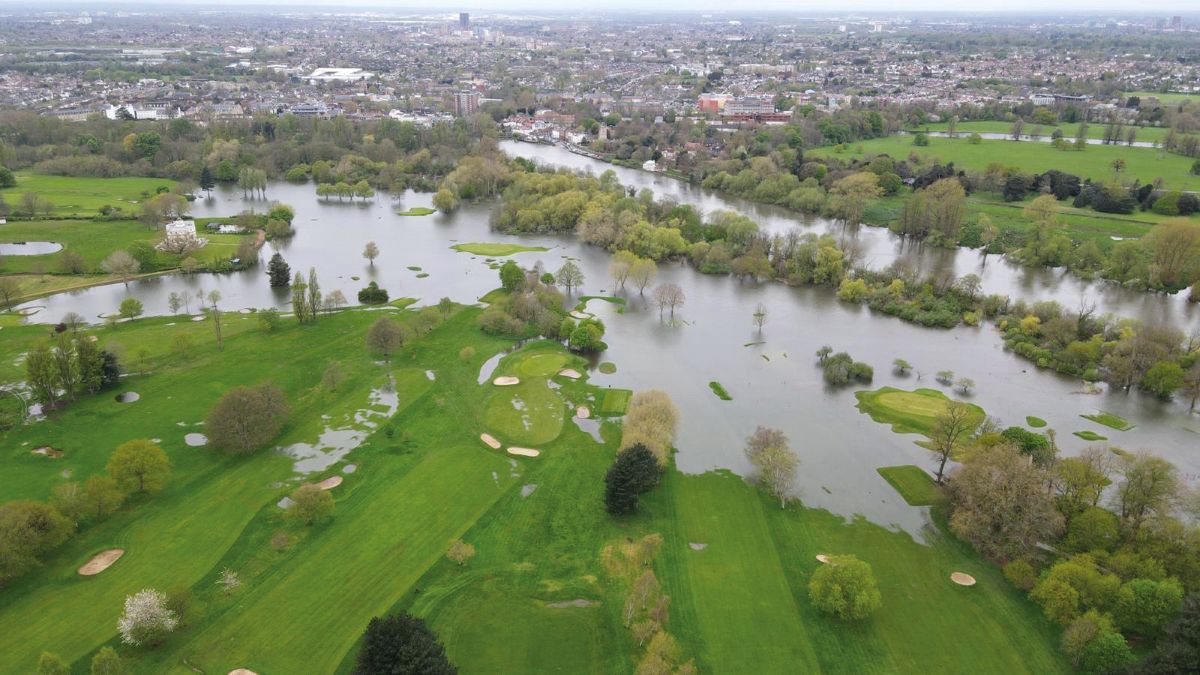
For members, it meant almost a full year of golf restricted to a composite layout, with six holes having been compromised. For the club, it brought financial pressure, operational challenges and uncertainty over the scale of the eventual restoration.
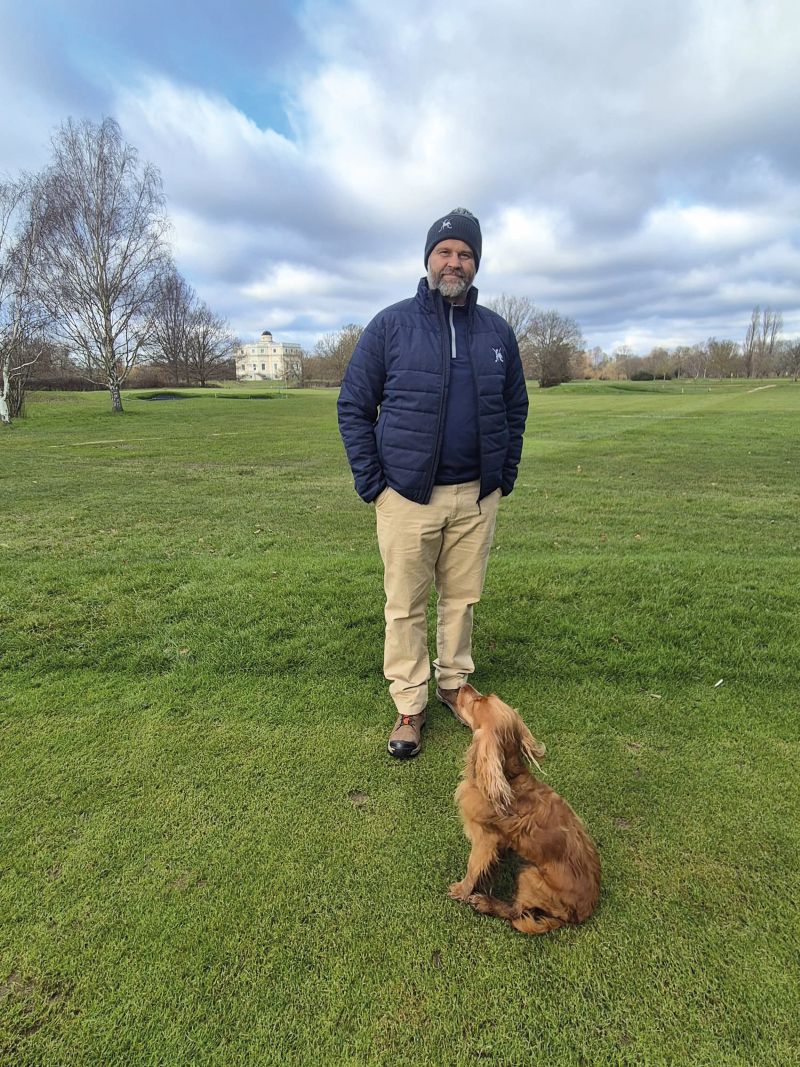
Into that picture stepped Course Manager Graham Down, who arrived in the summer with significant project-management experience and a clear understanding that the job would demand both patience and decisiveness.
His appointment followed a period during which major works were already in motion, including a second-phase bunker renovation and a multi-fairway drainage project. The club had been recognised for its sustainability credentials, earning Environmental Golf Club of the Year, and the greenkeeping team had been brilliantly led in difficult circumstances by the previous Course Manager Gavin Kinsella MG.
But the impact of the breach was still apparent, with much work to be done. Now, with repairs to the riverbank completed and the club working closely with agronomists and local authorities, attention is turning towards full recovery.
The aim is to restore two full courses to their former glory, strengthen resilience and then push performance standards to match the strength of the region’s renowned golfing landscape.
How and when did the move to Royal Mid-Surrey come about?
I was contacted by a recruiter who asked whether I’d be interested. I wasn’t sure at first, but he explained that the club was about to embark on a major bunker renovation, with the second half still to be done.
It’s a club with the resources to push forward and had just dealt with a breach of the Thames, so there were meaningful projects to get stuck into. I’d done a bunker project at Harewood and knew both the enjoyment and the impact it brings.
I met the general manager, got on well, and it felt like somewhere I could work. I also knew Gavin had been here nearly 20 years, so that told me it must be a good place.
Location mattered too: I live in Beaconsfield, my children are in excellent local schools and I needed to stay in the area. Financially, geographically and in terms of the type of course, it all lined up.
What sort of projects were already under way when you arrived?
The bunker project, a drainage project and reinstatement work after the flooding were all teed up before I started. Most of the background work had been done by Gavin and the general manager, so my job was to find my feet quickly and then project manage. My previous experience with bunker reconstruction and building the academy and range at Brocket Hall definitely helped. It’s really been about communication with the contractors and delivering what was already planned.
When you follow someone of long standing, how do you introduce your own way of working?
I take things steadily. I come in, get to know everyone, see where they’re strong and where improvements might be made. Because Gavin had been here so long, there were good protocols and good training in place. The two head greenkeepers had a tough summer with the weather, so my role was to support them and help going into autumn without upsetting the apple cart. I’ve been fortunate that the foundations were already very good.
Can you describe what you inherited in terms of the site and the impact of the riverbank breach?
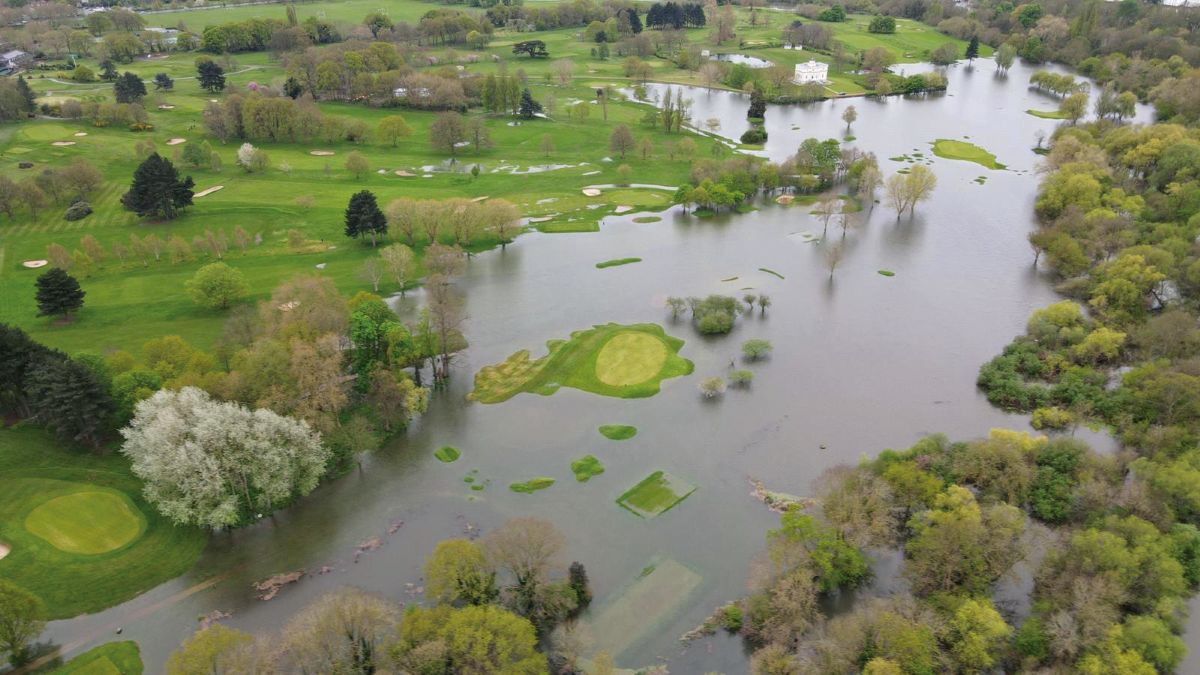
Last October was a very wet autumn. We border the Thames, and alongside the riverbank is the towpath, then a ha-ha – a long, ancient ditch that collects drainage water from the course. We’re in the floodplain, so when the tide is very high, water comes over the towpath, fills the ha-ha and floods the course and Old Deer Park next door. Normally that water recedes into the ha-ha and drains back into the Thames through culverts at low tide. But over time the culverts had blocked, and with the pressure behind them, a 20-metre hole blew out in the riverbank. After that, water came in twice a day regardless of tide height. It mostly affected the Taylor Course but also parts of the Barton. The club had to operate a composite course for most of the year. Members handled it well, but it was a big hit. New memberships and guest play were stopped, societies cancelled and there were financial implications. Responsibility for the repair was clarified as the council’s, and the work has cost millions. Now we’re assessing what needs to be done to put the bottom holes back together. The questions include soil condition, compaction and what can be salvaged. Realistically, we won’t see full recovery until spring.
What does the recovery process look like on the ground?
We’re still evaluating. The new culverts work but differently to the old ones, so we’re monitoring water levels closely. Several ponds in the low area connect to the ha-ha, and their levels are fluctuating. We need to understand where that settles before making decisions. We’re working with Paul Woodham and The R&A, with Gordon Howat designing the drainage project. There’s silt deposition, reeds where fairways used to be and a lot of debris washed in from the Thames. We’re considering scraping, aeration, decompaction, overseeding – whatever is appropriate once we know the baseline.
How do you approach communication with members around such a significant long-term project?
I work closely with the general manager, who issues weekly updates. When I arrived, I sent an email outlining my first impressions – mainly how welcoming everyone had been, which was absolutely genuine. There’s a daily update on course status through the IG app. We’ve spoken about a WhatsApp group like the one I used at Brocket, where I’d send daily videos from the course, but they want to make sure it’s right for Royal Mid-Surrey before deciding.
Do the two courses have distinct agronomic characteristics?
The land is similar, but the Taylor greens were reconstructed as USGA-spec sand-based greens during Gavin’s time. The Barton greens are old soil push-ups and much smaller – under a hectare compared with 1.2–1.5 hectares on the Taylor. Nutrition programmes will be adjusted accordingly.
The smaller soil greens should retain nutrients better, so there will be differences. I’ve spent a lot of time observing since August, and I’m now in a much more confident place about how they react.
Has staffing been affected by having holes out of action?
Although six holes were affected, in some cases it was just certain areas so the team has still had to cut the greens and maintain areas whenever conditions allowed. Bird damage has been a big issue because the lack of golfer traffic left leatherjackets and worms exposed. We’ve tackled that with a falconer using birds of prey, which has worked really well and avoids less sustainable measures. Geese are another challenge, and this approach has helped there too. Other local clubs have been in touch because they’re interested in doing the same.
How embedded are you in the club’s wider strategic decision-making?
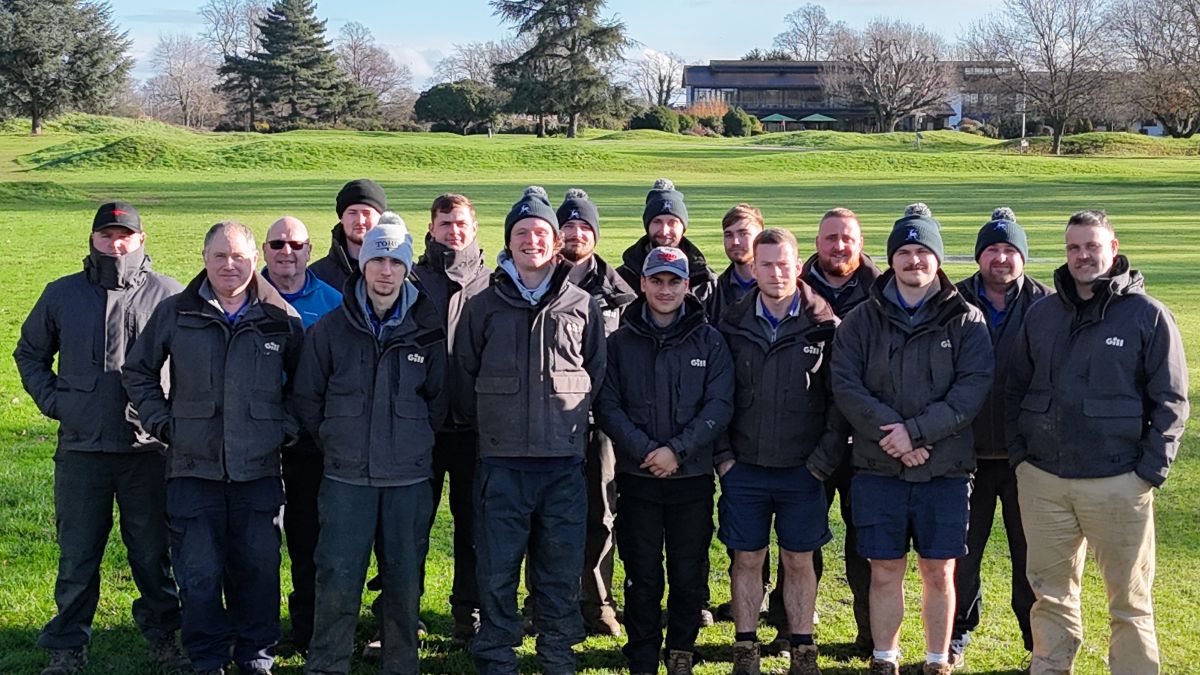
Very embedded. I’m a key decision-maker on anything involving the golf course, involved in water working groups, greens committees and other areas of the club. That was similar at Harewood and Brocket, and I expect it will develop in the same direction here.
How do you see the club once recovery work is complete?
Given where we are in south-west London, the competition is incredibly strong. There are many high-end courses with excellent course managers, so we need to be right up there. We have the resources and the team to achieve that. It’s about professional pride as much as anything. I want this to be known as one of the best courses in the area, respected by peers and something members are proud to show off. They’ve spent the last year showing visitors what’s gone wrong. It will be good to reach the point where they’re showing them how well everything has been rebuilt. The positivity here has really stood out. At a recent dinner, even after the breach, the loss of holes and Gavin leaving, everyone was upbeat and looking ahead. That’s a really positive environment to work in. GI
‘Horses for courses’
Graham has worked across a variety of setups, from small family-run operations to major groups and private members’ clubs, and says each brings its own rewards and challenges.
“My first course manager’s role was at a very small, family-run proprietary club, Oakland Park. It was a great grounding, and I learned so much there,” he said. “Then I went to Aldwickbury Park, which was part of the Burhill Group. That brought a completely different dynamic – the scale of a multi-course business, the buying power and some amazing training opportunities. After that I moved to Harewood Downs, a private members’ club, and spent eight years there through the Covid period and the boom that followed. That was much more about committees, boards and working closely with the general manager.
“Brocket Hall followed – still proprietary but foreign-owned – which came with its own challenges. You couldn’t always contact the owner, depending on whether they were in the country, and it was a much more corporate model, especially with the tournaments we hosted.
“Now I’m back at a members’ club at Royal Mid-Surrey. At the moment, I’m firmly in the private members’ club camp. There’s often a bit more pride within the membership and, in a well-run club, investment tends to go where members want it – usually the golf course – rather than being driven purely by return on investment.
“It really is horses for courses. There are pros and cons to every model, but I’ve taken something valuable from all of them.”
Author

A proud tradition of conservation
Royal Mid-Surrey’s success in being named the 2025 UK Environmental Golf Club of the Year reflects a long-term commitment to conservation that Graham is keen to uphold.
More than half of the club’s acreage is natural habitat, including wetlands, acid grassland and a rare pocket of wet woodland that has earned the site its SINC designation. These areas are managed to encourage ecological diversity, with carefully balanced wetland maintenance, wildlife corridors created through eco-rough, and ongoing guidance from specialist ecologists and neighbouring Kew Gardens.
That approach extends seamlessly into day-to-day turf operations. Inputs are kept deliberately low, with regular soil sampling guiding any targeted treatment. Cut-and-collect regimes protect species diversity in roughs, while hybrid and battery-powered machinery helps reduce emissions across the estate.
Water efficiency is another defining strength. A bore-fed irrigation system, supported by four large storage tanks, ensures resilience in dry periods. Precision is central: upgraded nozzles, app-controlled scheduling, POGO moistue mapping and weather-station data allow water to be used only where and when it’s needed.
The club’s circular approach to waste is equally robust. Everything from hollow cores and chipped branches to coffee grounds and kitchen cuttings is reused or composted on site, while single-use plastics have been dramatically reduced through refill schemes and sustainable product choices.
These efforts sit within a broader culture of sustainability. GEO certification, solar generation, EV charging, community partnerships, awareness events and member engagement initiatives all reinforce a club striving to protect its environment and demonstrate best practice.