
Lessons from Black Water Links
Paul Woodham, The R&A’s Sustainability Lead for Europe, believes we can learn much from Black Water Links in Poland - a new, pesticide-free course, which had sustainability built into its design and is harnessing various forms of technology, including AI
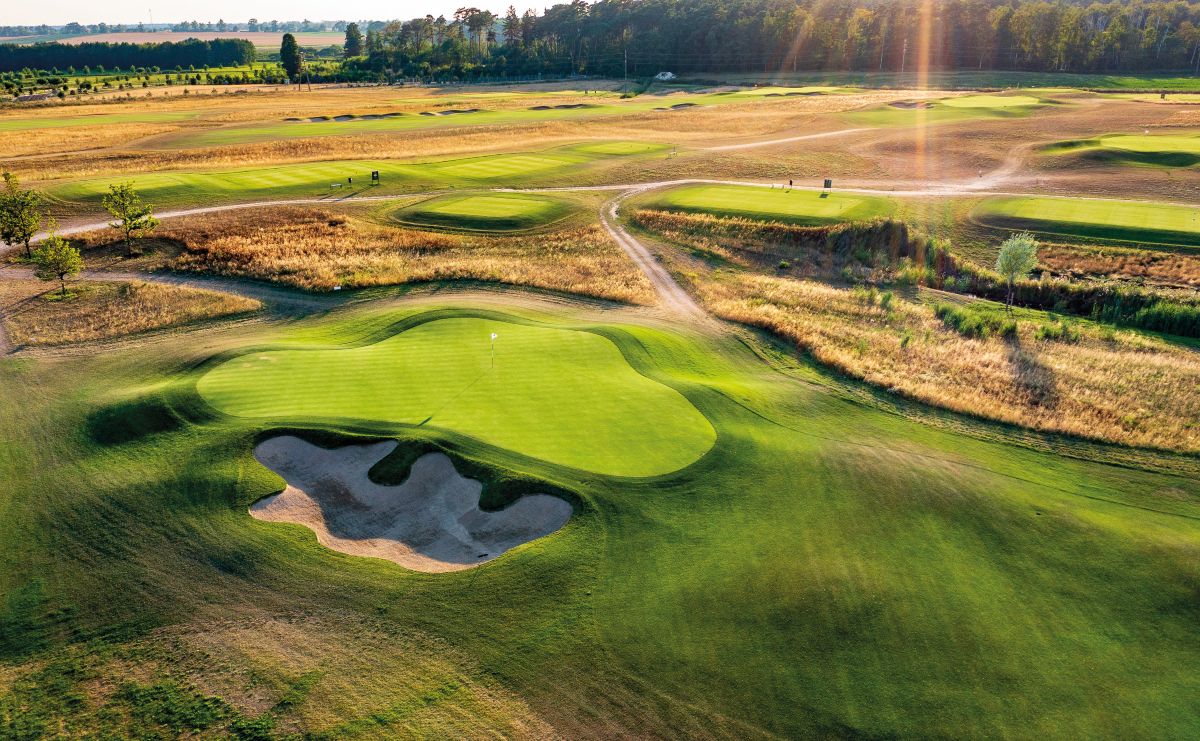
I had a recent opportunity to present to the Polish Greenkeepers Conference, held at Black Water Links, Poznan. This brought together greenkeepers from a growing golf market across Poland, a country currently with just 20 18-hole golf courses, and neighbouring regions such as Estonia – an even-smaller market of six golf courses. Both countries, though, have a gaining interest in the game.
Growing the game is difficult, especially in smaller countries without a recognised route into greenkeeping. The threat posed by a lack of staffing resources is particularly real in regions with less recognition of greenkeeping as a viable career. Any perception that the smaller markets are flying under the radar is far from reality. So, can the development of golf courses in emerging markets have the same mindset for sustainability in comparison to say the UK, France or Spain, for example?
Take Poland and Estonia, where finding staff retention and entry into greenkeeping often relies on family and friend referrals or employment offices for entry-level staff or seasonal workers. This is an inevitable strain relying on the skill of the technical greenkeeping staff and therefore the operation of the golf course. We must recognise that, for some, the route into greenkeeping may be from basic education but that is not to say that, with the correct recognition and support – entry-level training – greenkeeping can be a lifelong career. We often say that, without greenkeepers, there are no golf courses.
My experience visiting Black Water Links is one where a new facility – three years into its existence – has recognised the threats and opportunities by building sustainability into the course design and technology.
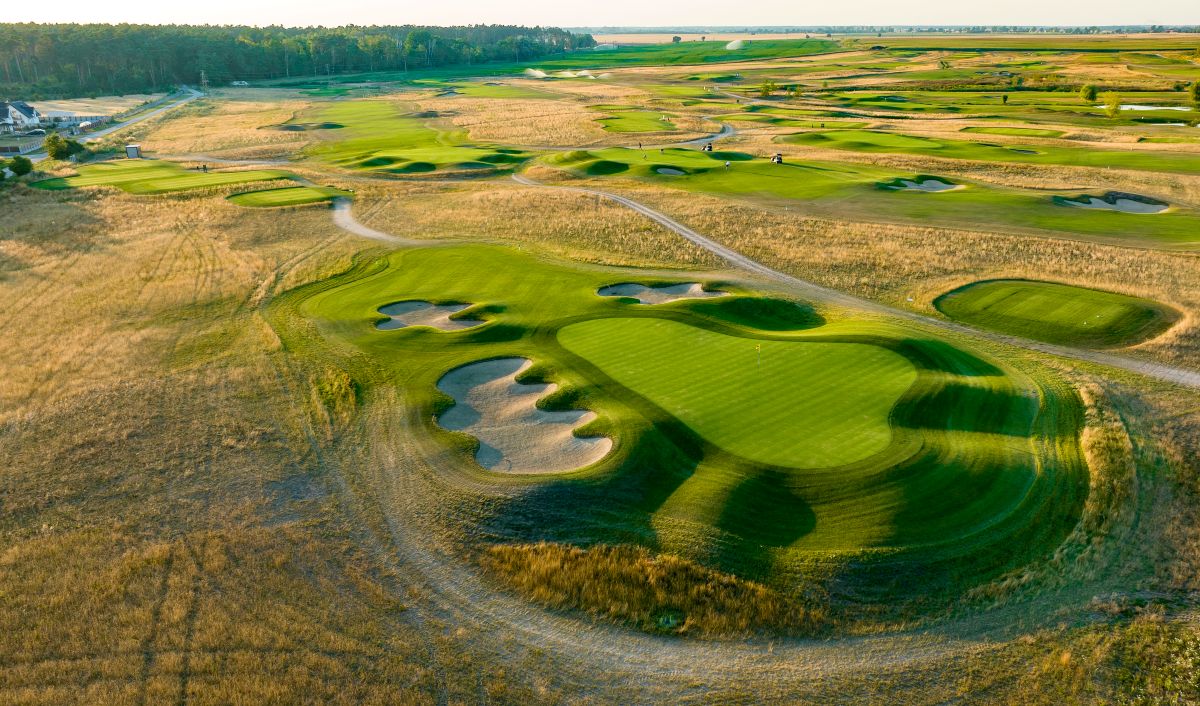
Let’s start from the design concept. The concept of the golf course architect, Casper Grauballe, was a back-to-basics approach to ensure the design was right for all aspects – visuals, playability, routing – and most importantly, at a physical and technical level, being functional for water management and its ability to deal with the climate.
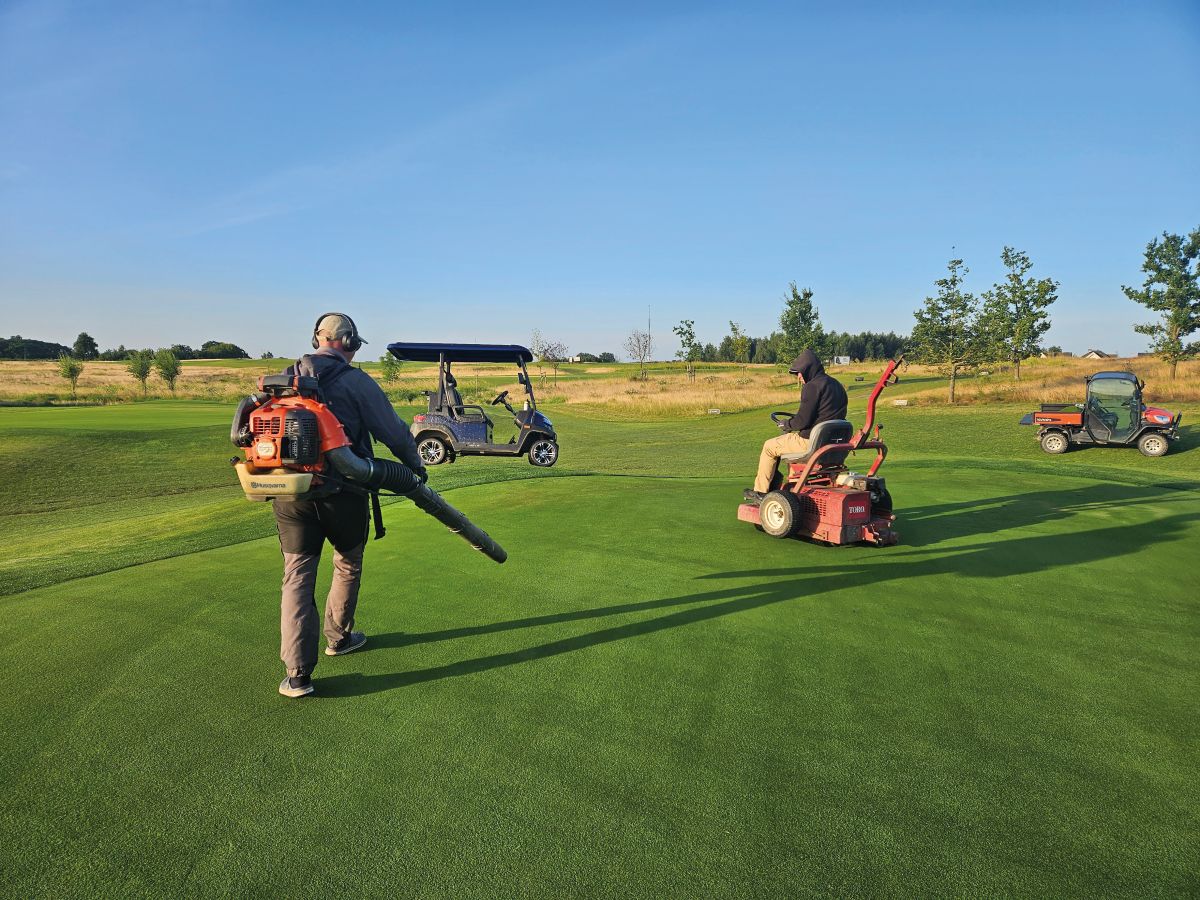
The operational functionality of the course was important in areas such as tee boxes and bunkers. Tees, for instance, are accessible for the golfer and provide the space needed for managing wear.
The design has increased the possibilities as accessibility is multi-functional. The rapid innovation and advancements in autonomous mowers have allowed this technology to be integrated into today’s maintenance practices.
The bunkers are designed to be able to deal with water. While lined with a permeable membrane, the design incorporated a reduced sand area but flashed sand lines for visibility and playability. The form and flow of the shaping maintains access, potentially for autonomous bunker raking equipment in the future, but allows easy movement of the robotics in use today. The greens shaping and construction considers the need to optimise the pinnable area of the playing surface – important for managing wear – and uses contours to shed ponding water from the surface. This is important in a region where frost-thaw can cause significant damage.
One further point is the irrigation design, which affords individual and optimum control of sprinkler heads around the course, using more sprinklers but less water. Irrigation is piped 1km from the town, taking the opportunity to use treated water, which is filtered before entering the course reservoir. This is a solution that works in collaboration with the local town. City water is now diverted from potential pollution points and reused on the golf course in a sustainable manner. A current project is the installation of a solar farm, which powers the clubhouse and irrigation system using energy stored from the day in battery storage - meaning that the whole facility will be energy independent by 2026.
Overall, the design and maintenance of the course facilitates the grass species selection, particularly in relation to nutrient and salt associated with the use of treated water. The course microclimate maintains an open environment, which can be managed over time as the course matures.
The Course Manager, Kris Misiaczynski, incorporates on-site sensors and satellite AI technology with images downloaded five to 10 times per month to monitor soil moisture content across the whole course to inform early indication of inconsistencies that may develop into turfgrass stress and disorders.
This analysis also provides indication of other stress, such as nutrient or growth deficiency.
Spray management incorporates conventional mounted spraying alongside innovation using drone spraying. This is relatively new territory, with the regulation for use still developing, but Kris can use drones for granular fertiliser application and soil or plant biostimulant during a half-day course closure window, which is a current stipulation for regulatory use.
Drones spot-treat localised areas identified for input to address performance or stress-related corrections.
The integration of autonomous mowers has been transformational for Black Water Links. All areas outside of the putting surfaces are maintained by robotics. Some 36 units work around the clock to cut the course. For Kris, this has seen a reduction in staff hours from 130 to typically 17 hours per week across tees, fairways, green surrounds, pathways and rough. There are four cabled docking stations for recharging. The autonomous mowers can be sent back to their base during competitions and ordered back to work remotely upon completion. Black Water Links is maintained by 10 full-time greenstaff, the same as before the integration of autonomous mowers.
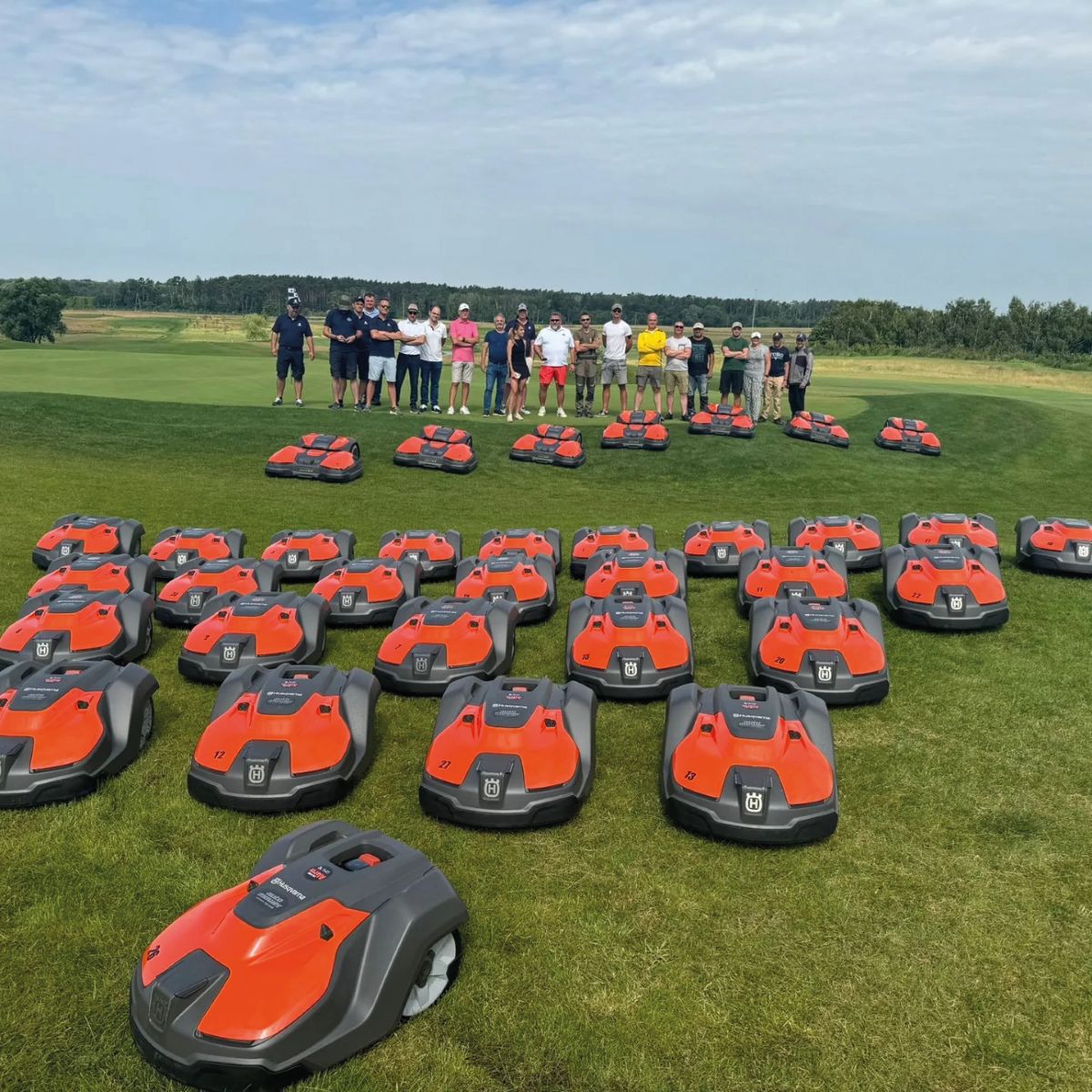
Routine play is uninterrupted, and Kris has the confidence that a Monday morning return to work is immediately focused on course conditioning, turf health management and the finer detail of presentation and performance.
The results achieved from design, technology and integrated turf management practices have seen the course being maintained pesticide-free to date. The integration of design and technology is working towards a sustainable future, particularly from a skills and resources perspective, not to mention minimal use of fossil fuels in course maintenance. There will undoubtedly be other leaders with a similar vision for new and existing courses, but it was great to see one of the lesser-known regions striving to deliver a high-performance course in a sustainable way.Author

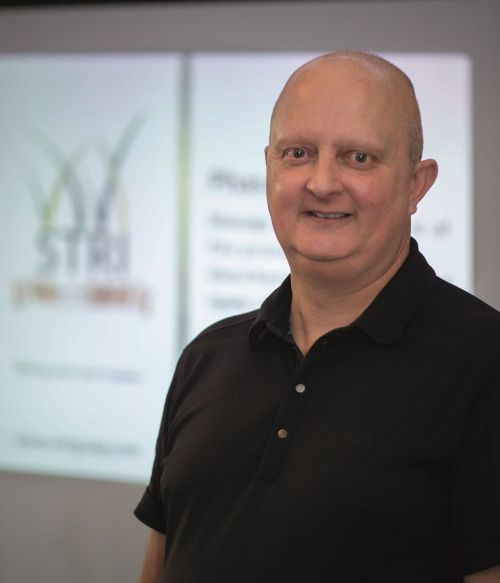
Paul Woodham, R&A's Sustainability Lead for Europe

Kris Misiaczynski, Course Manager at Black Water Links, Poznan