
Carnoustie is Redefining Sustainable Golf Course Management
Craig Boath and Jodie Docherty explain how Carnoustie Golf Links is redefining sustainable golf course management
When Craig Boath and Jodie Docherty take to the stage at BTME during day two of the Conference programme in Harrogate, they will be asking attendees to look at their golf courses through a wider lens.
Drawing on work carried out at Carnoustie Golf Links, their session explores how a renowned championship venue on the Open rotation is being managed not just as a sporting arena, but as a functioning ecosystem and a shared community asset.
For Craig, Carnoustie’s Head of Sustainability, the subject carries particular weight. Across a long career at the Links, he has been closely involved in hosting some of the game's biggest events – including three Open Championships, two Senior Opens and two Women's Opens – while simultaneously helping to embed sustainability into the fabric of daily course management.
"It's important to recognise that the places we work are far more than just golf courses," he said. "There is such a variety of wildlife on our courses and it's our job to gain an understanding of that and share it with others."
That belief underpins both Carnoustie's approach to sustainability and the message Craig and Jodie will deliver at BTME: that environmental responsibility, community engagement and championship standards are not competing priorities, but interconnected ones.
Carnoustie is a venue scrutinised at the highest level, and expectations around presentation and playability are non-negotiable, yet that pressure has also encouraged deeper thinking about how land is used, managed and protected over the long term.
"Yes, we want the place to be as pristine as possible, but that doesn't mean compromising on sustainability," said Craig. "For example, you don't need to cut everything – there are areas you can step back from, and that reduces labour, fuel use and other costs. That's money that can be used elsewhere and in other areas."
Rather than viewing sustainability as a perfunctory checklist of dos and don'ts, Carnoustie has adopted a more holistic approach. Decisions are increasingly shaped by weather patterns, climate variability and long-term ecological thinking, rather than habit or calendar-driven routines.
"In modern greenkeeping, you can’t simply rely on tradition and say, 'We fertilised on the first week of April for the past three years, so we'll do the same again,'" he explained. "Changing weather patterns and a shifting climate means decisions now have to be based on current conditions, taking all relevant factors into account to make informed choices.
That way of thinking has informed a series of significant ecological initiatives under Craig's leadership, from habitat development for native bumblebees – which earned Carnoustie the Operation Pollinator Award in 2016 – to large-scale regeneration projects such as the planting of 1,000 trees to enhance biodiversity across the venue.
Jodie's role has been central in broadening the sustainability conversation beyond purely environmental metrics. She joined Carnoustie four years ago in greenkeeping administration, before becoming increasingly involved in sustainability projects and community engagement, moving into the role full-time earlier this year.
"Sustainability has quite a few aspects," she explained. "To sustain something is to make sure it's here for the long term, whether that's the land or the business itself. We have a responsibility to take care of both."
That long-term outlook encompasses environmental, community and financial sustainability, which Jodie sees as inseparable.
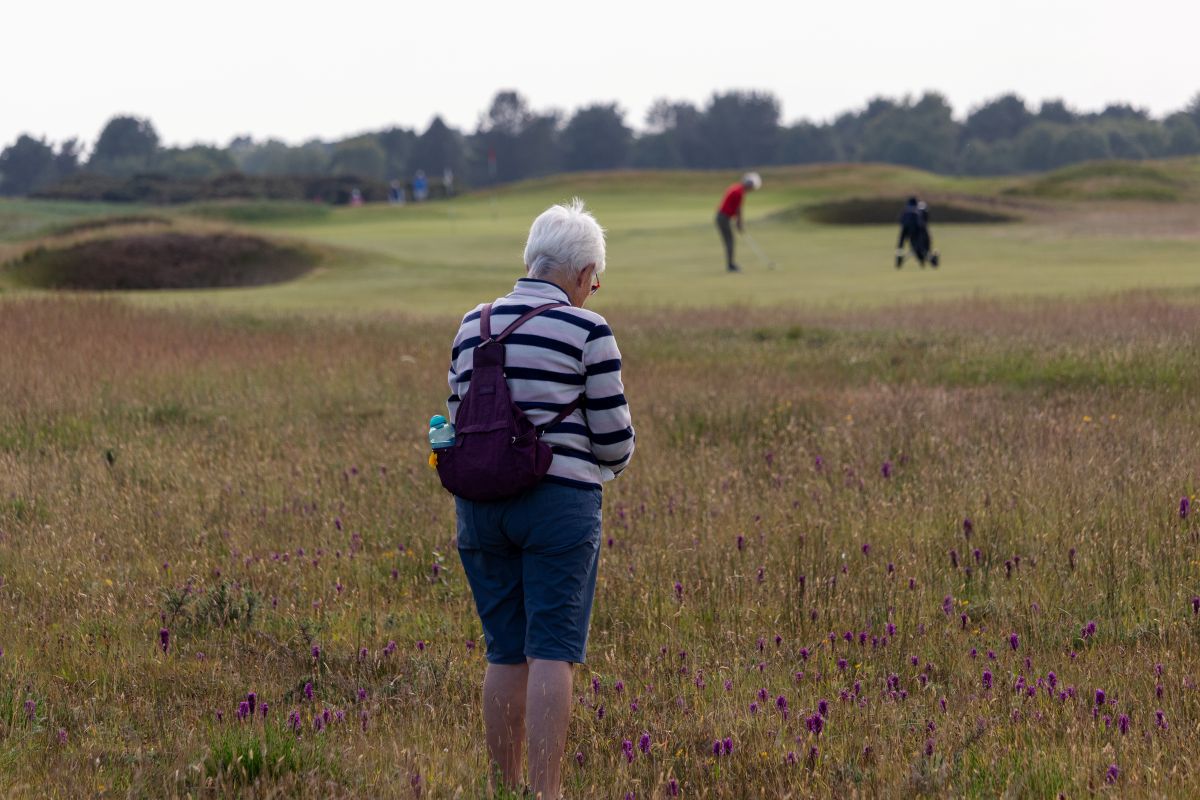
"When you actively bring people in from the local community, you create a stronger connection with the Links," she said. "Those individuals are far more likely to return, spend time on the course, maybe try to get into golf, visit the restaurant, and engage with the pro shop, helping to build a sense of belonging while also supporting the wider facility.
"All of that links together. It's about changing the mindset that sustainability isn't just one thing, when actually there are different ways to think long term."
That has driven a concerted effort to reconnect the Links with the town of Carnoustie – a relationship complicated by both geography and perception.
"There's a railway line that physically separates us from much of the town," Jodie explained. "That barrier isn't just physical – it reinforces a long-held perception of golf as a sport for the wealthy, which may make people reluctant to come down here."
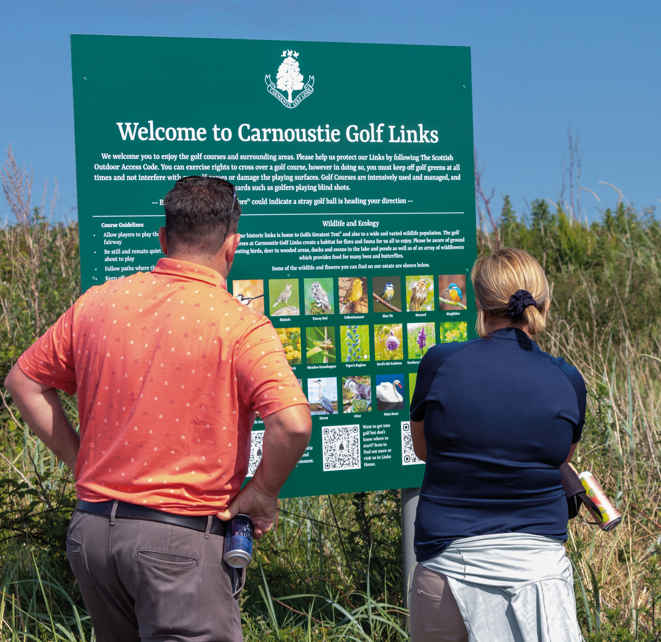
Breaking down that barrier through education, access and visibility has become a core objective of the sustainability team. One of the most effective tools in that process has been Carnoustie's annual BioBlitz – a 24-hour biodiversity survey that brings together ecologists, specialists, volunteers, schools and local residents to record as much wildlife as possible across the land.
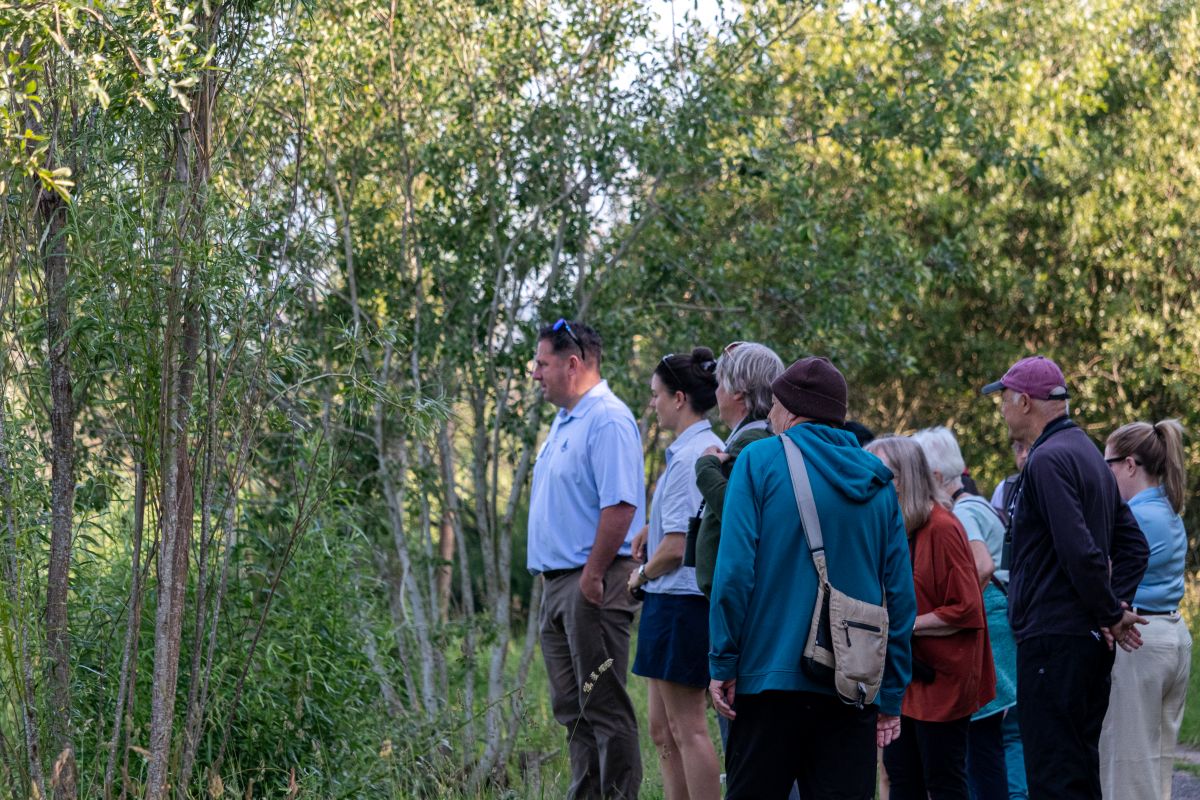
The first BioBlitz, held in 2024, marked a step change in how the club engaged with the wider community. Supported by The R&A and ecological partners, it welcomed people onto the estate who had never previously set foot on a golf course, many of whom were unsure whether they were even allowed to be there.
"We have broken down a barrier," Jodie said. "Community and nature groups give us data from walks and surveys that they have conducted around the Links, but in turn they are also keen to learn about golf, the ethics of the land and what's expected when the public comes onto a course."
For the greenkeeping and sustainability teams, the benefits are practical as well as philosophical. Specialist knowledge feeds directly into management planning, while long-term datasets help guide conservation decisions that would otherwise require paid consultancy.
"If we had to pay for that expertise, it would be expensive," Jodie noted. "So, it saves us money, helps the company and builds relationships at the same time."
The impact of that work has not been limited to external audiences. Within the Links itself, attitudes have shifted as season ticket holders and members of staff have become more aware of the ecological value of the Links.
"A lot of them are interested in wildlife," Craig said. "They come to us now saying they've seen bats, birds or other animals, so there's definitely a good level of engagement there and understanding of why conservation matters."
That growing sense of shared ownership has been supported by regular communication, from weekly updates to community newsletters, helping to normalise sustainability as part of everyday golf operations.
"They get quite excited telling you what they've seen," Jodie added. "When we had an injured otter on the course, people knew exactly who to phone."
Education has long extended into local schools through the Golf Development team, who for many years have worked directly with pupils to build a strong nucleus of more than 400 children enrolled in the Junior Golf Development Programme. This programme combines school visits, site visits to the Links and free golf lessons, ensuring the sport is accessible to all. Sustainability, delivered as a complementary strand alongside this programme, further deepens engagement, reaching even those pupils who may have no initial interest in golf itself.
"If children don't have golf in their family, they've probably never considered this as a career," Jodie said. "But they might become golfers, ecologists or greenkeepers in the future."
One of the most persistent myths surrounding sustainability is that it inevitably compromises playing standards. At Carnoustie, Craig is clear that the opposite has been true.
"It's not about restrictions or cutting back on everything," he insisted. "It's about managing things more effectively and efficiently. We are proof you can produce world-class conditions while being mindful of the environment."
That might mean phased habitat management rather than wholesale clearance, or targeted investment in infrastructure. Recent irrigation upgrades across three courses, for example, have allowed water to be used more efficiently and precisely.
Craig noted that while many sustainability initiatives can be delivered without major expense, there are times when real progress demands greater investment.
"Water usage is a critical issue," he said. "It's essential that we manage and invest in this resource responsibly if we are to move forward.
That approach has helped Carnoustie maintain elite agronomic standards while retaining its long-standing GEO Certified status, first achieved in 2013, and earning wider recognition for its sustainability leadership. The club's work has been recognised with the Climate Action Award at the 2021 IAGTO Sustainability Awards, as well as the inaugural Sustainability Award at The Golf Course Awards 2024.
As their BTME session will underline, Craig and Jodie view sustainability not as an add-on, but as an extension of greenkeeping itself.
"John Young made a really valid point recently at a BIGGA event in the North that really stuck with me," Craig said. "You're more than keepers of the green – you're keepers of the land”, and I guess we as a whole need to realise that nowadays."
It is a message he believes should resonate with anyone responsible for managing a golf course, regardless of size, budget or profile.
"Gathering data doesn't have to come at a massive cost," he said. "Get people involved. Get your members and your community to help. It all feeds into things like GEO Certification and helps show value to decision-makers."
For Carnoustie, that philosophy is already delivering results, forging a stronger bond between the Links, the people and nature.
Day two of the Continue to Learn Conference programme runs from 9.30am-4.40pm at the DoubleTree by Hilton Majestic Hotel & Spa
What is BioBlitz?
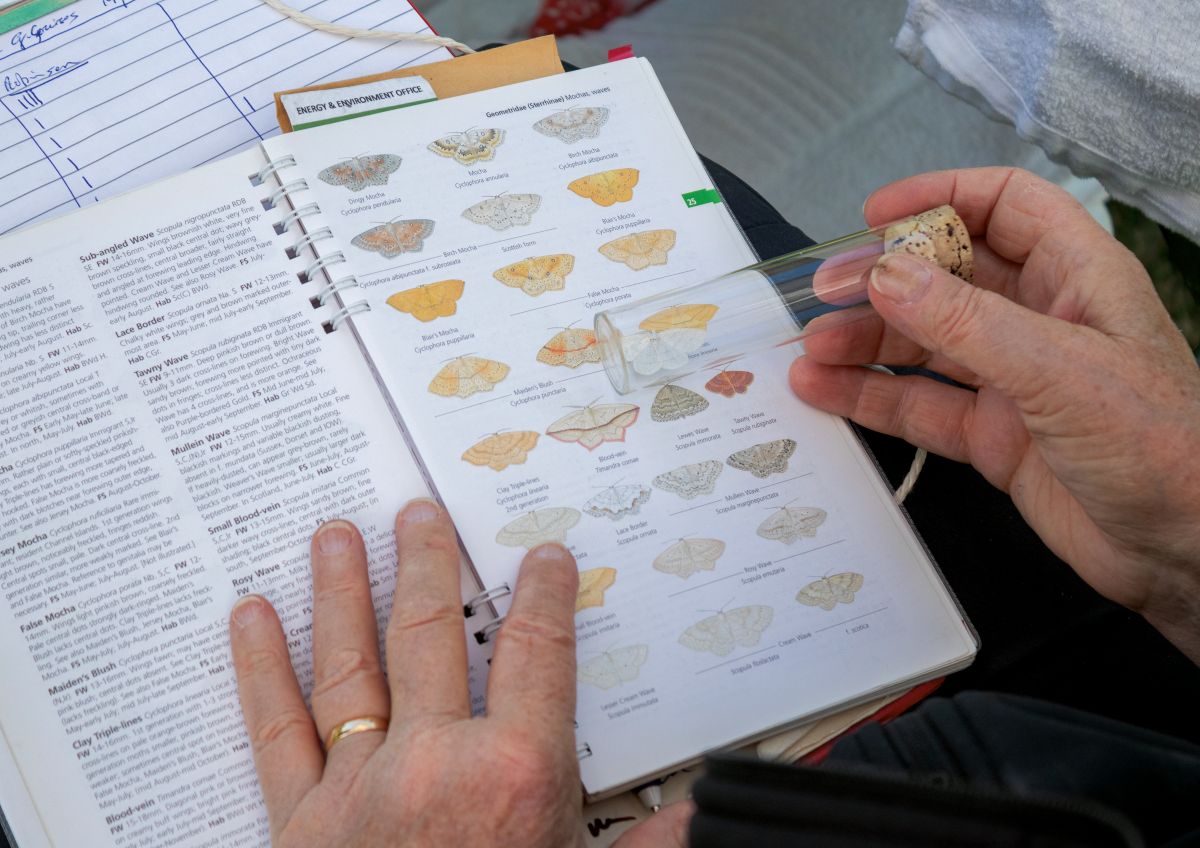
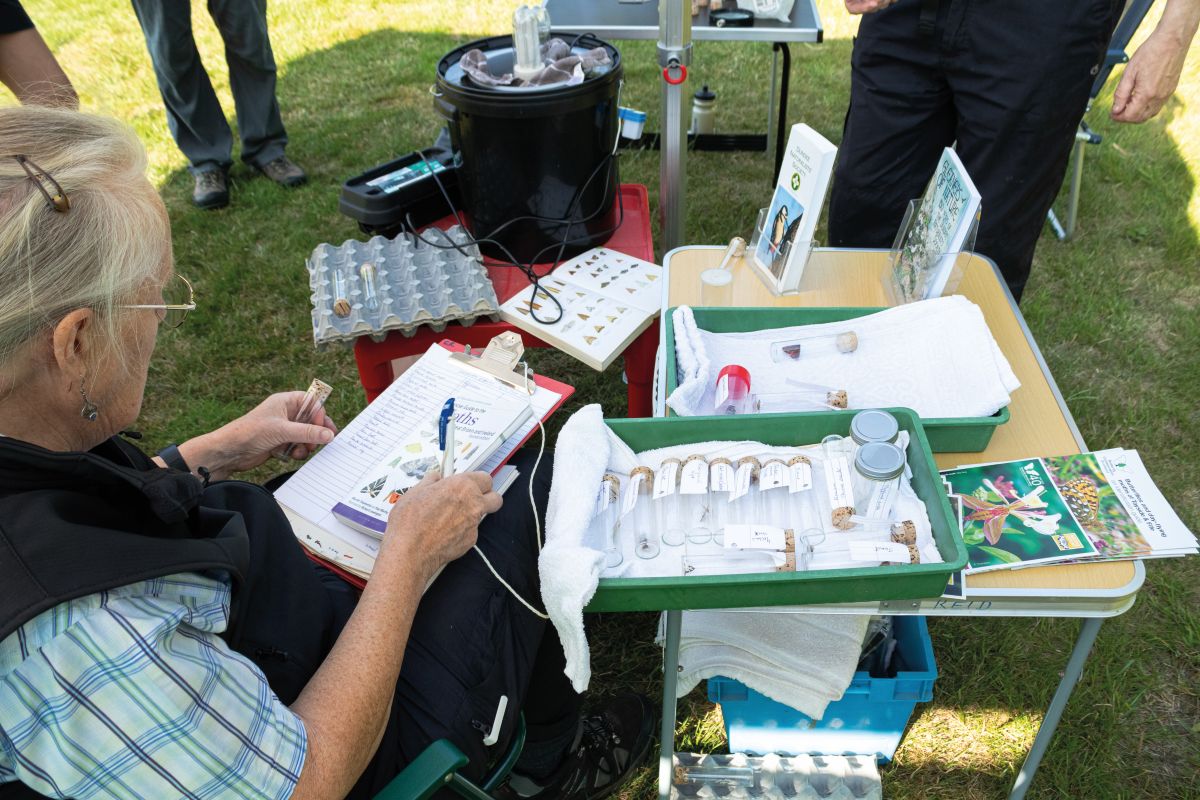
"A BioBlitz is a biological study in a very short space of time," explained Jodie. "We've run ours over a 24‑hour period, where we base it on the estate and try to record as much wildlife as we can. We've done that by hosting seven specialist walks and talks. Local researchers come in and lead sessions of about an hour to two hours each — we've had a bat survey, moth trapping, an ecology walk, dawn bird watching — and all the while we're recording what we see.
"It gives us a really good set of data for that snapshot in time. We did the first in 2024, ran one again in 2025, and we'll do another this year, so we're starting to build trends and see changes over time. The BioBlitz has given us valuable data and also a connection with the community, getting people interested and involved.
"We are a golf course, and we'll always be a golf course, but there's so much good that's done on this land. If it wasn't a golf course, we'd likely lose all that goodness to housing or a holiday park, and all this lovely green space would be gone. So, we're trying to show just how much good there is here.
"We publish our records each year, which helps spread the word further. Every year we find more people are interested, and a wider age range too — our youngest attendee this year was four years old.
"It's really good to get a mix of people, golfers and non‑golfers. It's hugely worthwhile for us, and it gets the word about Carnoustie out to people who probably hadn't thought about it beyond the golf before."

About Craig Boath
Craig Boath is head of sustainability at Carnoustie Golf Links and has spent nearly 30 years working across the Links in a range of greenkeeping and leadership roles. Craig has led major ecological initiatives including pollinator habitat creation, large-scale tree planting and conservation work for the small blue butterfly, earning multiple national sustainability awards.

About Jodie Docherty
Jodie Docherty is sustainability coordinator at Carnoustie Golf Links. She joined the organisation four years ago in greenkeeping administration before becoming increasingly involved in sustainability projects. Jodie plays a key role in developing partnerships with schools, ecological specialists and local groups, helping to connect the Links with the wider community.