
Building Ingrebourne Links
The lure of the ambitious Ingrebourne Links project in Essex proved too strong for Ben Adams to resist.
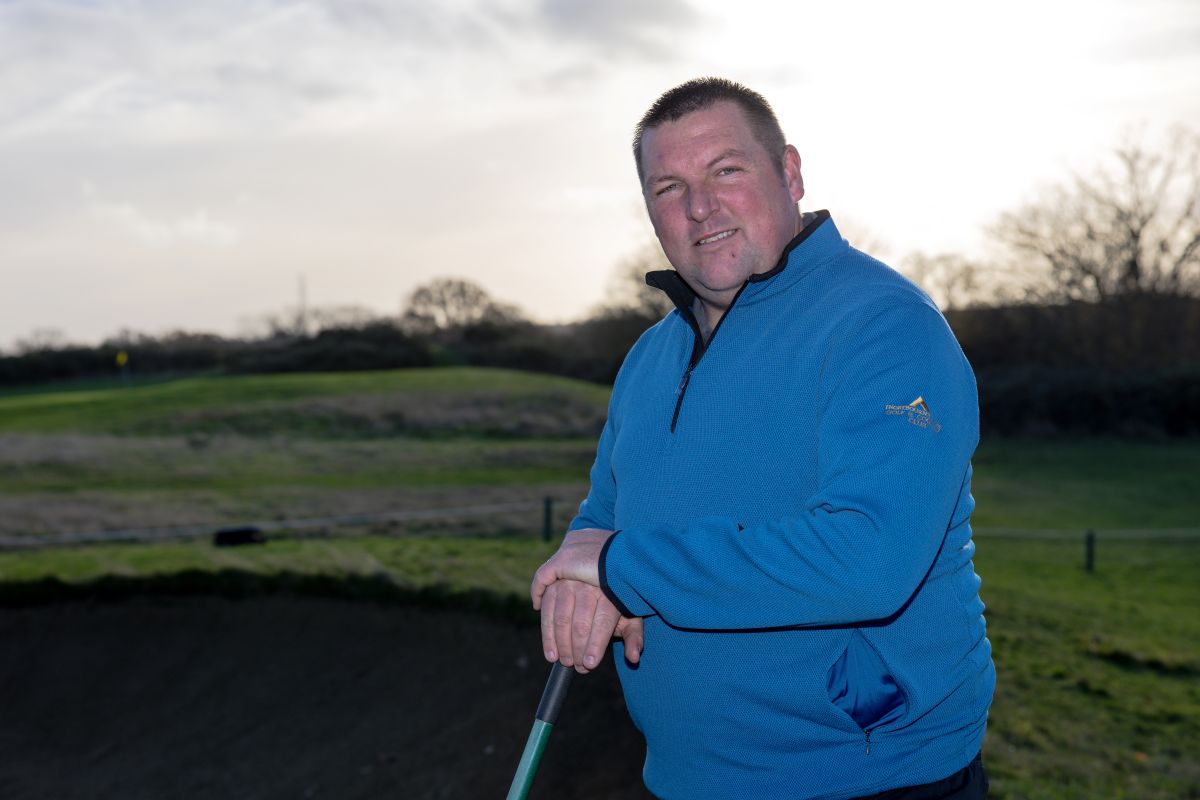
Some career opportunities are too good to turn down, even when you’re already occupying a coveted role. Such was the case for Ben Adams, who was making a name for himself at the prestigious London Golf Club when the chance to get involved in an exciting project presented itself. After more than 20 years in the industry, Ben made the bold decision to take the helm at Ingrebourne Links in 2017, arriving at the Rainham site at a crucial time.
The course’s inland-links identity, engineered landform and phased build created a demanding set of challenges for Ben and his team. The scale of material movements, the complexities of establishing turf on an exposed site and the constant settling of the ground called for a strategic, adaptable approach from the outset.
Here, Ben outlines that journey in detail, reflecting on the construction process, the agronomic decisions that have shaped the course and the evolution of the playing surfaces as the site has matured. His account offers an insight into the realities of guiding a modern venue from construction to championship standard and the mindset required to keep raising the bar.
Ingrebourne Links is situated in Rainham, Essex, just 20 minutes from central London. Its futuristic clubhouse – more akin to a ‘Grand Designs’ construction – boasts more glass than is perhaps sensible at a golf course yet offers visitors and members a striking welcome and stunning facilities.
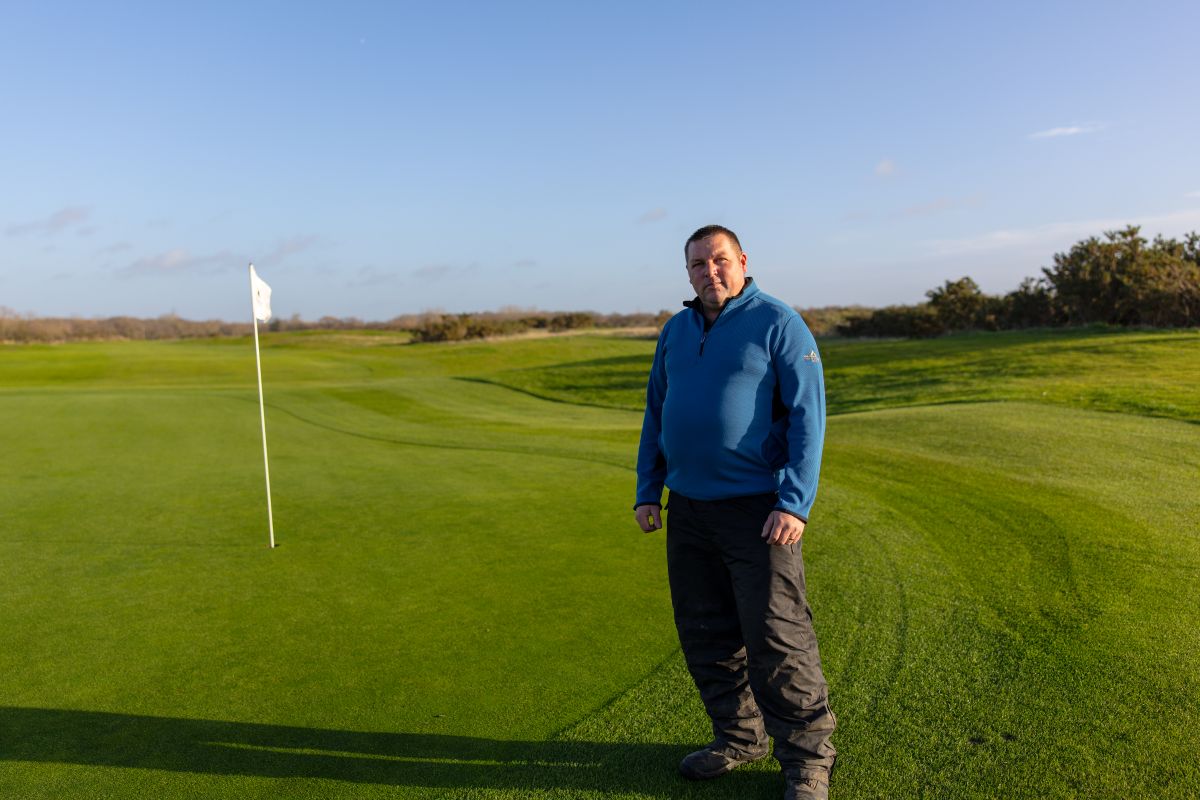
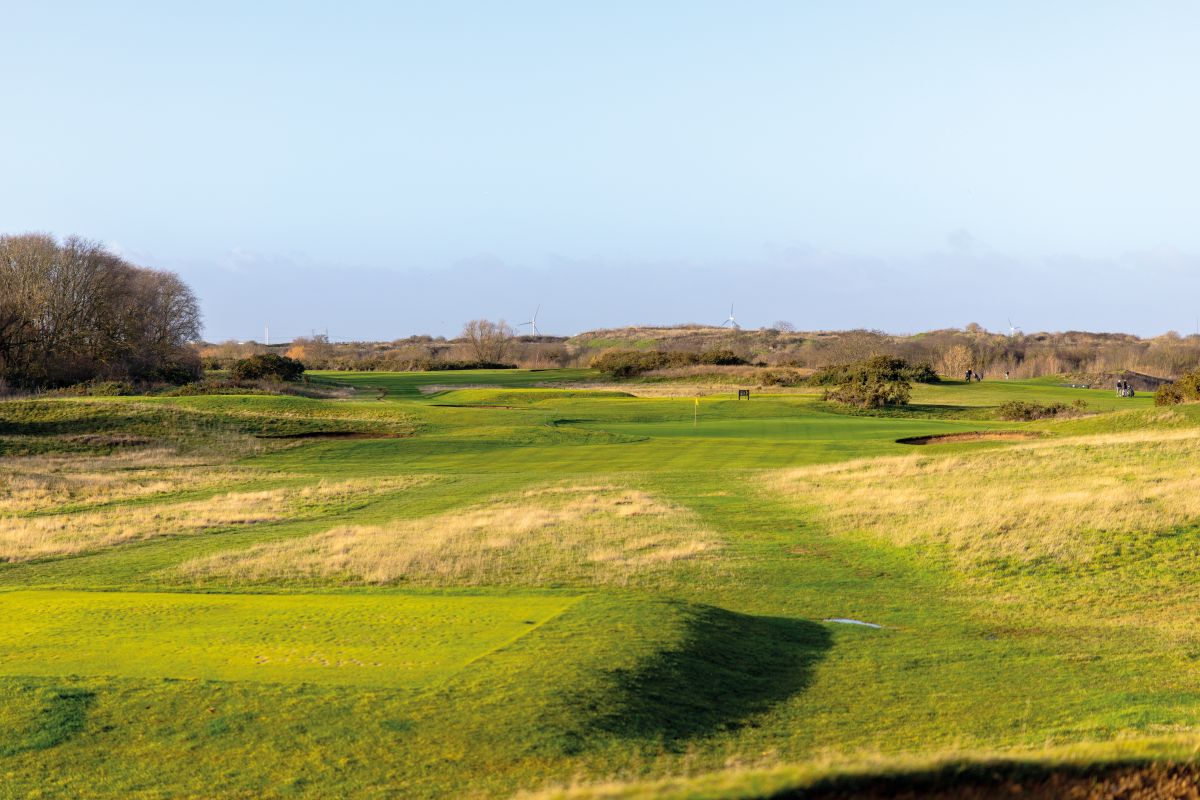
Ingrebourne Links currently has 18 holes of championship golf. The unique inland-links style of the championship course offers a very different challenge to the traditional parkland courses in the local area. As any golfing purist would know, a typical links course is normally close to the sea, but the rolling fairways, gorse, large undulating greens and some blustery winds coming off the Thames Estuary really provides a feel of playing golf by the coast.
The unique site first received planning permission back in 2007, with tipping of materials starting in 2010, mostly coming from the Crossrail project. In 2013, Ingrebourne Links opened the par 3 Mini-Links course and the driving range. Next to open was the North nine in 2017, while the East nine opened gradually in 2019/2020, with certain holes opening as they were completed. It was in July 2020 that we fully opened the 18 holes.
It’s hard to believe how much material was required to create the fantastic manmade courses that we now have the pleasure of maintaining every day. It took about six years in all for all material to come to site, all in different states of condition, and even today the course is settling down and moving where materials are compacting and contracting.
Our owners had a plan and the necessary permissions to create something extraordinary. They also found a way to generate funding by using what was effectively a landfill project to construct the course from scratch, reinvesting the proceeds to purchase specialist materials — including rootzone and gravel for the USGA greens — as well as drainage and irrigation components, machinery and other essential items needed throughout the grow-in stages.
We tried to reduce costs by having unscreened topsoils delivered, which we then screened and used around the whole course. In fact, we produced enough to apply 200mm of screened topsoil to the whole site, which provided us with almost entirely stone-free material to prepare seed straight away.
Behind the scenes and even before any materials could be delivered, vigorous permissions and planning applications were required, with lengthy and costly processes involving:
- Environmental Impact Assessment (EIA)
- Hydrological assessment
- Ecological Survey
- Buildings Regulation Approval
With the course now predominantly built with inert materials, and then the 200mm topsoil applied, the choices of which grasses to be sown was something we had to consider carefully. The decision in the end was to go with a fescue/rye mix on all tees, fairways, approaches and rough areas.
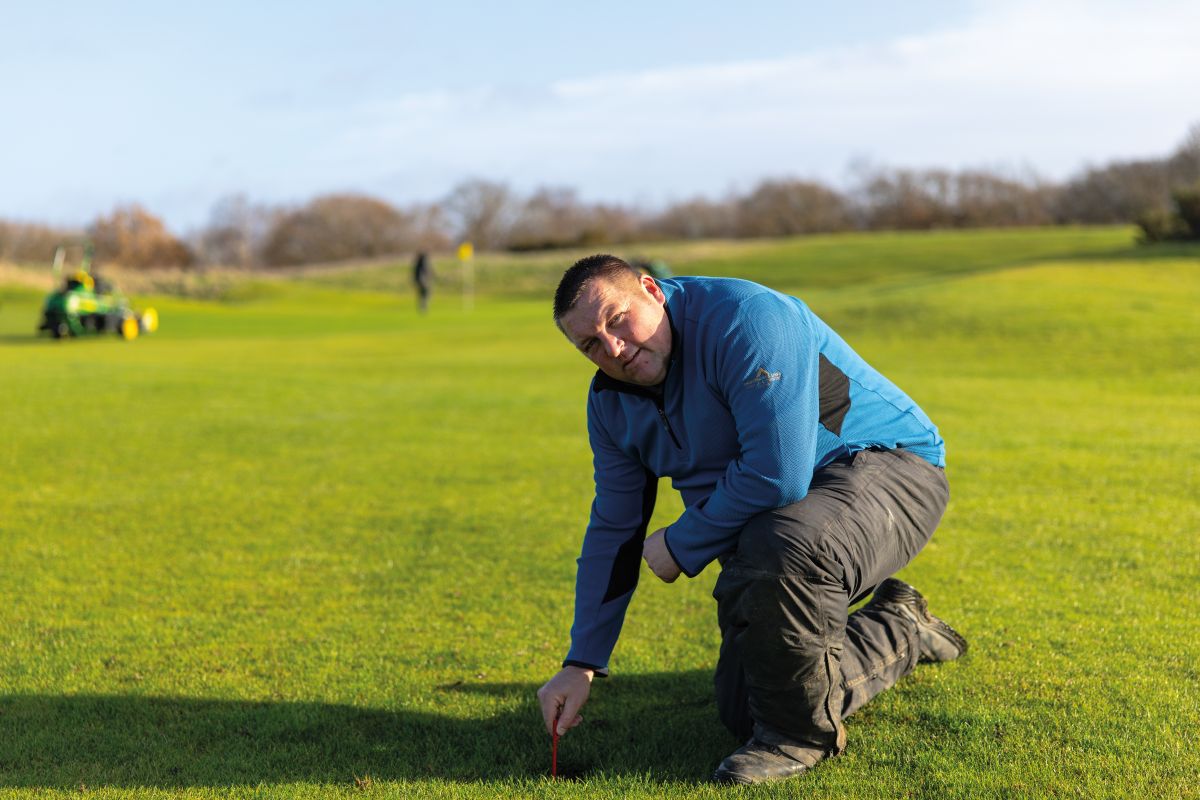
With USGA greens built, our initial decision was to only sow with fescue, but I altered that approach in light of how wet the winters were, as the fescue on the greens just wasn’t surviving. To address that, we first introduced some browntop bentgrass and had some success but ultimately found it is quite a problematic grass species to establish on an open golf course.
In 2019, I made the bold decision to go with a dwarf ryegrass mix from Barenbrug and have had some great results with it.
The inspiration was seeing an article published in this magazine about a course in Scotland that was suffering with similar traits, but with the added problem of being next to the coast and suffering from salt scorch and high winds. This was a massive learning curve for me as we only trialled this initially on the open North nine greens.
Having seen an increasingly positive impact from the introduction of dwarf ryegrass to the greens sward, I moved forward with including this from the grow-in stage on the East nine course, along with fescue and bent after the sward established, but this time before we opened the holes for play. To date, the mix seems to work well for us and can achieve cutting heights down to 3.5mm.
Disease tolerance has improved, but generally only seems to affect the poa annua. We have seen most improvements on the perimeters of the greens and around the pins, as there seems to be a lot more resilience to wear.
A wall-to-wall irrigation system has certainly contributed to successful establishment of all areas, the downside meaning we have just under 1,000 heads to keep an eye on!
In July 2026, the complete 18 holes will have been open six years. Throughout the years, we have had the privilege of hosting many tournaments from county to national level, with our biggest four-day event arriving when we hosted the PGA Professional Championship in June 2025.
I have had the opportunity through this period to work alongside a fantastic man, Alan Walker, a PGA Master Professional and golf course architect. Together we have overcome many a hurdle, which we expected from what is still a very moving, settling golf course, but I feel a huge part of what has enabled us to host such prestigious events in a relatively short period has been understanding what goals we want to achieve, and being realistic about how to achieve them.
It really has been amazing seeing things mature over the years, from having a blank canvas to then shape, mow and tweak until we are happy with the results. The relationship between Alan and I has been critical in our success.
Our course strives to provide a championship experience every day, so trying to understand what that experience should feel like and present like has also helped me focus on what’s required. I need to understand the golf course and the whole club from a player’s perspective, and my golf game is slowly improving, playing off a 10.5 handicap.
Developing that understanding of the member and visitor experience was something I learnt back during my days at the London Club, where I had many wonderful opportunities hosting DP World Tour events. I truly believe gaining an insight of what your club wants the customer to experience also helps create a benchmark of how you set things up – should greens be fast? What height of cut should fairways be? These are the things that will also determine the type of budget you may need to achieve certain things.
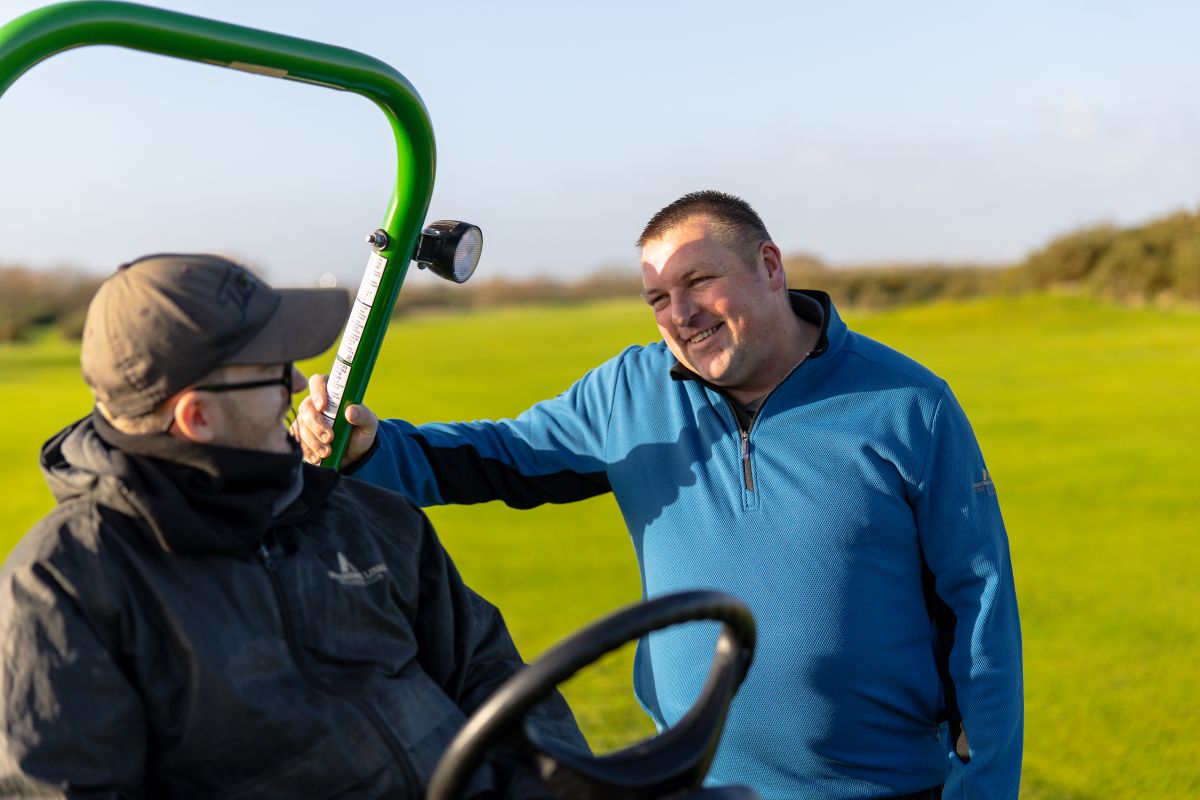
It’s so important to understand that changes can be brilliant, they can improve the golfers’ experience, make operations quicker, improve surfaces, but such changes can have unintended consequences too and may even have an impact on the budget.
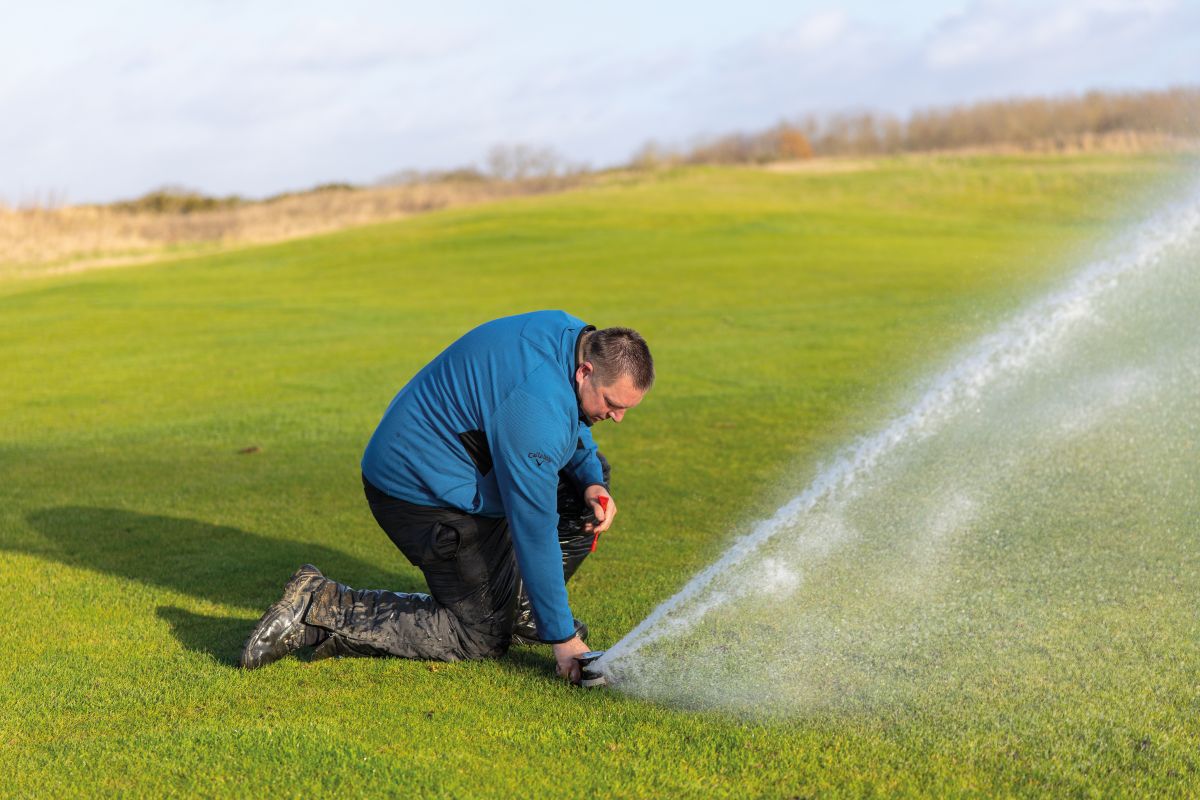
Moving from the London Club to Ingrebourne Links is a great example of this. At the London Club I was part of a very large team with 36 holes to look after. Here, I have 10 staff, including myself, and that means I have to be hands-on when I can, including spraying from time to time.
Our ambition is to work towards the exceptional standards and experience the London Club can offer, especially as I have experienced how and what is needed to achieve this. I like to use the saying ‘Rome wasn’t built in a day’ but believe that pushing for excellence and high standards certainly drives you closer to achieving your goals.
Every year spent here at Ingrebourne Links has been a learning curve, emotional, exciting but most of all rewarding. Having an open mind to possibilities and its potential has really helped move Ingrebourne Links forward and provided a catalyst for the success we have had so far. We may currently be seen as a small fish in a big pond, but we absolutely have ambitions to join the company of the elite clubs out there. GI
Teamwork makes the dream work
I’m really proud of the way our team has developed alongside the golf course. I’ve got a strong core around me.
Joe Horlock is my deputy course manager and someone I worked with at the London Club. He’s been at some high-end clubs and brings great experience, and with only the two of us able to spray, he takes on a huge amount of that workload.
Richard Whiting, our first assistant, has been in the industry well over a decade and can turn his hand to pretty much anything — tractors, grinding, irrigation, mechanics. He also supports me and Joe in overseeing and helping to guide the team.
Among the rest of the group, we’ve got two lads who have been here since the start and the remainder have come on board more recently, with a mixed range of ages across the whole team.
I try to rotate jobs so no one gets stuck doing the same thing every day. It keeps things interesting and steadily builds their skills.
While some don’t have the same experience and qualifications you might find elsewhere, they’re all willing learners and very committed.
You could say that we are stronger than the sum of our parts, and that is a huge credit to the whole team.
Timeline
2007: Planning permission granted
2010: Tipping of materials begins, primarily sourced from the Crossrail project
2013: Par-3 Mini-Links course and driving range open
2017: North nine opens
2019–2020: East nine opens gradually as holes are completed
2020: Full 18 holes open for play
2025: Hosted the PGA Professional Championship
Hosting the PGA Professional Championship
We hosted four tournaments in 2025, but the standout was the PGA Professional Championship – a four-day, 72-hole event with 144 players. At 7,150 yards, par 72, with changing winds and tournament-speed greens, the course offered a stern test. Harry Casey’s 13-under-par performance underlined the challenge, and the event drew excellent feedback from The PGA and competitors.
My previous experience with major tournaments shaped the preparation. Once The PGA provided the format, schedule and course-set-up requirements, I planned backwards from tournament week: cutting lines, heights of cut, staffing and equipment needs. That informed the lead-up work, from bunker checks and spraying schedules to aeration, topdressing and gradual height adjustments. With spring renovations completed in early March, we had three months to prepare. An exceptionally dry spring forced some tactical changes, but the team responded superbly, maintained standards and entered the week ready, focused and able to enjoy the event.
Course set-up
A team of 10 completed daily tasks as follows:
- Changing holes each day
- Ride-on mow greens at 3.5mm
- Rolling greens
- Single-cut approaches at 9mm
- Cutting tees at 9mm
- Cutting fairways 50/50 at 15mm (higher than preferred due to prolonged dry conditions)
- Cutting two bands of semi-rough at 50mm
- Fully raking all 50 bunkers
- Green speed averaged 10.5 on the stimp (on notably undulated surfaces)
The importance of SMART goals
Setting clear, realistic and achievable goals is vital to the success of any project. This is where having SMART goals comes into play. Every year I aim to improve at least one area of the course, using the SMART approach to plan and budget for the work required.
- Specific – Clearly defined objective with no ambiguity
- Measurable – Quantifiable outcome to track progress
- Achievable – Realistic and attainable given resources
- Relevant – Aligned with overall goals or priorities
- Time-bound – Set within a defined timeframe
Author

About Ben
Ben has been in the greenkeeping industry for more than two decades, beginning his journey as a trainee greenkeeper at the London Golf Club in Kent back in 2003. Following a brief spell at Kings Hill, he returned to the London club as a first assistant before ascending to head greenkeeper by the age of 28. Ben held the course manager’s role when the opening arose to be part of a new construction and grow-in project at Ingrebourne Links, representing a rare and ultimately irresistible opportunity.