
Jordan Fairweather - From agronomy to management
Greenkeeping careers can follow many paths but few illustrate the broad possibilities of the profession as clearly as Jordan Fairweather’s.
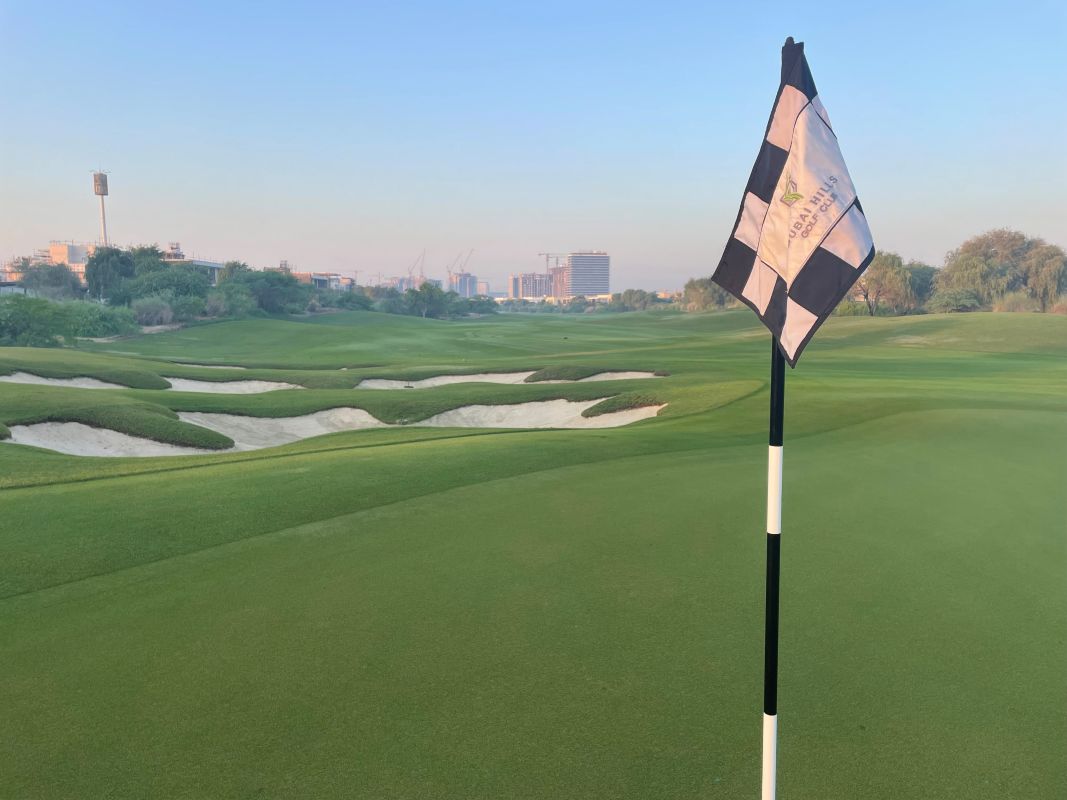
From his beginnings in Scotland to a role overseeing six courses across Dubai, India and Morocco, he has combined expertise in agronomy, construction and leadership to build an impressive and varied career.
We caught up with Jordan to discuss how his time at Troon Golf has equipped him with a broad skillset and opened up new opportunities.
How much did moving abroad shape your ideas about agronomy?
Being at Loch Lomond set me up well. At some clubs, it’s a case of, ‘We’ve always done it this way’, so they stick to the same approach. Loch Lomond worked with data – soil tests, water tests, organic matter analysis – and based decisions on facts. That approach transfers anywhere. For example, water quality is a huge challenge in the Middle East. When I’m dealing with a course, whether in Dubai, Morocco or India, I always start with soil and water tests. Only then can you build the right programme. The grass type or climate may differ, but the principle of starting with accurate data is universal.
What does overseeing six courses across three countries look like day to day?
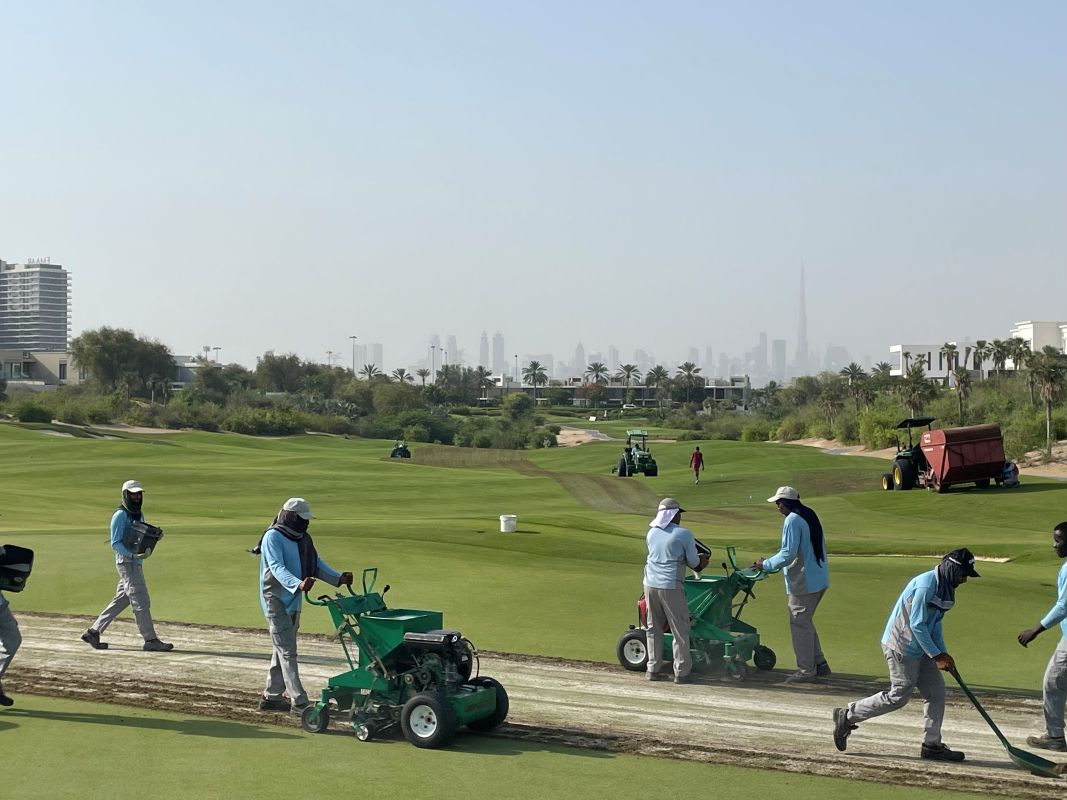
I have eight direct reports: a course manager at each site, an administrator and a cluster workshop manager. One week each month I travel, alternating between India and Morocco, and the rest of the time I’m in Dubai, where we have four properties. We hold regular senior management meetings every 14 days. Each course manager submits weekly spreadsheets, which I review for calibration and programme adjustments. I see my role as risk management, supporting them and questioning where needed.
Only about 40 per cent of my time is pure agronomy. The rest is long-term planning, capital projects and business management. We run a flat system without general managers on each site, so between myself (back of house) and a colleague (front of house), we oversee all six properties. It’s a challenge to balance my time, but I aim to spend at least a day every 10 days at one of the facilities in Dubai.
How did you acquire the skills to take on those managerial responsibilities?
I think mentors have an important role to play, even if you don’t always appreciate when you’re younger who those mentors are or when they’re mentoring you.
Since 2012, I’ve worked with Troon Golf, who operate over 650 courses worldwide. That gave me exposure to strong general managers, and I learned a lot from them. That’s not an opportunity always afforded to course managers, and they don’t get the same insight and understanding of how the wider business works. Troon also ran a leadership programme where I worked across different departments – food and beverage, sales, marketing, operations – to understand that wider business. Agronomy is usually the biggest cost centre in a club, so course managers are well placed to discuss costs, but they also need to understand revenue.
If you’re an assistant or deputy, don’t just ask for chainsaw or sprayer training – ask for budgeting or business exposure. That’s what prepares you for management. Loch Lomond gave me my agronomy foundation; Troon gave me my management foundation.
How much insight do your course managers get into the bigger picture?
We try to expose them as much as possible. Every 14 days, all senior managers at each club meet – operations, F&B, security, engineering, agronomy. It gives everyone a chance to hear each other’s challenges and share ideas. When we set agronomy programmes and budgets, I involve the course managers directly, and I also run training seminars on budgeting. Not everyone wants to move beyond course manager, but at least they get the opportunity to see the wider picture.
What are the demographics of your teams?
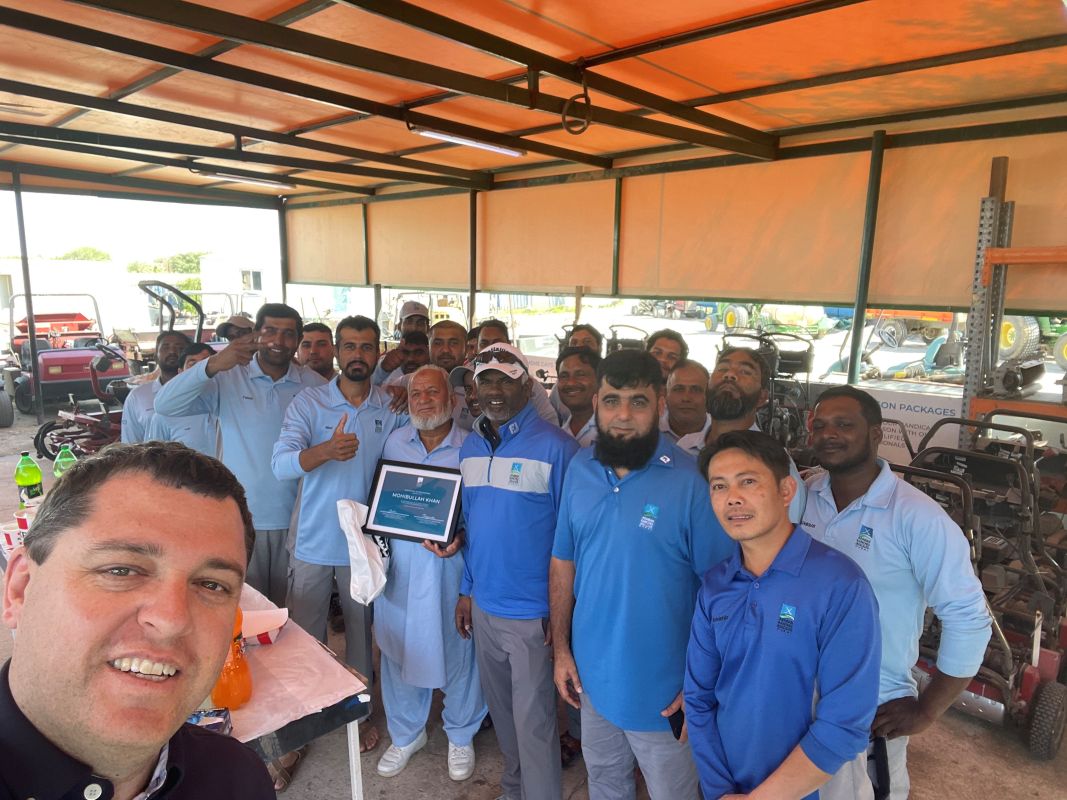
In Morocco and India, 99 per cent of the teams are local, with only the course managers being from overseas – for example, a French manager in Morocco, due to the language. In the Middle East, it’s different – teams are mainly Indian, Filipino and Pakistani, around 75 per cent Muslim, with course managers from Western countries. Across all six courses, we probably have 12–14 nationalities. We respect cultural and religious holidays, which actually works out well – Muslim staff want Eid off, while Western staff want Christmas and Easter, so it balances.
What’s the next step in your career?
Things change with family and circumstances. I’ve always been interested in construction and renovation, but also in future opportunities, and have always taken a risk with having worked now in eight countries. At this time in my career, it is not just about me, and I have to consider not just my future but my children’s stability. Travel while single! My current role has given me such varied experience that I am no longer always looking for dedicated agronomy roles. I don’t see myself returning to the UK, but I will be back in Europe, and maybe the Middle East again, in future. GI
Author

About Jordan
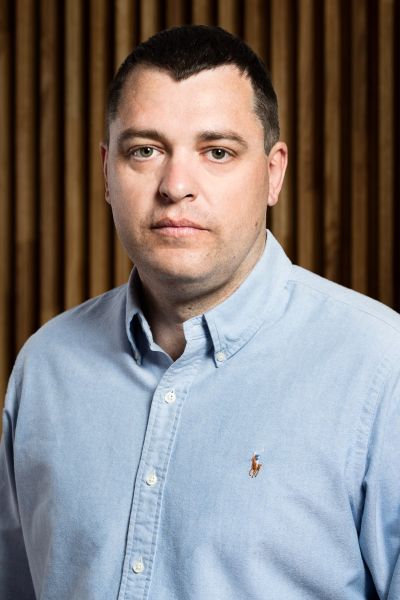
Growing up in Scotland, golf was naturally part of Jordan’s life and, although many expected him to join his father in the motor trade, he was drawn instead to the outdoors. A formative spell at Loch Lomond, where he started as a seasonal worker and ended up staying seven years, opened his eyes to the breadth of opportunities within greenkeeping, with specialisations in construction, irrigation, mechanics and many more besides putting paid to the ‘glorified grass-cutter’ stereotype.
Frustrated by limited opportunities to progress in the UK, Jordan accepted an offer from Ken Siems to move to Dubai in 2008. What began as a leap of faith has since become a career abroad that now outweighs his time in the UK. Over the years, he has combined construction, grow-ins and operational agronomy, building a broad skillset. He is a strong advocate for young greenkeepers to gain diverse experience, particularly in construction, to strengthen their future careers.