
Driven by Curiosity, Grounded in Growth
A thirst for knowledge and a willingness to invest in his own development are qualities that have seen Kenilworth course manager Steve Hardy establish a glowing reputation

Steve Hardy’s career journey has been driven by healthy ambition and an undimmed curiosity. From volunteering as a teenager at a local nine-hole course to becoming course manager at the highly regarded Kenilworth, he has invested heavily in his own development along the way.
With several self-funded qualifications under his belt and a first-class honours degree to his name, the results have been impressive. That dedication has also translated into results for the clubs he has worked for, and the impact he is having at Kenilworth extends well beyond the playing surfaces.
We caught up with Steve to find out what motivates him and how he has established himself as a key part of his club’s strategic vision.
How and why did you get into greenkeeping?
Like many in the industry, I fell into it. I’d played competitive golf since I was six or seven, but by 15 or 16 I wasn’t sure what I wanted to do - only that I liked golf and sport.
My local course was Copsewood Grange, a nine-hole club. One summer holiday, when I was 16, I went down there. A school friend, Ashley Bulpitt - now the head greenkeeper - was working at the club. I got talking to him and liked the look of the work: the kit, the tractors and the changes being made after the previous greenkeeper retired. I asked if they needed an extra pair of hands. I didn’t want paying, I just wanted to help with strimming, bunkers, things like that. My grandad was a member and had been president, so I already had a connection.
I spent three months volunteering while working evenings at Tesco. By September’s Club Championship, I was both setting up the course and playing in it. Soon after, a position came up and, because of my experience with greens mowers and tractors, I got the job.
Did you have any sense at that early stage of how much science and technical know-how was required to excel in the industry?
Absolutely not. I asked a lot of questions, my head greenkeeper at the time would say that about me, but it was all about machinery, visuals and presentation. I’d ask, ‘Why can’t we do this? Why can’t we do that?’. There was always a reason, but I was curious.
As the year went on, I realised there was much more to it: disease cycles, the need to spray greens regularly. As a player, I’d had no idea how often they were sprayed or fertilised. At 17 I said, ‘How do I get on that sprayer?’. I was told I’d need a licence, so I asked the club to put me through it. Spraying was my first qualification. I passed, enjoyed it and did a lot of spraying with the head greenkeeper, Gary Compton. He’d take me along, show me how to mix, then hand it over: ‘You’ve got your licence now, it’s up to you.’
Within months, my next question was: ‘How do you make a career out of this? How do you progress or earn more?’ The answer was: get your Level 2. That way, the club could offer me a better salary.
You started off in a small team – how did that inform your development?
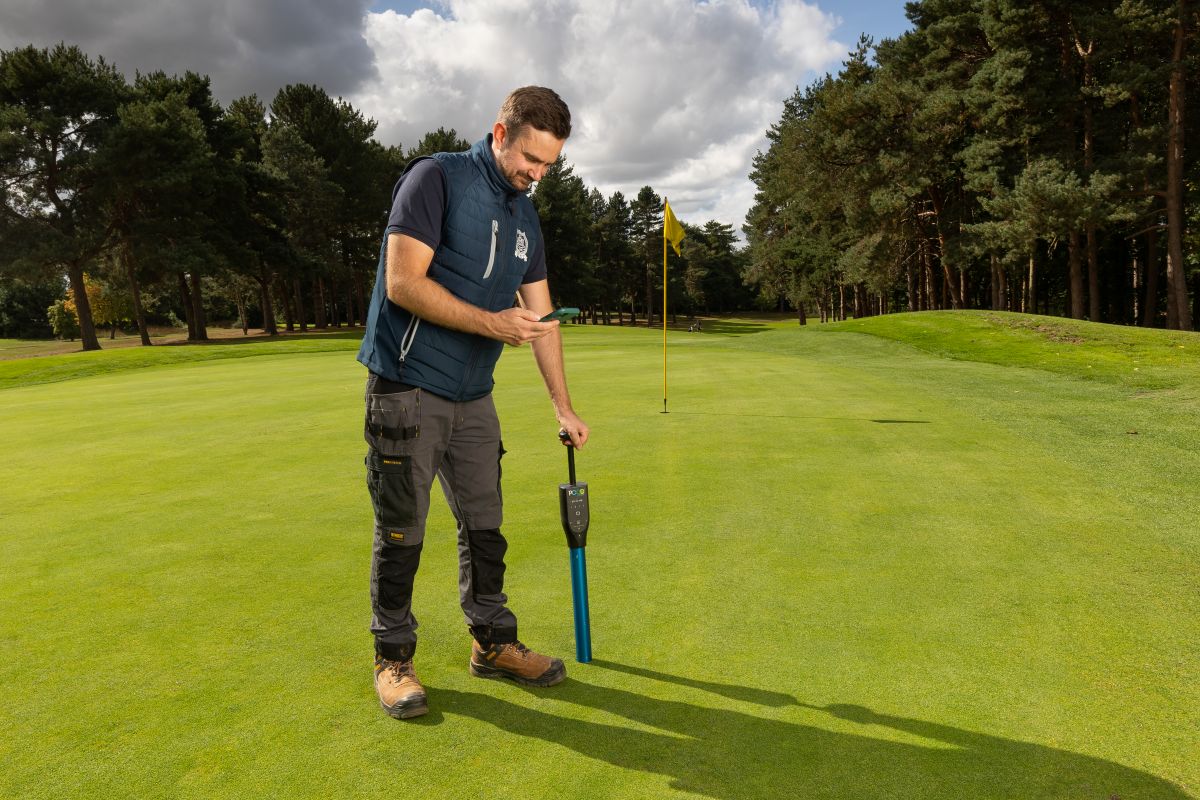
There were only three of us for the nine holes, so I was exposed to everything – verti-draining, small irrigation repairs, fertilising greens, every mower they had. With a small team, you had to use everything because there was no alternative. We also dealt with tree work and flood management. The site used to flood in winter, sometimes up to five feet, so dealing with the aftermath and debris clearance was an eye-opener.
After five years there, I kind of outgrew the role. I’d completed my Level 2 and was itching to do Level 3. I knew that was the only way to improve my salary and position. I was looking at adverts for senior greenkeepers, deputies, even assistants with decent salaries, and they all required Level 3. That became my goal: finish Level 3 as soon as I could.
Halfway through my Level 3, a position came up at The Warwickshire Golf Club, which was a completely different venue – a 45-hole facility, and although the hotel wasn’t built yet, it was still a very big operation, and it appealed to me.
How did you go about moving on from the place that had offered you your start in the industry?
I approached Gary and said I’d been offered this job. It wasn’t a huge increase in money, but I thought I’d learn more there. As it happened, Gary had worked at The Warwickshire 10 or 15 years earlier when it was being constructed. He said he’d be sad to see me go, because in a small team my skills were hard to replace, but he encouraged me. He told me, ‘If it doesn’t work out, you know where we are’. That was really nice to hear.
Was it difficult to adapt to a new facility and being part of a bigger team?
Surprisingly, when I arrived, I was one of the more qualified members of the team, even though I was only in my early 20s with five years’ experience. Because of my skill set, I could step straight in and do a lot of the tasks.
About six months in, I finished my Level 3 and also did my chainsaw certificate. I actually self-funded that. I approached the course manager, Daniel Rowe, and said I wanted to do the course. With over 10,000 trees on site, I felt it was important. Daniel agreed but said the training budget was limited and others had been waiting. So I said, ‘No problem, I’ll pay the £500 myself’. They were over the moon with that. A couple of months later, someone told me about BIGGA’s Refund of Fees Scheme, so I claimed a good chunk of it back anyway.
You sound very driven – self-funding courses, pushing for qualifications. Did you at that stage already have an eye on becoming a course manager one day?
Looking back now, definitely. At the time, it was more about doing the job really well. I’ve always liked to be prepared and understand my subject. I absorb information quickly, whether from courses, verbal instruction or hands-on practice. But I did know early on that to build a career, you have to make yourself more valuable, and you do that by being more qualified, more knowledgeable and versatile. That was instilled in me by my first course manager.
Do you remember an early moment where that really hit home?
Back at Copsewood when I was 18, we had a superb agronomist, Peter Jones, who came out each year to walk the course. Gary would bring everyone along. Peter is this very experienced and knowledgeable person, and I didn’t make the most of being in his company back then. I remember walking to one of the greens with him and he suddenly asked me, ‘How much nitrogen have you put on this year?’ – I had no idea what he was talking about. I said I didn’t know, and I could see the disappointment in his face. I went home that night determined never to be in that position again. That stuck with me.
You’ve got a degree – why did you take that step and how did you find time for it?
I was an assistant at The Warwickshire for two years, spending eight or nine years there in total. When my deputy was promoted within the company, which owned The Warwickshire and 15 other sites, I stepped into the deputy role after a successful interview. The general manager was impressed with my self-funding initiatives and drive. One interview question was: ‘Where do you see yourself in five years?’. Naively, I said I wanted to be in the course manager’s chair, while he was sitting opposite. He challenged me, asking how I’d do that if he was still there. I realised I needed to make myself more valuable, so I focussed on excelling in the deputy role, managing 18 holes and becoming the main spray technician.
When it came to further education, I chose the foundation degree over the HNC because it was more science-based, covering the chemical, biological and soil aspects I was keen on. Funding was a challenge at £1,500 per year, but I took out a student loan, supported by my wife’s advice. The R&A scholarship in year two eased the burden and boosted my CV.
I then moved straight on to a BSc, adding 10–15 hours a week on top of work. The final year coincided with lockdown, but I was delighted to graduate with a first-class honours degree.
You first stepped into a course manager role at The Leicestershire – how did that come about?
I knew I had this degree I needed to use, and at the time my course manager was hinting at retirement. That left me in limbo. I think a lot of people can relate – staying in a role waiting for someone senior to move on. My mentality was: ‘Well, Steve’s been here 20 years, Dave’s been here 32, surely it’ll come to me next.’ Looking back, that was naïve and not advice I’d give anyone.
In 2021, a position came up at The Leicestershire as course manager. After Covid, I was frustrated and still wanted to do something with my degree. I knew I was young, had energy and decided to go for it.
I didn’t tell anyone I’d applied, but I put everything into it – walking the course several times before interview, speaking to contacts and trying to understand the situation. The club had had the same manager for over 20 years, and parts of it looked tired. There were quick wins to be had but also unknowns, like the machinery fleet and irrigation.
At interview, I found a supportive committee and board. They shared their challenges, I explained my ambitions, and we were aligned. It felt the perfect chance to put my stamp on something and test my knowledge.
What challenges did you face when you first stepped into the role?
Pretty quickly, I realised water security was a huge issue. The club abstracted out of a brook under a licence, but they’d already had warnings from the Environment Agency about the pump set and abstraction method. It was a fragile system, and the risks were obvious.
So, right from the start, I was front and centre with the committee and GM Simon Collingwood, presenting to members in forums about water security and what needed to be done. I also found myself dealing with a lot of external stakeholders – the Environment Agency, Severn Trent, England Golf – all within my first few weeks. I remember having this moment about three or four weeks in, thinking, ‘Oh, this is fully on me now’. It was a steep learning curve, but it forced me to step up straight away.
How do you communicate fresh ideas to a team who have been doing things a certain way for many years?
I like to think I’m a people person, so I didn’t go in criticising everything. At The Leicestershire, I started with the basics — good housekeeping. The sheds were a mess, cluttered with broken machinery, and there was no system for storing equipment. I spent the first week just observing, understanding how the team worked.
Then we tackled order: marking parking spots for machines, getting rid of what we didn’t need and creating simple routines for washing and maintenance. Small changes like these saved time and made daily operations smoother. Explaining the reasoning, demonstrating the benefits and taking things slowly were key, making sure never to overwhelm the team with too much at once. The team was fantastic with me, I’m very grateful for their support during that time.
Was it just about routines, or were there bigger challenges?
The machinery was very old and unreliable, so once the basics were in place, we met with the finance committee and general manager to plan a fleet upgrade. We worked with John Deere to replace core machines, bought grinders to keep blades sharp and introduced basic mechanics training for the team. These changes were game-changing for efficiency and quality.
The Leicestershire is a much quieter and more private property than The Warwickshire. The focus was on members rather than visitors or corporate days. It was a completely different dynamic, but I enjoyed the challenge and bringing some structured processes from my previous experience.
Did you also make changes to the course itself?
Yes. We worked hard to introduce sustainable practices, refining the grass species by reducing organic matter in the upper profile combined with lower inputs. It was great to work with Paul Woodham from the beginning of the process to implement all the positive agronomic changes. I engaged with the course architect, Jonathan Gaunt, on a demonstration bunker project. It was eye-opening compared to The Warwickshire, where we handled everything ourselves. While finances didn’t allow a full rebuild, it showed members the potential ambition for the course.
You were making good progress at The Leicestershire and had a long-term plan. What was the catalyst for leaving?
The short answer is family. I was commuting 40 minutes in the morning and often over an hour home. Fuel costs were rising, and with a young family – our first child had arrived and my wife was pregnant with our second – the commute became unsustainable.
The Kenilworth role came up out of the blue. At first, I wasn’t interested. I was very committed to The Leicestershire – it’s a great club that backed me fully. We’d reduced organic matter on the greens from 9% to within range, carried out heavy renovations, worked with STRI and had glowing reports from Paul Woodham, who was astonished at the speed of progress. We’d also started tree management planning and other projects. I loved it there.
But when my wife saw the Kenilworth advert, she asked the obvious question: ‘Do you really want to keep driving over an hour each way when there’s a very good club 10 minutes from home?’ That made me think. I knew Kenilworth well, having played there in junior opens. When I walked the course, I recognised many of the same issues I’d encountered at The Leicestershire – too many trees, neglected greens, lack of direction. In some ways, it felt like Groundhog Day. I’d hoped my next move would be less about starting from scratch, but with my wife’s encouragement I applied – literally the day before the deadline.
What was the interview process like?
They asked candidates to present a plan for three holes. The panel consisted of the GM Paul Taylor, club captain, chair of management and support agronomist Andy Cole. Instead of focussing on presentation or short-term agronomy, I took a strategic approach: water security, drainage, sustainable management. I told them plainly – if they wanted greens shaved to two millimetres and lightning fast year-round, I wasn’t their man. But if they wanted resilient, sustainable turf that performs consistently, then I could deliver. I explained how I would achieve it and what had been achieved at The Leicestershire.
The conversation shifted from me presenting slides to me questioning them about long-term planning. I asked, ‘What’s your 30-year water security plan?’, and explained that my role was to ensure the club thrived in 50 years, not just next season. That struck a chord. I wasn’t desperate to leave The Leicestershire, and I knew good people would apply. In fact, my old school friend Ashley, who I knew from Copsewood, was also going for the job. We even walked the course together beforehand, comparing notes. He was disappointed not to reach the second interview, but we had different experiences and qualifications by that stage.
How do you reflect on the transition from The Leicestershire to Kenilworth?
I went into Kenilworth far more relaxed and confident. At The Leicestershire, I’d felt that ‘this is all on me’ pressure. At Kenilworth, I knew I could do it, and I’d learned a lot about patience and working with boards and the wider membership.
Two-and-a-half years in at Kenilworth, we’ve already brought the greens back within range, and they’re performing well. We’ve smartened up the sheds and facilities, just as we did at The Leicestershire. The irrigation system here is decent but ageing, so we’re beginning the process of planning upgrades. It’s a bigger site with more trees and machinery, but we’ve made strong progress.
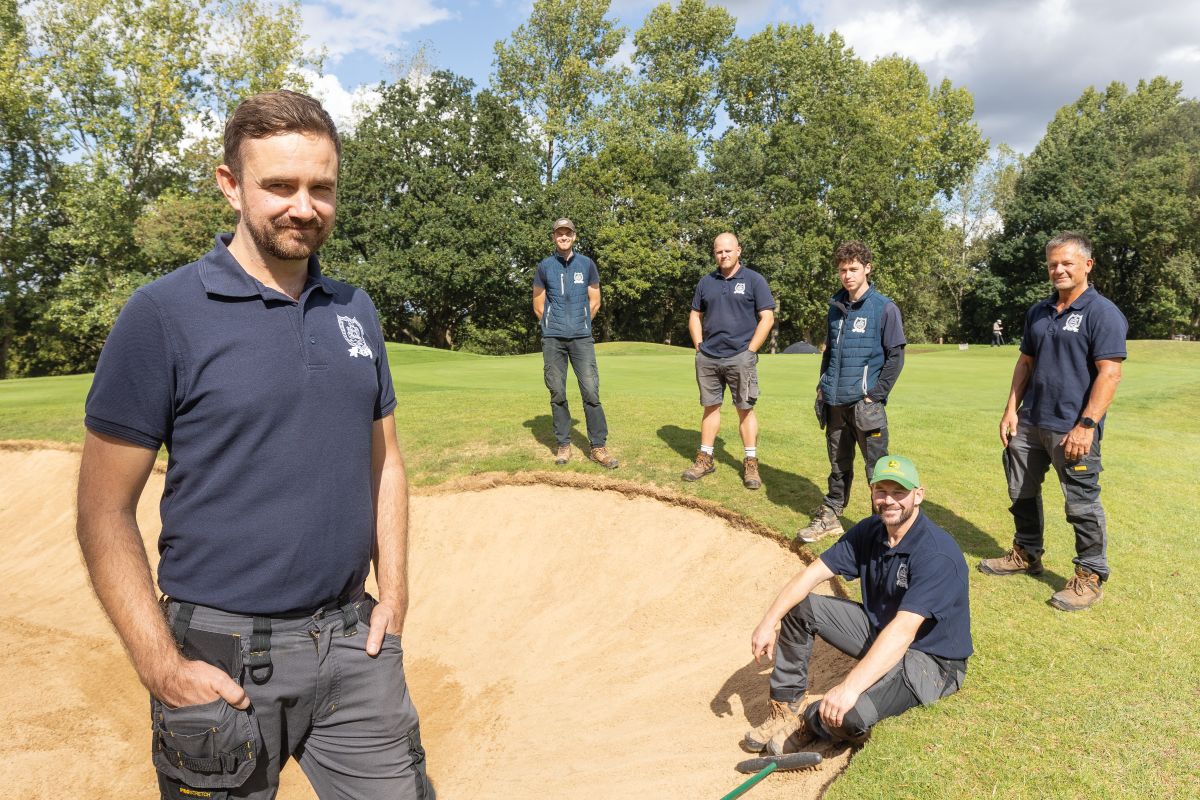
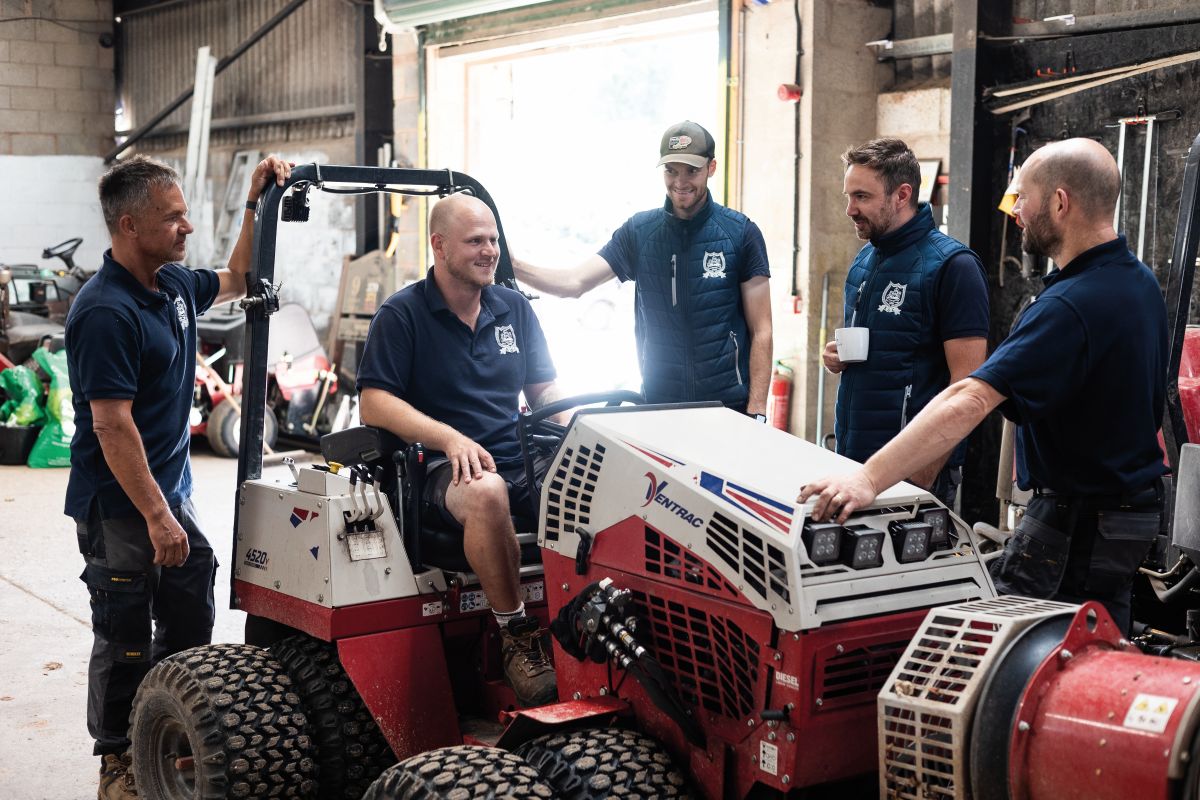
We’ve got eight full-time members of staff in terms of weekly man hours, which includes three casuals, so on some days we have up to 10 staff, which is fantastic for course set-up. It allows me and my deputy to step back from day-to-day jobs and focus on the bigger picture or project work.
What does that bigger picture look like?
Like most clubs, we have a variety of challenges. The in-house drainage programme is our primary focus, alongside irrigation upgrades. Water harvesting is a high priority – we want to capture and reuse the water we’re draining. We’re working with consultants, Dr Tom Young (TEP) and Jonathan Gaunt, who was commissioned to draw up a concept masterplan for Kenilworth. My role is to keep delivering that strategic plan and make the budget go as far as possible.
On top of that, because of our investment in equipment and staff, we’re now able to offer services externally – such as primary drainage installation, project work, labour support and consultancy for other clubs. I think there’s a market for that, especially for newer course managers who might need the support. For us, it’s a way of reinvesting income back into our projects at Kenilworth.
What about yourself? Do you have a dream job in mind further down the line?
Not really, to be honest. I buck the trend there. A lot of my peers talk about wanting to be at an Open venue or to host a championship, but I’m not looking that far ahead right now. I enjoy helping others and think I would definitely like to support the industry and up-and-coming greenkeepers navigate the challenges.
I’ve got a young family, and I’m blessed with an excellent role at a club that fully supports my vision. So for the moment, it’s about keeping things moving here. If something came up in five or 10 years that caught my eye, maybe I’d look at it, but right now, it’s not even on my radar. GI
FTMI: Shaping course managers of the future
FTMI was a real turning point for me. I was lucky to be on it alongside others who are now course managers. At the time, we were all deputies or assistants, but from very different clubs. That was eye-opening in itself.
Over four days in Ipswich, we heard from four experienced course managers about their projects, mistakes and lessons learned. My mentor was James Bledge, who is always full of energy and enthusiasm. Lee Strutt also supported and reinforced the view that today’s course manager role is less about cutting grass and more about managing assets and shaping the club’s future.
We also had inspiring input from Grant Frogley, Matt Plested and David Cole, all at the top of the industry. What struck me most was the generosity of time from mentors, many of whom gave up holiday to be there. The message was clear: communicate well, get budgets right, set priorities and don’t try to fix everything at once.
FTMI made me realise agronomy is maybe 30 per cent of the job – the rest is people, assets and management. It shifted my focus towards budgeting, presentations and communication and gave me confidence that there were many different pathways to becoming a course manager.
How to make yourself more valuable – Steve’s top tips
Steve’s CV
Assistant greenkeeper at The Warwickshire
Assistant course manager at The Warwickshire
Course manager at The Leicestershire
Course manager at Kenilworth
Adding value with in-house projects
At Kenilworth, we've been fortunate to take on a number of projects in-house. After the very wet winter 18 months ago, we suffered badly, like many clubs. Being a wet site anyway, it really highlighted how vulnerable we were to weather. Drainage became a priority.
We had quotes for contractors to drain just one fairway, and the cost was £60–80k. That would have been our entire CapEx for the year, with no plan for the rest of the course.
After speaking to colleagues like Dave Stewart at Great Barr, who loves in-house projects, I realised we could buy our own trencher, backfiller, tractors and equipment for less than the cost of that one fairway. The board was bold enough to back the idea, and I set a target of 10,000 metres of primary drainage over three years. We're now halfway through, with 6,000 metres installed.
Turning a generous donation into a lasting legacy
Our greens director, Paul Hone, approached me about making a donation. His family had been at the club for generations, and he wanted to make a financial contribution. At first he suggested buying a greens mower. I was flabbergasted, but it didn't sit right with me – it wasn't a legacy, and the machine would depreciate to nothing in five years.
So I suggested using the money for something longer lasting: new practice nets. We designed a three-bay structure with a roof, pathways and planting. It still didn't spend the whole donation, so we added a simulator, something new to me, but a real potential revenue stream.
We ended up with unique, fully weatherproof nets with lighting, a simulator members can book and plans to rebuild and double the size of the chipping green alongside it. The whole aim was to improve our practice facilities, create a potential new membership category.
‘The boy was a machine!’
Back in 2008, Ashley Bulpitt offered Steve a first foray into the world of greenkeeping with the suggestion of some volunteer work at Copsewood. He didn’t take long to make an impression, and when the opportunity of a full-time role came up, Steve jumped at the chance.
“What struck me straight away was that Steve wasn’t content with routine jobs, he wanted to understand the ‘why’ behind everything we did,” said Ashley. “He was so eager to learn and take on more responsibility.
“He used to maintain the crown bowls green we have on our site and I vividly recall the hours he would put into it after a full shift on the golf course.
“He would be brewing compost teas in the sheds, taking soil samples and collecting his own data, it was like a mini laboratory – all of this while producing the biggest NVQ2 portfolio folder I’ve ever seen. The boy was a machine!”
It has come as no surprise to Ashley to see Steve climb the career ladder and build a reputation for excellence, with the two still in regular contact.
“Steve was a pleasure to work with and was always chomping at the bit to not only better himself but others around him,” he said. “While we were sad to lose him, myself and Gary had no doubt Steve would enjoy huge success. His role at Kenilworth is hard-earned and richly deserved.
“Steve has turned a lot of heads in the industry, and many clubs have seen or heard of his work and taken lots of his ideas on board. It shows what can be achieved when clubs give their backing to someone who is as skilled, driven and dedicated as Steve.”
Author