
Bob Taylor - Heathland Management
Few people have done more to advance the understanding of golf's relationship with nature than Bob Taylor. For more than 35 years, the consulting ecologist has been at the forefront of integrating sound ecological practice with high-quality course management, reshaping perceptions of what golf landscapes can, and should, contribute to the natural environment.
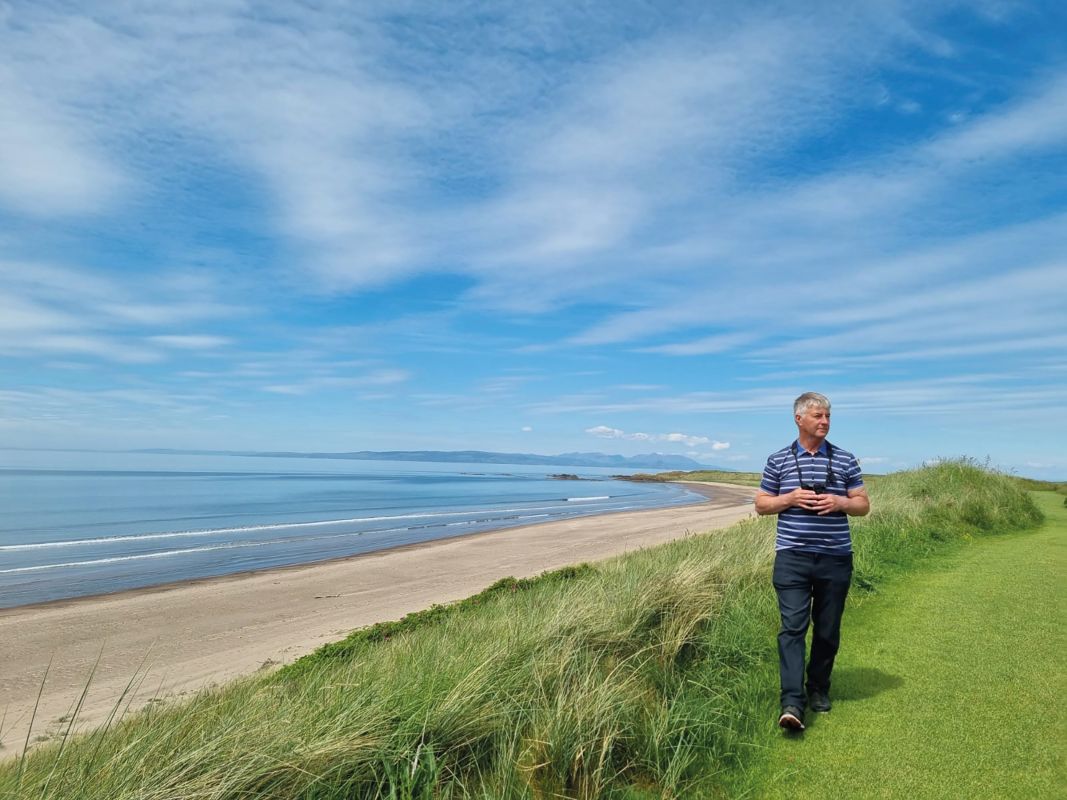
At Continue to Learn 2026, Bob will again share his expertise alongside Sophie Olejnik in the class 'Heather and Heathland Management', part of the comprehensive BTME education programme that continues to set the benchmark for professional learning in greenkeeping and course management. The session promises to explore the complexity and value of heathland environments – habitats that have declined dramatically across the UK but remain integral to the character of many cherished golf courses.
For Bob, it is a subject that goes far beyond aesthetics. Heathlands, he argues, are living systems whose protection and restoration sit at the intersection of ecology, sustainability and the playing experience itself.
"A major element of this talk will be on the management and conservation of our heathlands, which are declining for a number of reasons – habitat loss, fragmentation and even nitrogen pollution," he said. "Greenkeepers are increasingly recognising the importance of these areas and are facing real challenges in this modern era, particularly with climate change and atmospheric pollution as significant factors."
Beyond the heather
The class will first address a fundamental question: what actually constitutes heathland?
"In golf, we often think of heather, but that's just one element of the heathland mosaic," he said. "Heathlands are much more rich and diverse. The types of plants that can be found within them depend on geography – coastal heathlands, for example, are concentrated around certain sections of our coastline and can be among our rarest habitats within golf."
He will contrast lowland heaths, such as those in Berkshire, Dorset and across southern England, with upland heaths that occur above 250 metres in the Pennines and other northern regions. Each, he explained, supports its own distinctive communities of plants and animals, shaped by soil, stress and competition. "Generally, heathland species depend upon very stressed or nutrient-poor soil conditions," he said. "That's part of their character. Some species are highly competitive, others can only live in disturbed sites, but those in heathlands need that weak, poor, stressed environment."
For many greenkeepers, the attraction of heathland management lies not only in its ecological merit but also in the contribution it makes to golf's visual and strategic qualities. Well-managed heather banks and roughs can sharpen definition, influence strategy and add texture to a course – benefits that complement rather than compromise playability. Bob is clear that ecological work and course presentation are not mutually exclusive.
"Golf and ecological management are not in competition," he insisted. "They run hand in hand."
Management, cost & commitment
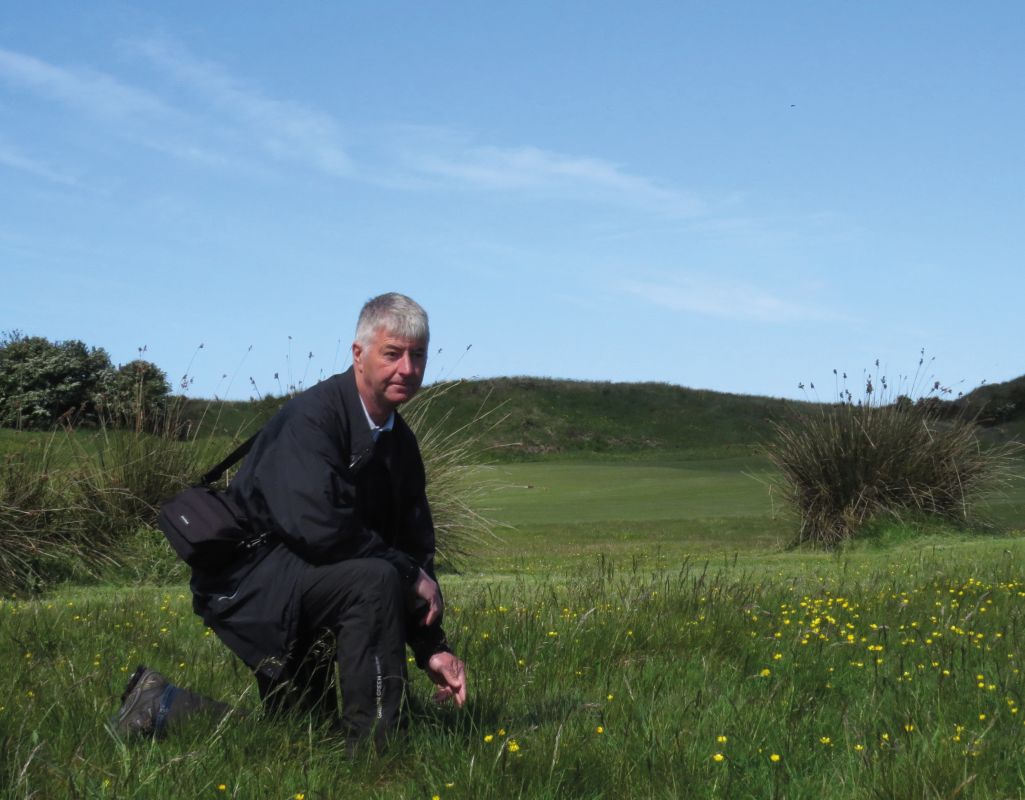
Despite the challenges, Bob is adamant that good heathland management does not have to carry an excessive price tag. "The costs don't need to be significant," he said. "Clubs certainly need appropriate equipment, but most already have what would suffice, and there's always the option to hire machinery when cutting, scarifying and collecting. The crucial thing is understanding – knowing how and when to manage. Timing is everything."
He believes too many clubs still regard ecological areas as peripheral, something to be tended only when routine maintenance is quiet. "That shouldn’t be the case," he said. "Management must be undertaken at the most appropriate times to ensure that habitat and species interests are conserved."
What is required, in his view, is commitment and knowledge – both of which BTME's education programme seeks to strengthen. The 'Heather and Heathland Management' class is designed to provide practical, actionable insight: not abstract ecology but achievable methods that superintendents and greenkeepers can implement on their own courses.
"There's no point talking about the niceties of what could be an ideal situation," he said. "It has to be practical, and it has to be at greenkeeper level. Everything we discuss should be given in a pragmatic sense and be doable. I always think in terms of things that are winnable – O level, A level and degree-level projects – so that people can build experience and see results when they go back to their clubs."
Changing climates, shifting challenges
Bob's career has spanned an era of profound change in attitudes toward ecology and sustainability. When he joined STRI in 1989, the concept of an 'ecological service' for golf courses was still novel. Today, environmental management is recognised as a central pillar of course maintenance, though new pressures continue to emerge. "Heathlands are like cold-climate habitats, and with warming, they're under stress," he said. "We're also seeing atmospheric nitrogen falling from the sky at a rate that's thickening the rough and leading to more lost golf balls. Greenkeepers are being faced with difficult challenges and having to adapt, but they're taking on that challenge."
He points to invasive species, such as the South African grass Sporobolus seen in Jersey, and the broader issue of resource scarcity, from water to sand, as indicators of how much the sustainability conversation has evolved. "We have to look at how we manage sustainably in all aspects, and that includes understanding that golf courses form part of a wider landscape," he said. "They provide patch habitats, connectivity through the countryside and real ecological value, but they can only do that through appropriate management."
Consistency is critical, but is sometimes hampered by changes to a club's personnel. "You can go to a club for years and see real progress, then the management changes, and everything comes to a halt. Wildlife needs consistency. Overall, though, the direction of travel from where we were 30 years ago has been massive. Ecological management is now considered much more seriously, and that's a huge positive," explained Bob.
The value of awareness
While golf's internal understanding of its ecological role has advanced enormously, Bob feels there is still work to do in communicating that message more broadly. "Some clubs do it well, others not so much," he said. "I've spent over 35 years trying to get that message across. Golf courses can only be good with management – you can't just leave them alone and hope for the best. Some clubs manage extremely well, others still see ecological work as an aside. We need to change that perception."
He believes part of the answer lies in visibility and education. Golf's positive environmental stories are too often hidden from public view, despite the sport's contribution to biodiversity and habitat conservation. "Golf clubs are still seen as another selfish land use for a few people who can afford it," he said. “Yet they're functioning so importantly, not only bringing in economy and tourism, but also from an ecological point of view providing habitat and connectivity. We have to do a better job of getting that message across."
A platform for learning
BTME and the Continue to Learn programme, he believes, play a vital role in that process – not only as a forum for formal education but as a meeting point for the exchange of experience and ideas. His own sessions are intentionally conversational, designed to encourage discussion rather than deliver a lecture.
"Workshops like mine are about sharing," he said. "I like to be as practical as possible, and I think everyone who attends goes away feeling they've got something that will benefit them and their clubs."
That emphasis on practicality, on achievable progress rather than theory, reflects Bob's lifetime approach to ecological management. For him, the measure of success is not the beauty of a slide deck or the sophistication of a plan but the visible, lasting results on the ground. "Management is key," he said. "If you're good with management, you can bring areas into play and use them right up to the line of play so they're still playable. The quality of the course depends on the management you provide. If you neglect it, the nature of the course – and the business – suffers."
Looking ahead
For those attending BTME and engaging with the exceptional Continue to Learn offering, the Heather and Heathland Management class will offer a deep dive into the science, the practicalities and the opportunities of working with one of Britain's most distinctive habitats. But it will also, inevitably, reflect the philosophy that has guided Bob's career: that ecological care and the pursuit of great golf are complementary ambitions.
As he put it, the goal is simple but enduring – to learn, to share and to manage better. "BTME and Continue to Learn are vital because they provide a platform for sharing knowledge and ideas," he said. "That's how we progress – by listening, discussing and then putting those lessons into practice on the ground." GI
About Bob
A consulting ecologist with over three decades of experience, Bob is an expert in applied habitat and species management, with a sound understanding of the needs of the game and the benefits that appropriate management can bring. Founding Bob Taylor Ecology Ltd in 2021 to serve the golfing industry in an ecological advisory capacity, Bob works across the industry, often with recognised golf course architects. He is an accredited verifier for the GEO Foundation and is The R&A’s preferred ecological adviser to The Open.
Bob's work has demonstrated that considering wildlife and the habitats on golf courses can run in parallel with providing an enhanced playing experience, with management being used to reduce frustration of slow play and lost balls and delivering real and tangible health benefits. Holistic management has become part of many golf clubs’ routine management over the last 30 years, and Bob has been at the heart of that change.
Author

Heather and Heathland Management
Presented by: Bob Taylor BSc MCIEEM MBPR, Bob Taylor Ecology Ltd, and Sophie Olejnik, Oleo Ecology
Heathland habitats have been in acute decline in the UK. Golf courses are one of the few land uses where this valuable habitat can be maintained and promoted with appropriate management. This class will look at what constitutes heathland and its principle components. Renowned ecologists Bob Taylor and Sophie Olejnik will contrast lowland coastal and upland heath, as well as determine management requirements for conservation, while not losing sight of the playing of the game. The class will look at various management techniques for establishing, maintaining and managing heathland, highlighting cost‑effective methods and promoting heathlands as areas not only beneficial to wildlife but also to enhancing the prestige of the golf club.
